


Sustainable solutions to mitigate occupational heat strain - an umbrella review of physiological effects and global health perspectives
- PMID: 32887627
- PMCID: PMC7487490
- DOI: 10.1186/s12940-020-00641-7
Sustainable solutions to mitigate occupational heat strain - an umbrella review of physiological effects and global health perspectives
Abstract
Background: Climate change is set to exacerbate occupational heat strain, the combined effect of environmental and internal heat stress on the body, threatening human health and wellbeing. Therefore, identifying effective, affordable, feasible and sustainable solutions to mitigate the negative effects on worker health and productivity, is an increasingly urgent need.
Objectives: To systematically identify and evaluate methods that mitigate occupational heat strain in order to provide scientific-based guidance for practitioners.
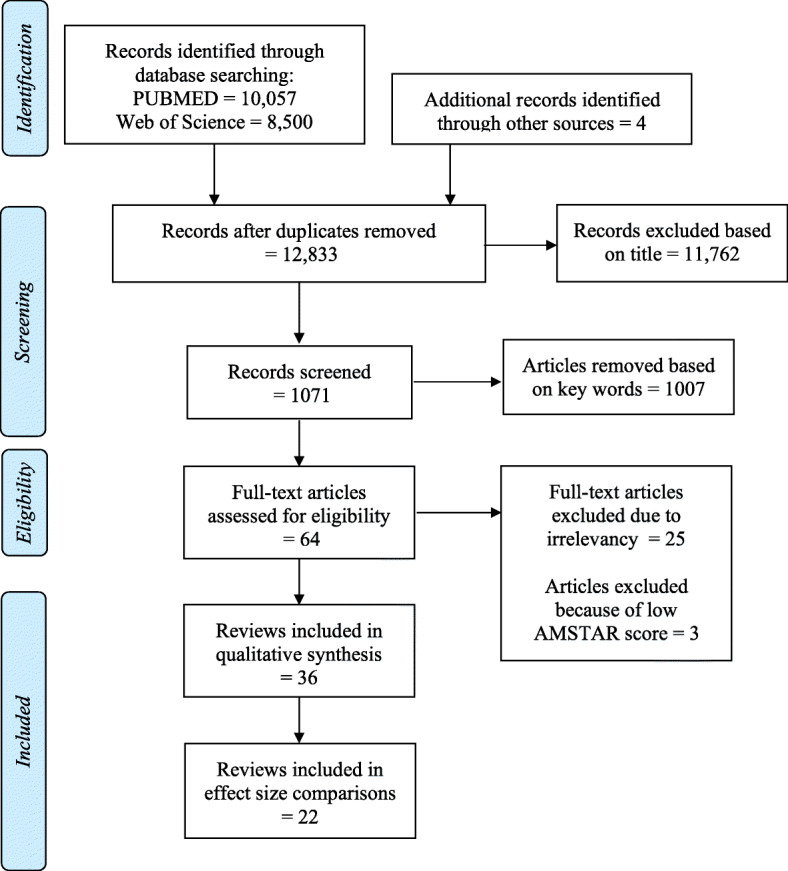
Methods: An umbrella review was conducted in biomedical databases employing the following eligibility criteria: 1) ambient temperatures > 28 °C or hypohydrated participants, 2) healthy adults, 3) reported psychophysiological (thermal comfort, heart rate or core temperature) and/or performance (physical or cognitive) outcomes, 4) written in English, and 5) published before November 6, 2019. A second search for original research articles was performed to identify interventions of relevance but lacking systematic reviews. All identified interventions were independently evaluated by all co-authors on four point scales for effectiveness, cost, feasibility and environmental impact.
Results: Following screening, 36 systematic reviews fulfilled the inclusion criteria. The most effective solutions at mitigating occupational heat strain were wearing specialized cooling garments, (physiological) heat acclimation, improving aerobic fitness, cold water immersion, and applying ventilation. Although air-conditioning and cooling garments in ideal settings provide best scores for effectiveness, the limited applicability in certain industrial settings, high economic cost and high environmental impact are drawbacks for these solutions. However, (physiological) acclimatization, planned breaks, shading and optimized clothing properties are attractive alternative solutions when economic and ecological sustainability aspects are included in the overall evaluation.
Discussion: Choosing the most effective solution or combinations of methods to mitigate occupational heat strain will be scenario-specific. However, this paper provides a framework for integrating effectiveness, cost, feasibility (indoors and outdoor) and ecologic sustainability to provide occupational health and safety professionals with evidence-based guidelines.
Keywords: Climate change; Environmental health; Heat stress; Occupational hygiene; Occupational medicine.
Conflict of interest statement
All authors declare no competing interests, financial or otherwise.
Figures
References
-
- IPCC. Climate Change 2013: The Physical Science Basis. Contribution of Working Group I to the Fifth Assessment Report of the Intergovernmental Panel on Climate Change. In: Stocker TF, Qin D, Plattner G-K, Tignor M, Allen SK, Boschung J, Nauels A, Xia Y, Bex V, Midgley PM, editors. New York: Cambridge University Press; 2013.1535 pp.
-
- Semenza JC, Rubin CH, Falter KH, Selanikio JD, Flanders WD, Howe HL, et al. Heat-related deaths during the July 1995 heat wave in Chicago. N Engl J Med. 1996;335:84–90. - PubMed
-
- International Labour Office . Working on a warmer planet: The impact of heat stress on labour productivity and decent work [Internet] Geneva: ILO; 2019.
-
- Zander KK, Botzen WJW, Oppermann E, Kjellstrom T, Garnett ST. Heat stress causes substantial labour productivity loss in Australia. Nat Clim Change Nature Publishing Group. 2015;5:647–651.
Publication types
MeSH terms
Grants and funding
LinkOut - more resources
Full Text Sources
Medical
