


Systematic review of Group B Streptococcal capsular types, sequence types and surface proteins as potential vaccine candidates
- PMID: 32888741
- PMCID: PMC7526974
- DOI: 10.1016/j.vaccine.2020.08.052
Systematic review of Group B Streptococcal capsular types, sequence types and surface proteins as potential vaccine candidates
Abstract
Background: 21 million pregnant women worldwide (18%) are estimated to carry Group B Streptococcus (GBS), which is a risk for invasive disease in newborns, pregnant women, and stillbirths. Adults ≥ 60 years or with underlying health conditions are also vulnerable to invasive GBS disease. We undertook systematic reviews on GBS organism characteristics including: capsular polysaccharide (serotype), sequence type (multi-locus sequence types (MLST)), and virulence proteins. We synthesised data by at-risk populations, to inform vaccine development.
Methods: We conducted systematic reviews and meta-analyses to estimate proportions of GBS serotypes for at risk populations: maternal colonisation, invasive disease in pregnant women, stillbirths, infants 0-90 days age, and older adults (≥60 years). We considered regional variation and time trends (2001-2018). For these at-risk population groups, we summarised reported MLST and surface proteins.
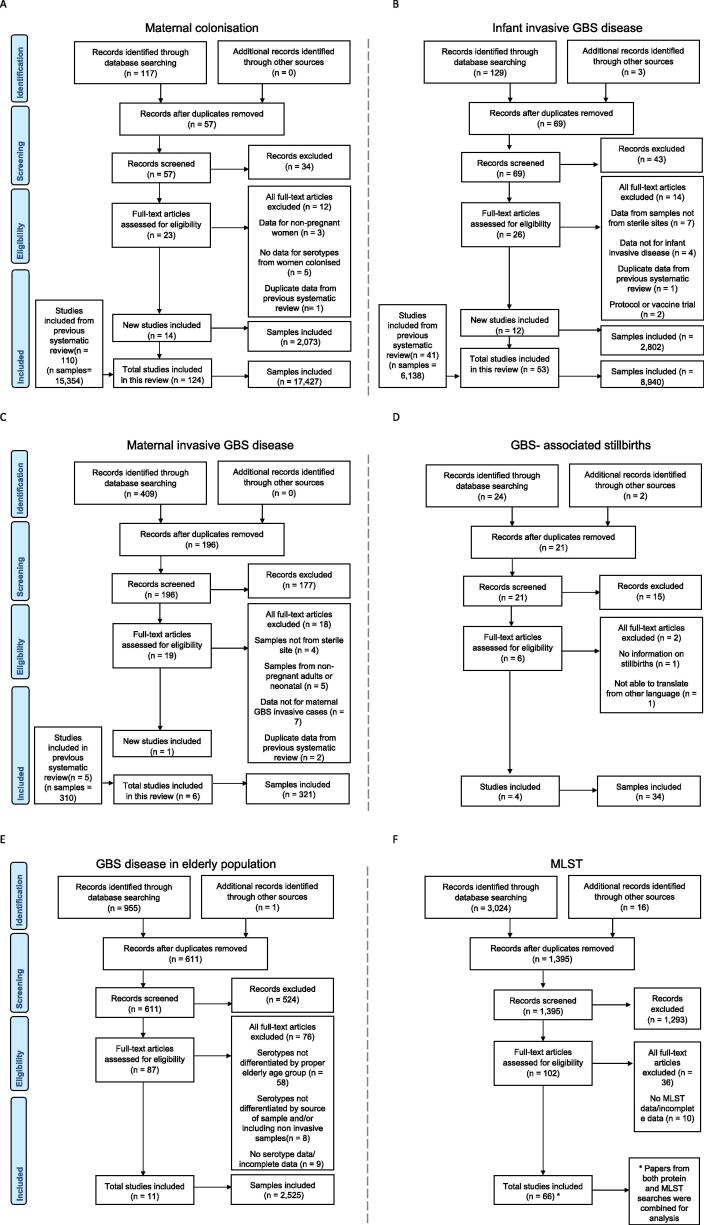
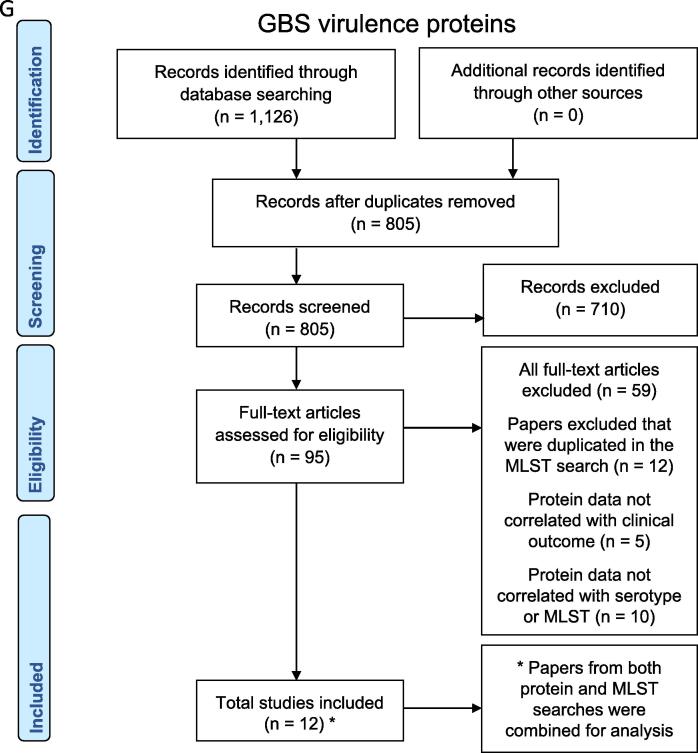
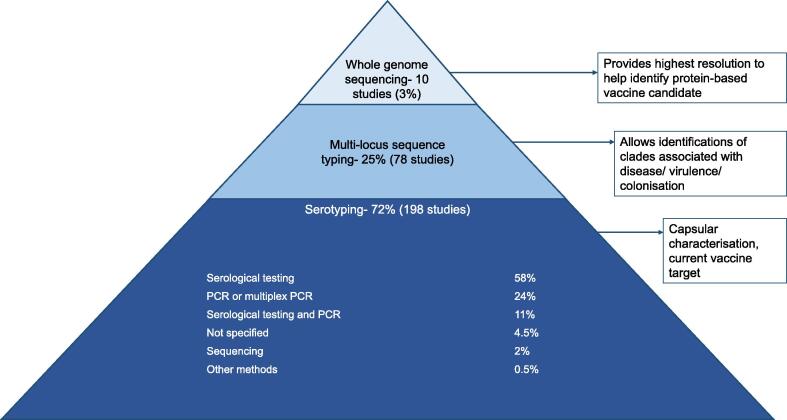
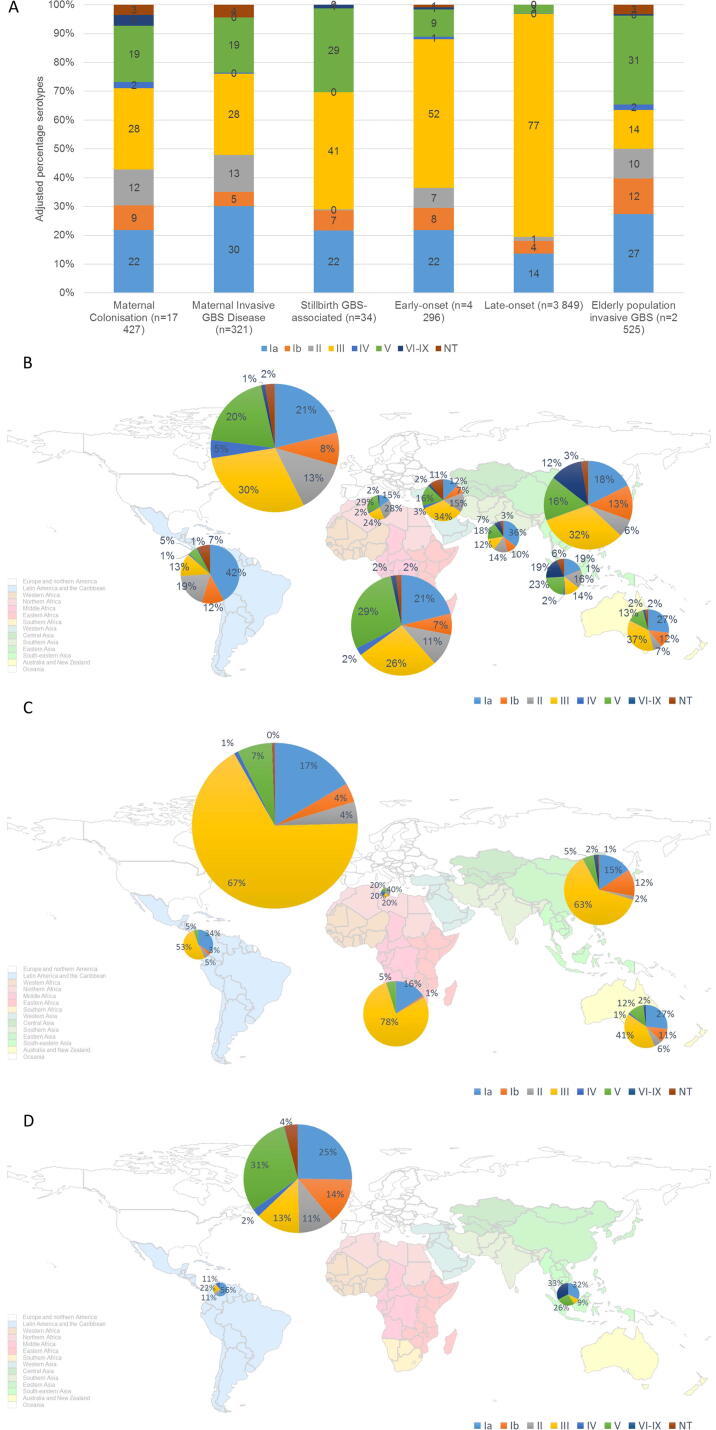
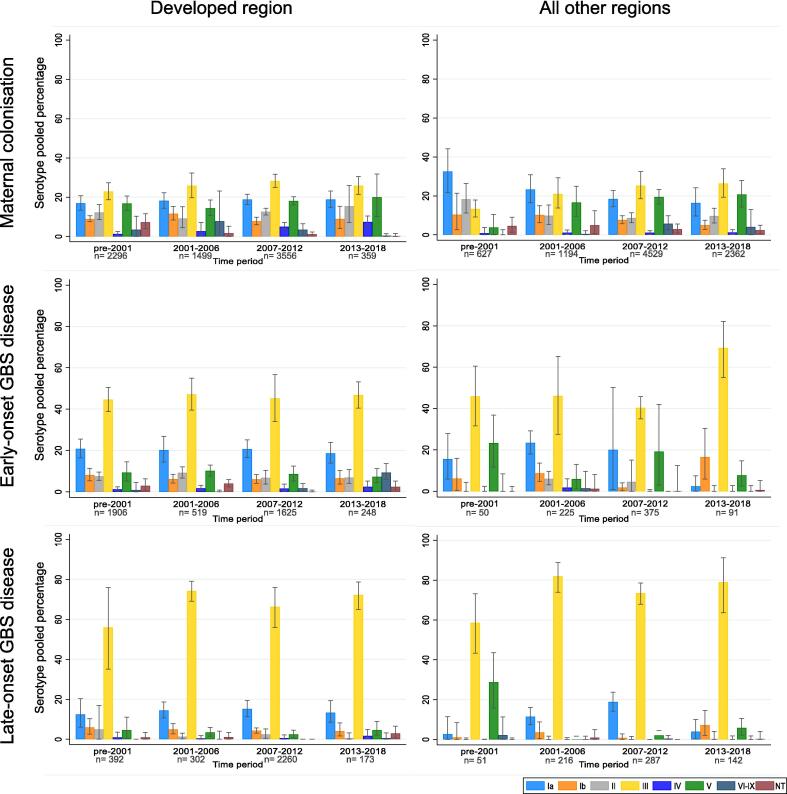
Results: Based on 198 studies (29247isolates), 93-99% of GBS isolates were serotypes Ia, Ib, II, III, IV and V. Regional variation is likely, but data gaps are apparent, even for maternal colonisation which has most data. Serotype III dominates for infant invasive disease (60%) and GBS-associated stillbirths (41%). ST17 accounted for a high proportion of infant invasive disease (41%; 95%CI: 35-47) and was found almost exclusively in serotype III strains, less present in maternal colonisation (9%; 95%CI:6-13),(4%; 95%CI:0-11) infant colonisation, and adult invasive disease (4%, 95%CI:2-6). Percentages of strains with at least one of alp 1, alp2/3, alpha C or Rib surface protein targets were 87% of maternal colonisation, 97% infant colonisation, 93% infant disease and 99% adult invasive disease. At least one of three pilus islands proteins were reported in all strains.
Discussion: A hexavalent vaccine (serotypes Ia, Ib, II, III, IV and V) might provide comprehensive cover for all at-risk populations. Surveillance of circulating, disease-causing target proteins is useful to inform vaccines not targeting capsular polysaccharide. Addressing data gaps especially by world region and some at-risk populations (notably stillbirths) is fundamental to evidence-based decision-making during vaccine design.
Keywords: Adult; Group B Streptococcus; Maternal; Multi locus sequence typing; Neonatal; Serotypes; Stillbirth; Vaccine; Whole genome sequencing.
Copyright © 2020 The Authors. Published by Elsevier Ltd.. All rights reserved.
Conflict of interest statement
Declaration of Competing Interest The authors declare that they have no known competing financial interests or personal relationships that could have appeared to influence the work reported in this paper.
Figures
References
-
- UNICEF. Inter-agency Group for Child Mortality Estimation. Levels and trends in child mortality: report 2019. 2019 [Dec 12, 2019]. Available from: https://www.unicef.org/reports/levels-and-trends-child-mortality-report-....
-
- Lawn J.E., Blencowe H., Oza S., You D., Lee A.C.C., Waiswa P. Every Newborn: progress, priorities, and potential beyond survival. The Lancet. 2014;384(9938):189–205. - PubMed
-
- Maternal immunisation. The Lancet Series; 2017.
Publication types
MeSH terms
Substances
Grants and funding
LinkOut - more resources
Full Text Sources
Medical
