


COVID-19 Impact on Neurosurgical Practice: Lockdown Attitude and Experience of a European Academic Center
- PMID: 32891850
- PMCID: PMC7470722
- DOI: 10.1016/j.wneu.2020.08.168
COVID-19 Impact on Neurosurgical Practice: Lockdown Attitude and Experience of a European Academic Center
Abstract
Background: The coronavirus disease 2019 (COVID-19) pandemic is an unprecedented challenge. Different models of reorganization have been described aiming to preserve resources and ensure optimal medical care. Limited clinical neurosurgical experience with patients with COVID-19 has been reported. We share organizational experience, attitudes, and preliminary data of patients treated at our institution.
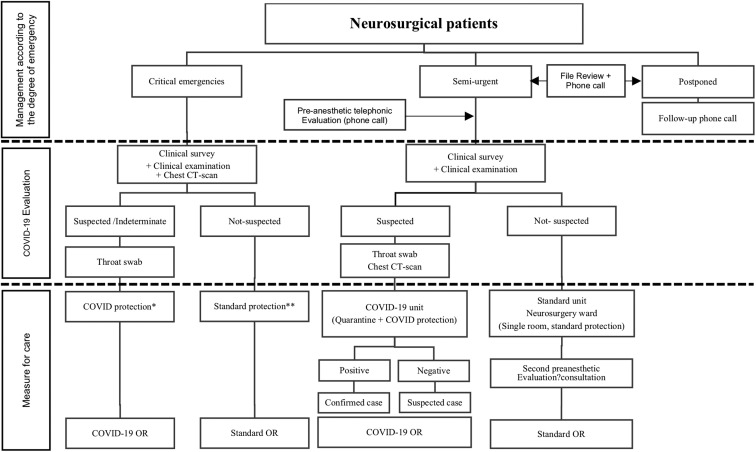
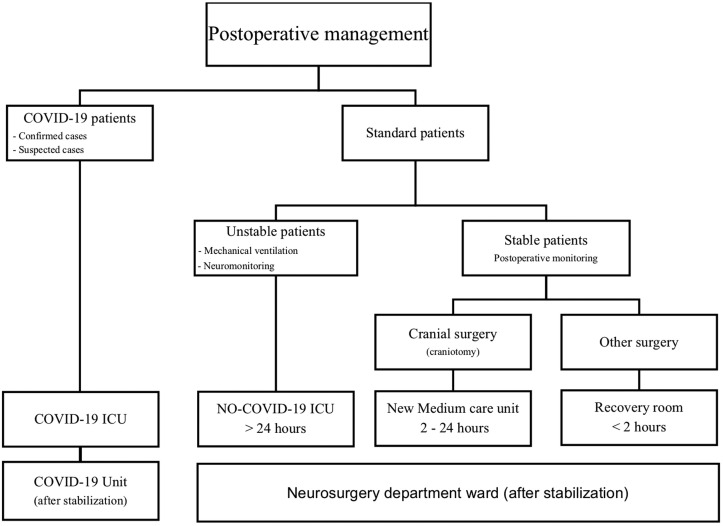
Methods: Institutional guidelines and patient workflow are described and visualized. A cohort of all neurosurgical patients managed during the lockdown period is presented and analyzed, assessing suspected nosocomial infection risk factors. A comparative surgical subcohort from the previous year was used to investigate the impact on surgical activity.
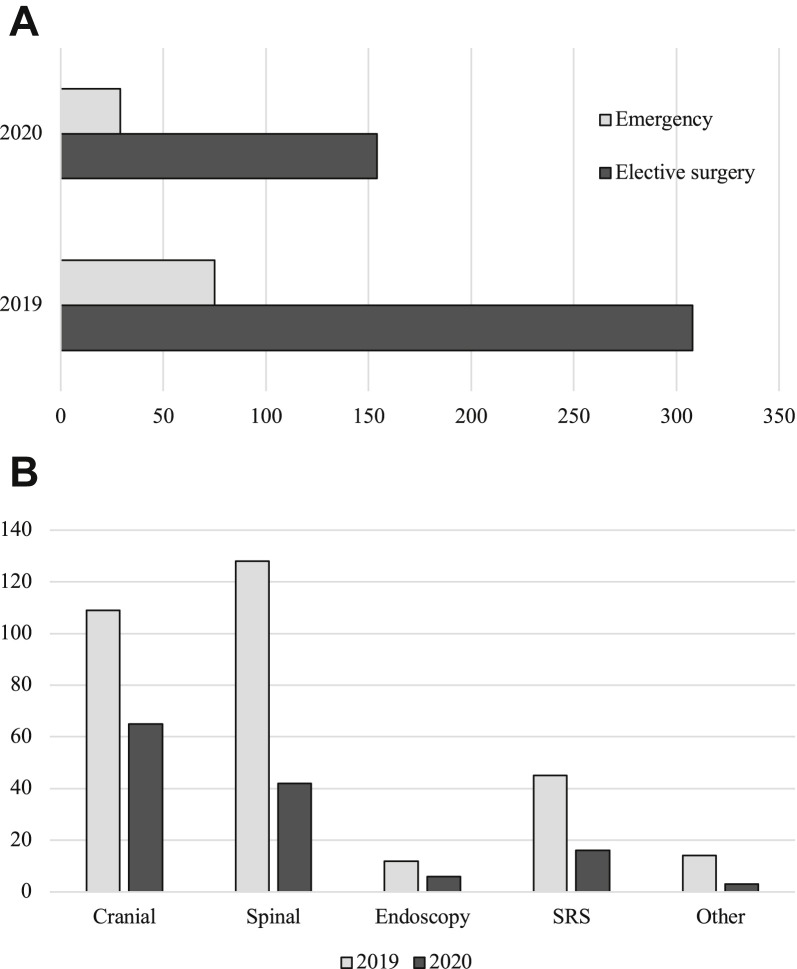
Results: A total of 176 patients were admitted in 66 days, 20 of whom tested positive for COVID-19. Patients initially admitted to the neurosurgical ward were less likely to be suspected for a COVID-19 infection compared with patients admitted for critical emergencies, particularly with neurovascular and stroke-related diseases. The mortality of patients with COVID-19 was remarkably high (45%), and even higher in patients who underwent surgical intervention (77%). In addition to the expected decrease in surgical activity (-53%), a decrease in traumatic emergencies was noted.
Conclusions: By applying infection prevention and resource-sparing logistics measures shared by the international medical community, we were able to maintain essential neurosurgical care in a pandemic with controlled nosocomial infection risk. Special consideration should be given to medical management and surgical indications in patients infected with severe acute respiratory syndrome coronavirus 2, because they seem to show a problematic hemostatic profile that might result in an unfavorable clinical and surgical outcome.
Keywords: COVID-19; Lockdown; Neurosurgery; SARS-CoV-2.
Copyright © 2020 Elsevier Inc. All rights reserved.
Figures
Comment in
-
Letter to the Editor Regarding "COVID-19 Impact on Neurosurgical Practice: Lockdown Attitude and Experience of a European Academic Center".World Neurosurg. 2021 Apr;148:221-223. doi: 10.1016/j.wneu.2020.09.117. Epub 2020 Sep 28. World Neurosurg. 2021. PMID: 32992061 Free PMC article. No abstract available.
-
In Reply to the Letter to the Editor Regarding "COVID-19 Impact on Neurosurgical Practice: Lockdown Attitude and Experience of a European Academic Center".World Neurosurg. 2021 Apr;148:224. doi: 10.1016/j.wneu.2020.10.143. Epub 2020 Nov 2. World Neurosurg. 2021. PMID: 33144209 Free PMC article. No abstract available.
References
-
- World Health Organization COVID-19 situation reports. https://www.who.int/emergencies/diseases/novel-coronavirus-2019/situatio... Available at:
-
- Scienseano Epistat–Covid19 Monitoring. https://epistat.wiv-isp.be/covid/ Available at:
Publication types
MeSH terms
LinkOut - more resources
Full Text Sources
Medical
Miscellaneous
