


The protocol of a clinical quality registry for dementia and mild cognitive impairment (MCI): the Australian dementia network (ADNeT) Registry
- PMID: 32894049
- PMCID: PMC7487842
- DOI: 10.1186/s12877-020-01741-2
The protocol of a clinical quality registry for dementia and mild cognitive impairment (MCI): the Australian dementia network (ADNeT) Registry
Abstract
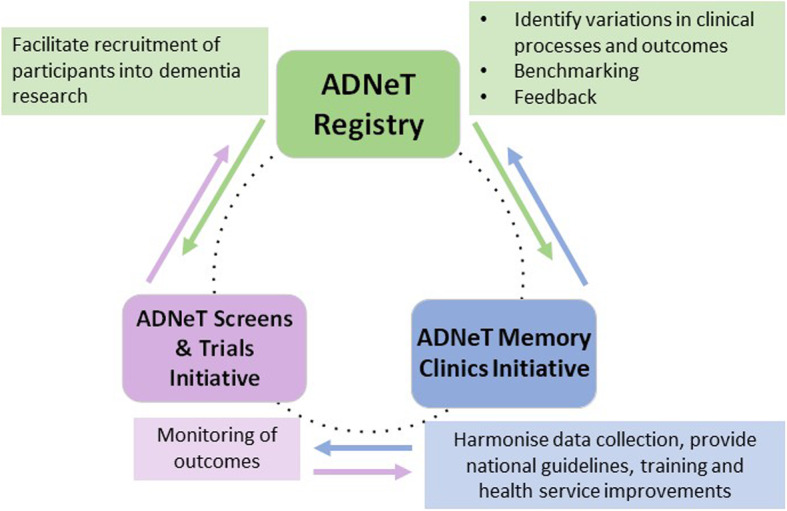
Background: Dementia was identified as a priority area for the development of a Clinical Quality Registry (CQR) in Australia in 2016. The Australian Dementia Network (ADNeT) Registry is being established as part of the ADNeT initiative, with the primary objective of collecting data to monitor and enhance the quality of care and patient outcomes for people diagnosed with either dementia or Mild Cognitive Impairment (MCI). A secondary aim is to facilitate the recruitment of participants into dementia research and trials. This paper describes the Registry protocol.
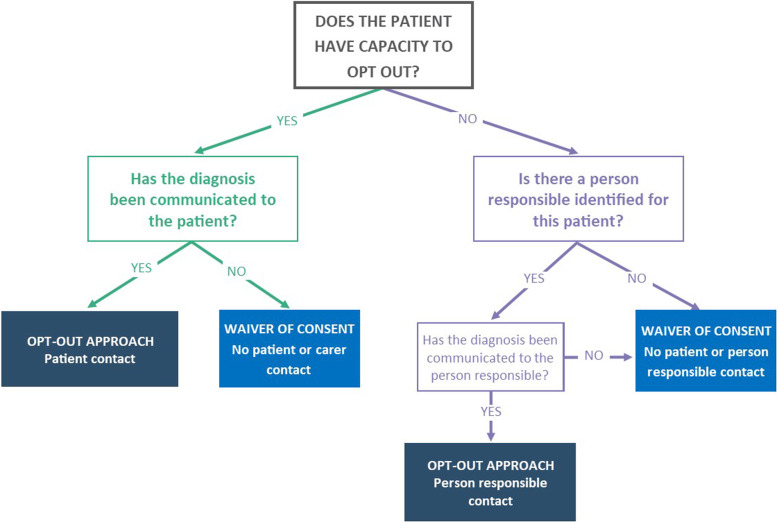
Methods: The ADNeT Registry is a prospective CQR of patients newly diagnosed with either dementia or MCI. Eligible patients will be identified initially from memory clinics and individual medical specialists (e.g., geriatricians, psychiatrists and neurologists) involved in the diagnosis of dementia. Participants will be recruited using either an opt-out approach or waiver of consent based on three key determinants (capacity, person responsible, and communication of diagnosis). Data will be collected from four sources: participating sites, registry participants, carers, and linkage with administrative datasets. It is anticipated that the Registry will recruit approximately 10,000 participants by the end of 2023. The ADNeT registry will be developed and implemented to comply with the national operating principles for CQRs and governed by the ADNeT Registry Steering Committee.
Discussion: The ADNeT Registry will provide important data on current clinical practice in the diagnosis, treatment and care of people with dementia and MCI in Australia as well as long-term outcomes among these people. These data will help to identify variations in clinical practice and patient outcomes and reasons underlying these variations, which in turn, will inform the development of interventions to improve care and outcomes for people with dementia and MCI.
Keywords: Clinical quality registries; Dementia; Health care quality; Mild cognitive impairment; Neurocognitive disorders; Registries.
Conflict of interest statement
Henry Brodaty is a member of the Nutricia Australia Advisory Board. The other authors declare that they have no competing interests.
Figures
References
-
- American Psychiatric Association . Diagnostic and statistical manual of mental disorders 5ed. Arlington, VA: American Psychiatric Publishing; 2013.
-
- Winblad B, Palmer K, Kivipelto M, Jelic V, Fratiglioni L, Wahlund LO, et al. Mild cognitive impairment--beyond controversies, towards a consensus: report of the international working group on mild cognitive impairment. J Intern Med. 2004;256(3):240–246. doi: 10.1111/j.1365-2796.2004.01380.x. - DOI - PubMed
-
- World Health Organization. Global action plan on the public health response to dementia 2017–2025. Geneva: World Health Organization; 2017.
Publication types
MeSH terms
Grants and funding
LinkOut - more resources
Full Text Sources
Medical
