


Poverty and food insecurity may increase as the threat of COVID-19 spreads
- PMID: 32895072
- PMCID: PMC7520649
- DOI: 10.1017/S1368980020003493
Poverty and food insecurity may increase as the threat of COVID-19 spreads
Abstract
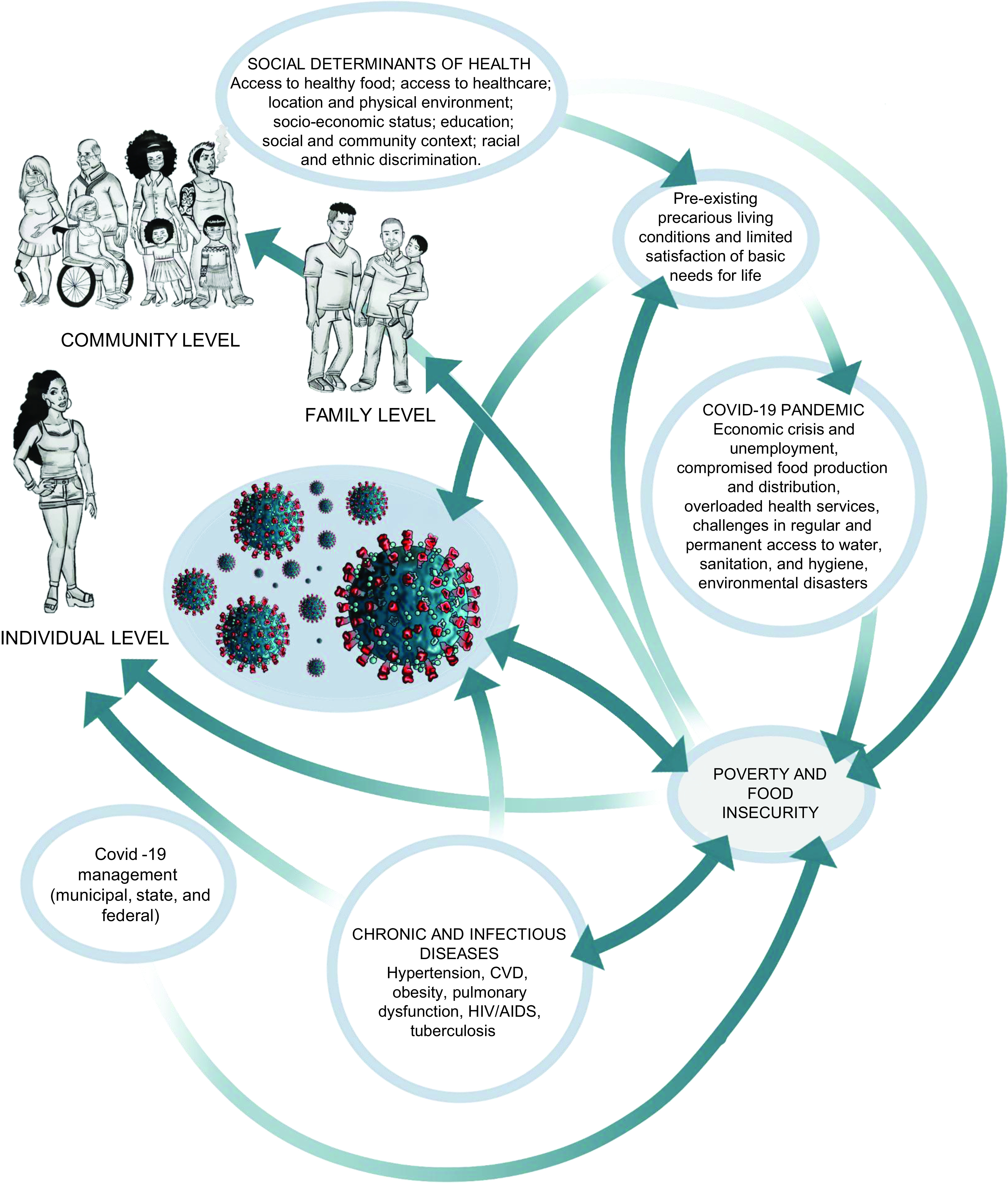
This article discusses the relationship between both poverty and food insecurity (FI) and the COVID-19 pandemic, as well as presenting possible strategies and actions for increasing social protection in the fight against these conditions in the current epidemiological context, especially for low-income countries. This is a narrative review concerning COVID-19, poverty, and food and nutritional insecurity. The COVID-19 pandemic may increase poverty and FI levels, resulting from the absence of or weak political, economic and social interventions to maintain jobs, as well as compromised food production and distribution chains and reduced access to healthy foods in different countries around the world, especially the poorest ones, where social and economic inequality was already historically high; the pandemic heightens and uncovers the vulnerability of poor populations. Public policies focused on guaranteeing the human right to adequate food must be improved and implemented for populations in contexts of poverty with the aim of providing food security.
Keywords: COVID; Food insecurity; Food supply; Inequality.
Figures
References
-
- Baltrusis N & D’Ottaviano MCL (2009) Rich and poor, each one in their place: socioespatial inequality in São Paulo. Caderno CRH 22, 135–149.
-
- Power M, Doherty B, Pybus K et al. (2020) How COVID-19 has exposed inequalities in the UK food system: the case of UK food and poverty. Emerald Open Res 2, 11.
-
- Ribeiro-Silva RC, Pereira M, Campello T et al. (2020) Covid-19 pandemic implications for food and nutrition security in Brazil. CiênciaSaúde Coletiva 25, 3441–3430. - PubMed
-
- HungerMap LIVE (2020). https://hungermap.wfp.org/ (accessed June 2020).
Publication types
MeSH terms
LinkOut - more resources
Full Text Sources
Medical
