. 2020 Sep 7;11(1):4447.
doi: 10.1038/s41467-020-18228-8.

Population sequencing enhances understanding of tea plant evolution

Affiliations

Population sequencing enhances understanding of tea plant evolution

Xinchao Wang et al. Nat Commun. .

Abstract

Tea is an economically important plant characterized by a large genome, high heterozygosity, and high species diversity. In this study, we assemble a 3.26-Gb high-quality chromosome-scale genome for the 'Longjing 43' cultivar of Camellia sinensis var. sinensis. Genomic resequencing of 139 tea accessions from around the world is used to investigate the evolution and phylogenetic relationships of tea accessions. We find that hybridization has increased the heterozygosity and wide-ranging gene flow among tea populations with the spread of tea cultivation. Population genetic and transcriptomic analyses reveal that during domestication, selection for disease resistance and flavor in C. sinensis var. sinensis populations has been stronger than that in C. sinensis var. assamica populations. This study provides resources for marker-assisted breeding of tea and sets the foundation for further research on tea genetics and evolution.


Conflict of interest statement

The authors declare no competing interests.

Figures
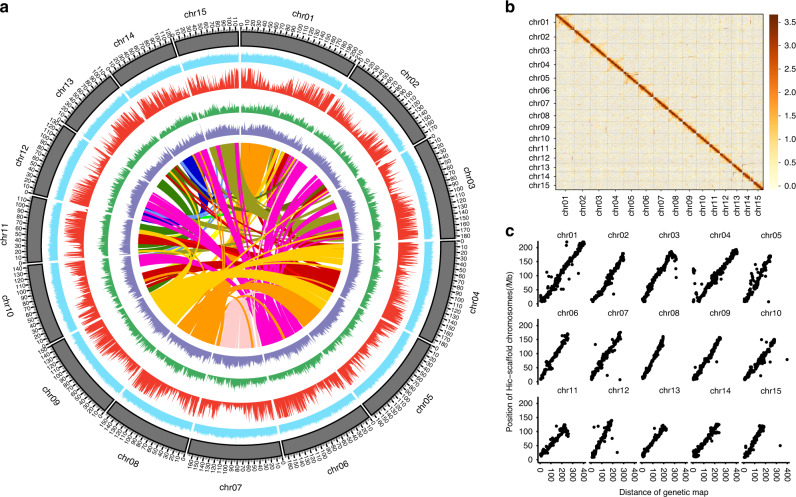
Fig. 1
Fig. 1. Characterization and quality of the LJ43 genome.
a The landscape of the LJ43 genome. From inside to outside: LJ43 gene collinearity; long terminal repeat density (purple); single-nucleotide polymorphism density (green); gene density (red); GC content (blue). The chromosome units of all aforementioned features are 1 Mbp. b Genome-wide all-by-all Hi–C interaction. The resolution is 0.5 Mbp. c The collinearity of the genetic map and assembled genome. Source data underlying Fig. 1a and c are provided as a Source Data file.
Fig. 2
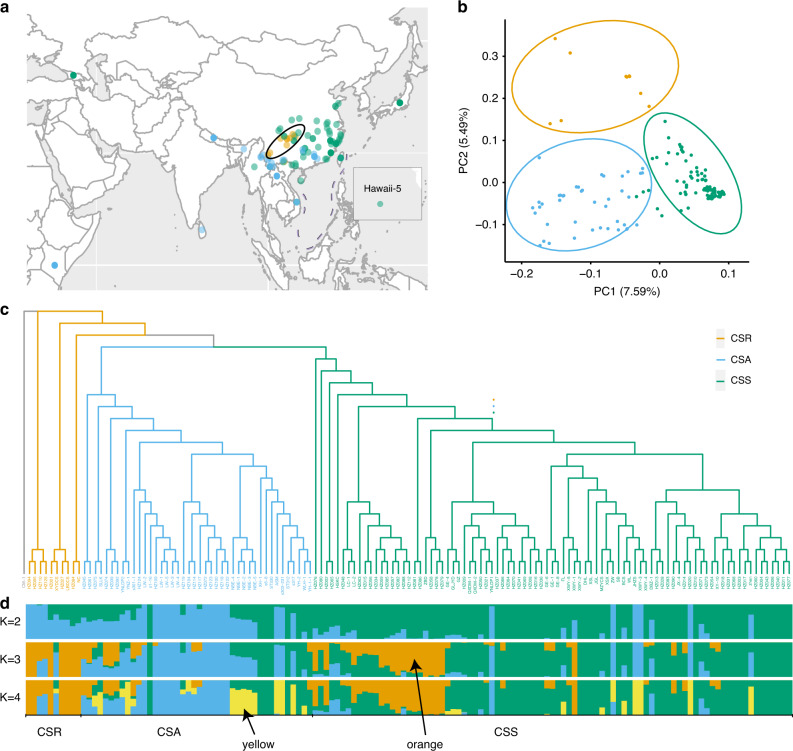
Fig. 2. Distribution and evolution of tea.
a The distribution of tea accessions assessed in the present study. The teas within the black oval had the highest nucleotide polymorphism. b Principal component analysis of the tea populations. PC1 and PC2 split the tea populations into three clusters. The Camellia sinensis var. sinensis (CSS) samples were found to cluster more tightly than the C. sinensis var. assamica (CSA) samples. c A phylogenetic tree of tea. Camellia sasanqua Thunb. was used as the outgroup, and the tea samples closest to the outgroup were C. sinensis-related species (CSR). d Structure of the tea populations. Green, blue, and yellow represent the CSS, CSA, and CSR populations, respectively. Yellow and orange are marked with arrows. Source data are provided as a Source Data file.
Fig. 3
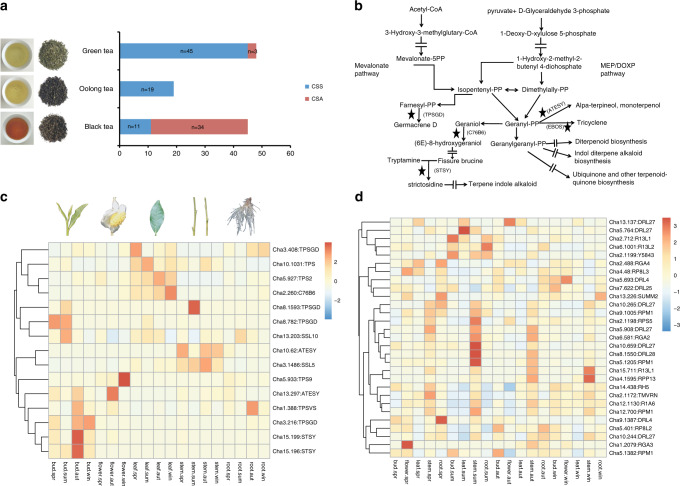
Fig. 3. Sweep genesets in CSA and CSS show different directions of domestication.
a The tea types were used for SweepFinder2 analysis of CSS (C. sinensis var. sinensis) and CSA (Camellia sinensis var. assamica). b The pathway of terpene metabolism. The selective sweep genes are indicated by stars. The arrows bisected by equal symbols indicate hidden processes. c The expression of terpene-related genes in different tea tissues. d The expression of NBS-ARC genes in different tea tissues. Source data underlying Fig. 3c, d are provided as a Source Data file.

References

    1. Xia EH, et al. The tea tree genome provides insights into tea flavor and independent evolution of caffeine biosynthesis. Mol. Plant. 2017;10:866–877. - PubMed
    1. Wei K, et al. A coupled role for CsMYB75 and CsGSTF1 in anthocyanin hyperaccumulation in purple tea. Plant J. 2019;97:825–840. - PubMed
    1. Lu H, et al. Earliest tea as evidence for one branch of the Silk Road across the Tibetan Plateau. Sci. Rep. 2016;6:18955. - PMC - PubMed
    1. Wu, J. Review on ‘Cha Ching’ (Agriculture Press, Beijing, 1987).
    1. Harbowy ME, Balentine DA. Tea chemistry. Crit. Rev. Plant Sci. 1997;16:415–480.

Publication types