


Vitamin D and Cardiovascular Disease, with Emphasis on Hypertension, Atherosclerosis, and Heart Failure
- PMID: 32899880
- PMCID: PMC7555466
- DOI: 10.3390/ijms21186483
Vitamin D and Cardiovascular Disease, with Emphasis on Hypertension, Atherosclerosis, and Heart Failure
Abstract
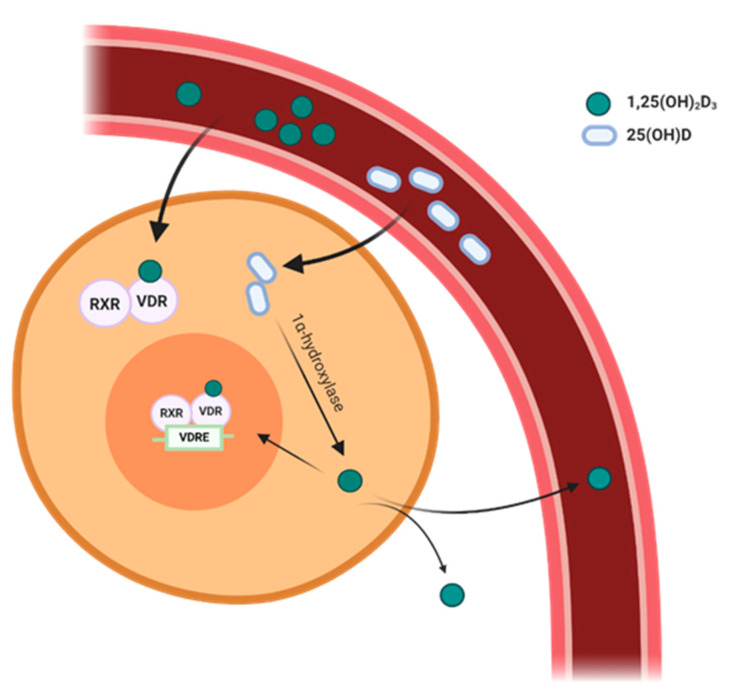
Vitamin D deficiency is the most common nutritional deficiency, affecting almost one billion people worldwide. Vitamin D is mostly known for its role in intestinal calcium absorption and bone mineralization. However, the observation of seasonal changes in blood pressure and the subsequent identification of vitamin D receptor (VDR) and 1α-hydroxylase in cardiomyocytes, as well as endothelial and vascular smooth muscle cells, implicated a role of vitamin D in the cardiovascular system. Animal studies provided compelling evidence that vitamin D signaling is essential for cardiovascular integrity, especially for the regulation of vascular tone and as an antifibrotic and antihypertrophic signaling pathway in the heart. In addition, observational studies reported an association between vitamin D deficiency and risk of hypertension, atherosclerosis, and heart failure. However, recent clinical intervention studies failed to prove the causal relationship between vitamin D supplementation and beneficial effects on cardiovascular health. In this review, we aim to highlight our current understanding of the role of vitamin D in the cardiovascular system and to find potential explanations for the large discrepancies between the outcome of experimental studies and clinical intervention trials.
Keywords: atherosclerosis; cardiovascular disease; endothelial dysfunction; heart failure; hypertension; vitamin D.
Conflict of interest statement
The authors declare no conflict of interest. The funders had no role in the design of the study; in the collection, analyses, or interpretation of data; in the writing of the manuscript, or in the decision to publish the results.
Figures
References
-
- Holick M.F., Biancuzzo R.M., Chen T.C., Klein E.K., Young A., Bibuld D., Reitz R., Salameh W., Ameri A., Tannenbaum A.D. Vitamin D2 is as effective as vitamin D3 in maintaining circulating concentrations of 25-hydroxyvitamin D. J. Clin. Endocrinol. Metab. 2008;93:677–681. doi: 10.1210/jc.2007-2308. - DOI - PMC - PubMed
-
- Shieh A., Chun R.F., Ma C., Witzel S., Meyer B., Rafison B., Swinkels L., Huijs T., Pepkowitz S., Holmquist B., et al. Effects of High-Dose Vitamin D2 Versus D3 on Total and Free 25-Hydroxyvitamin D and Markers of Calcium Balance. J. Clin. Endocrinol. Metab. 2016;101:3070–3078. doi: 10.1210/jc.2016-1871. - DOI - PMC - PubMed
Publication types
MeSH terms
Substances
LinkOut - more resources
Full Text Sources
Other Literature Sources
Medical
