


Successful implementation of a short message service (SMS) as intensive care to family communication tool
- PMID: 32900328
- PMCID: PMC10692561
- DOI: 10.1016/S1441-2772(23)00389-7
Successful implementation of a short message service (SMS) as intensive care to family communication tool
Abstract
Background: Regularly informing families of the condition of their relative can be difficult. Text messaging via mobile telephones may achieve such communication effectively.
Objective: To test the hypotheses that we could efficiently deliver real-time short message service (SMS) updates to families and that these SMS updates would be accepted and welcomed.
Design: Prospective observational study.
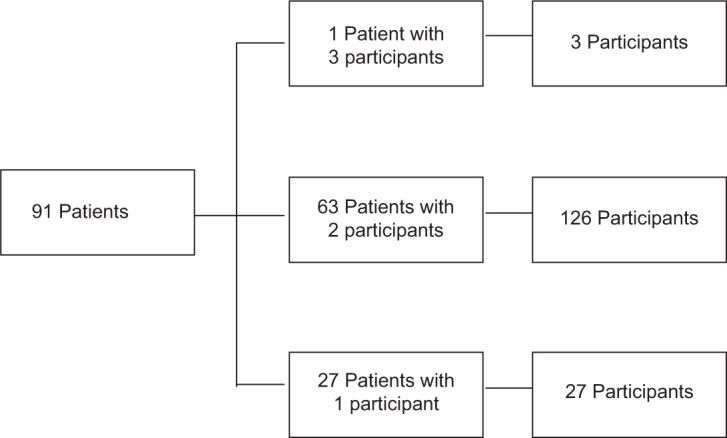
Participants: Cohort of 91 cardiac surgery patients and 156 family participants.
Intervention: At five distinct landmark events, we sent pre-written SMS updates to designated mobile numbers. We used the sendQuick (TalariaX) mobile messaging platform via the internet in our hospital. To alleviate privacy concerns, all patients were referred to as "your loved one". The message confirmed the passing of each landmark and directed the families towards the next one. After the patient's discharge, families were followed up with a telephone call and a five-point Likert scale questionnaire.
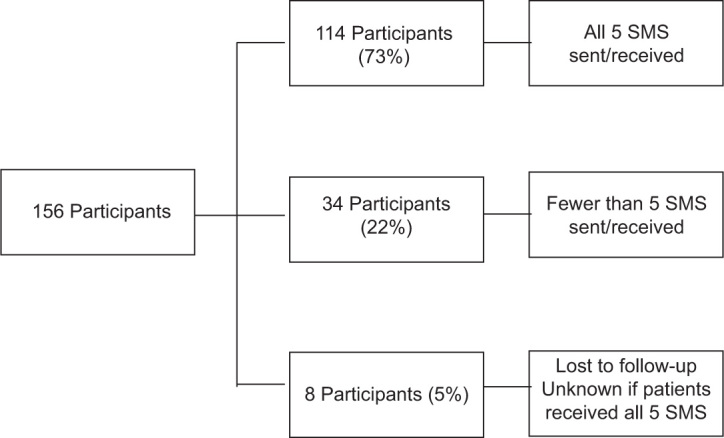
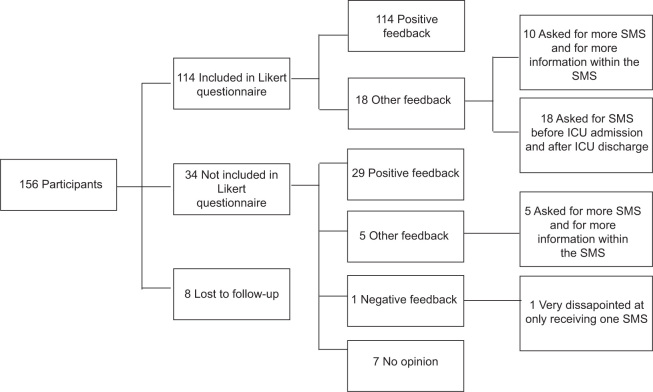
Results: We successfully sent all five SMS messages for 72 patients to 114 participants (73%). Among 114 participants, all agreed the SMS service was reassuring and that the SMS messages were easy to follow and kept participants informed. Almost all felt the SMS service did not increase anxiety and all disagreed with the SMS service being intrusive. All surveyed participants stated that they would recommend the service to other families.
Conclusion: We successfully instituted real-time SMS updates. All surveyed participants agreed that these messages were reassuring, informative and easy to follow and that they would recommend the SMS service to other families.
Conflict of interest statement
None declared.
Figures
References
-
- Kynoch K., Cabilan C.J., McArdle A. Experiences and needs of families with a relative admitted to an adult intensive care unit: a qualitative systematic review protocol. JBI Database System Rev Implement Rep. 2016;14:83–90. - PubMed
-
- Kynoch K., Chang A., Coyer F., McArdle A. The effectiveness of interventions to meet family needs of critically ill patients in an adult intensive care unit: a systematic review update. JBI Database System Rev Implement Rep. 2016;14:181–234. - PubMed
-
- Keenan A., Joseph L. The needs of family members of severe traumatic brain injured patients during critical and acute care: a qualitative study. Can J Neurosci Nurs. 2010;32:25–35. - PubMed
-
- Strandbygaard U., Thomsen S.F., Backer V. A daily SMS reminder increases adherence to asthma treatment: a three-month follow-up study. Respir Med. 2010;104:166–171. - PubMed
Publication types
MeSH terms
LinkOut - more resources
Full Text Sources
Medical
Miscellaneous
