Monoclonal antibody against H1N1 influenza virus hemagglutinin cross reacts with hnRNPA1 and hnRNPA2/B1
- PMID: 32901845
- PMCID: PMC7533452
- DOI: 10.3892/mmr.2020.11494
Monoclonal antibody against H1N1 influenza virus hemagglutinin cross reacts with hnRNPA1 and hnRNPA2/B1
Abstract
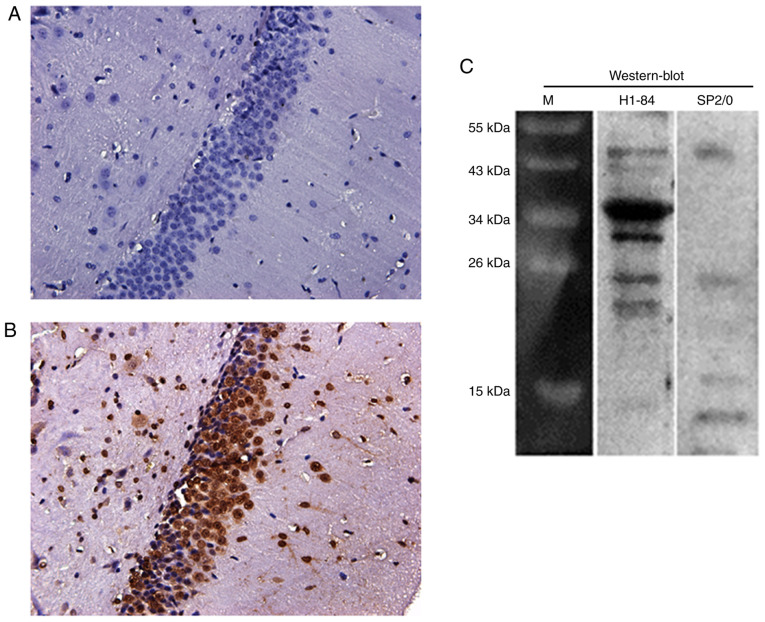
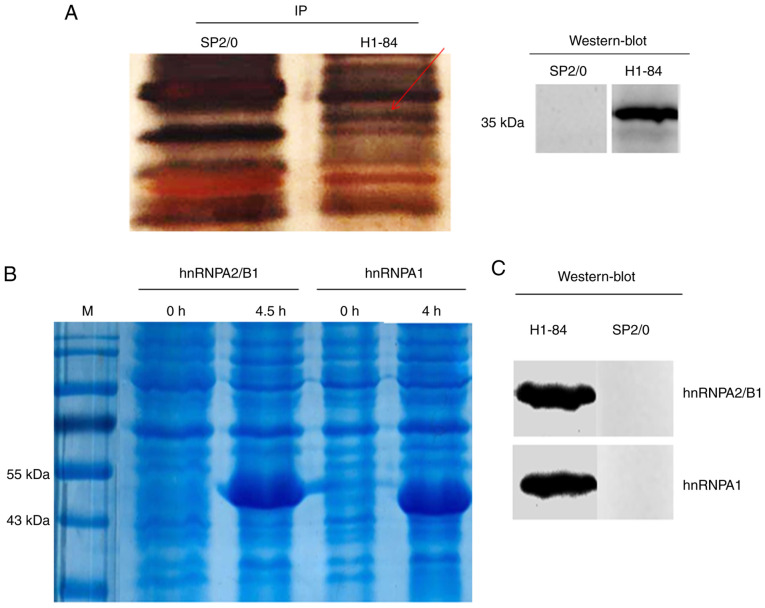
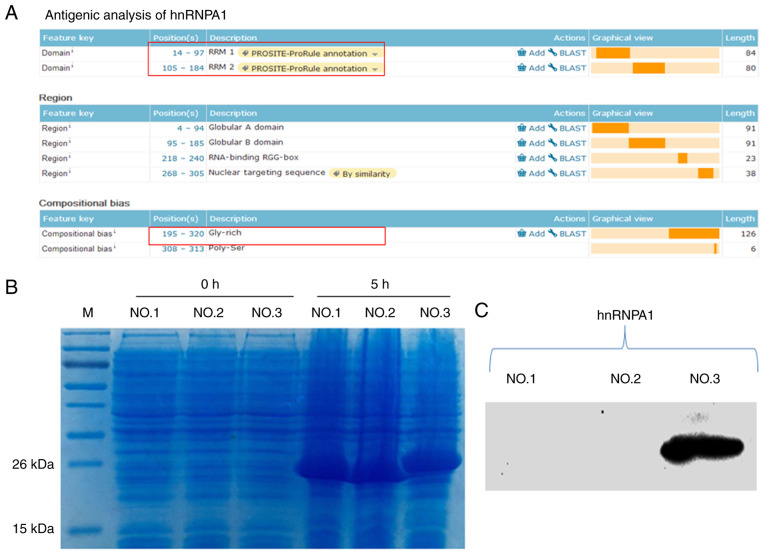
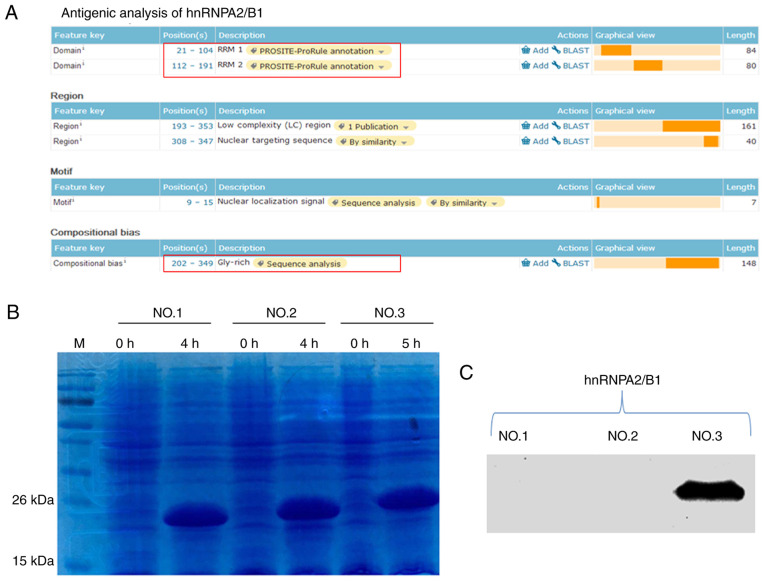
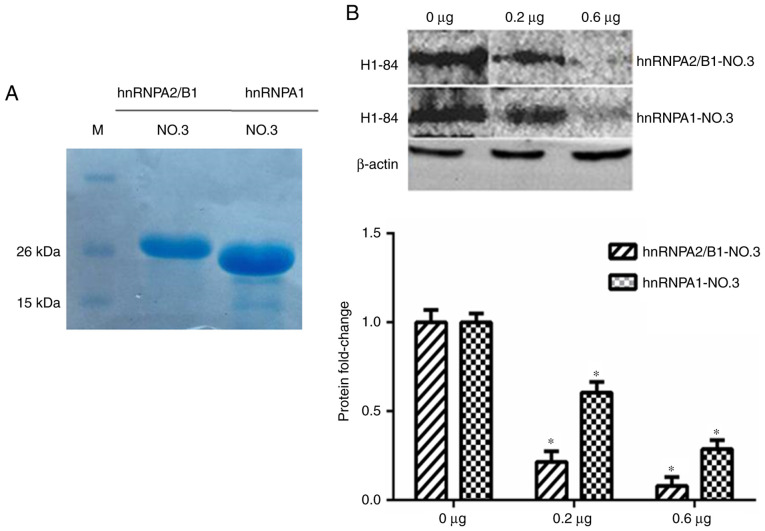
Following influenza A vaccination, certain individuals exhibit adverse reactions in the nervous system, which causes a problem with the safety of the influenza A vaccine. However, to the best of our knowledge, the underlying mechanism of this is unknown. The present study revealed that a monoclonal antibody (H1‑84mAb) against the H1N1 influenza virus hemagglutinin (HA) protein cross‑reacted with an antigen from brain tissue. Total brain tissue protein was immunoprecipitated with this cross‑reactive antibody, and mass spectrometry revealed that the bound antigens were heterogeneous nuclear ribonucleoprotein (hnRNP) A1 and hnRNPA2/B1. Subsequently, the two proteins were expressed in bacteria and it was demonstrated that H1‑84mAb bound to hnRNPA1 and hnRNPA2/B1. These two proteins were expressed in three segments and the cross‑reactivity of H1‑84mAb with the glycine (Gly)‑rich domains of hnRNPA1 (195aa‑320aa) and hnRNPA2/B1 (202aa‑349aa) was determined using ELISA blocking experiments. It was concluded that the Gly‑rich domains of these two proteins are heterophilic antigens that cross‑react with influenza virus HA. The association between the heterophilic antigen Gly‑rich domains and the safety of influenza A vaccines remains to be investigated.
Figures
References
-
- Siegers JY, van de Bildt MWG, Lin Z, Leijten LM, Lavrijssen RAM, Bestebroer T, Spronken MIJ, De Zeeuw CI, Gao Z, Schrauwen EJA, et al. Viral factors important for efficient replication of influenza A viruses in cells of the central nervous system. J Virol. 2019;93:e02273–18. doi: 10.1128/JVI.02273-18. - DOI - PMC - PubMed
-
- Ninove L, Daniel L, Gallou J, Cougard PA, Charpentier A, Viard L, Roquelaure B, Paquis-Flucklinger V, de Lamballerie X, Zandotti C, Charrel RN. Fatal case of Reye's syndrome associated with H3N2 influenza virus infection and salicylate intake in a 12-year-old patient. Clin Microbiol Infect. 2011;17:95–97. doi: 10.1111/j.1469-0691.2010.03196.x. - DOI - PubMed
MeSH terms
Substances
LinkOut - more resources
Full Text Sources
Miscellaneous