


Radiofrequency catheter ablation of premature ventricular contractions from the mitral annulus in patients without structural heart disease
- PMID: 32901968
- PMCID: PMC7756668
- DOI: 10.1111/pace.14063
Radiofrequency catheter ablation of premature ventricular contractions from the mitral annulus in patients without structural heart disease
Abstract
Introduction: We previously reported the clinical benefits of radiofrequency catheter ablation (RFCA) of premature ventricular contractions (PVCs) from the right ventricular outflow tract or near the His-bundle, which can often deteriorate the clinical status. PVCs from the mitral valve (MA-PVCs) also often deteriorate the patients' clinical status. This study aimed to evaluate the effect of ablating MA-PVCs with RFCA from a trans-interatrial septal approach on the clinical status in symptomatic patients with frequent MA-PVCs without structural heart disease.
Methods: The frequency of PVCs per the total heart beats by 24-hours Holter monitoring and New York Heart Association (NYHA) functional class in 22 patients with MA-PVCs were evaluated before and 6 months after RFCA.
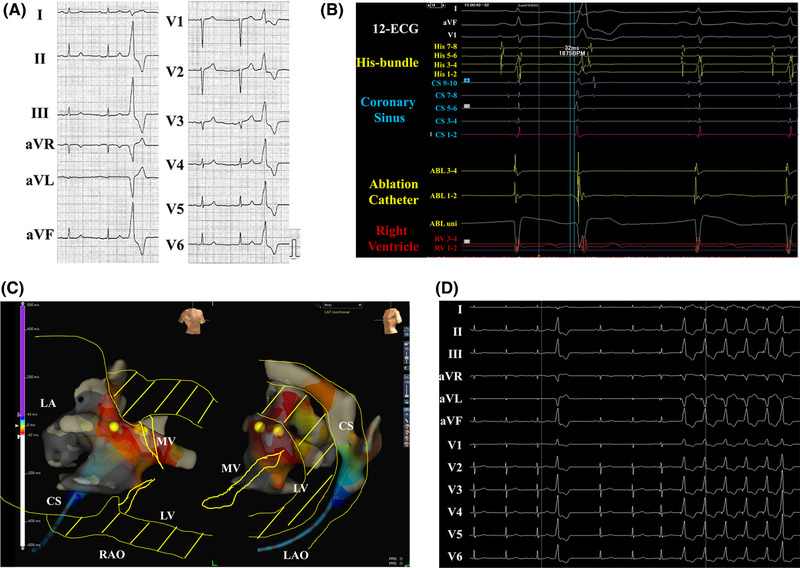
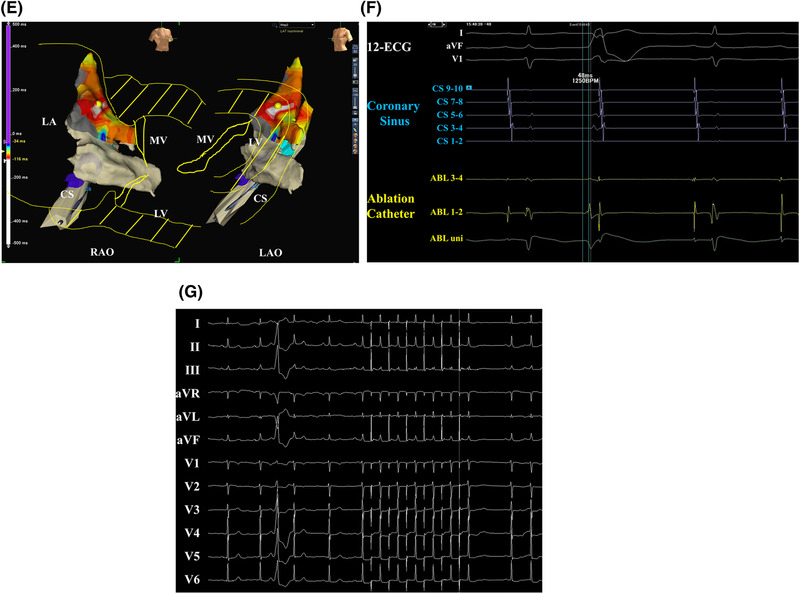
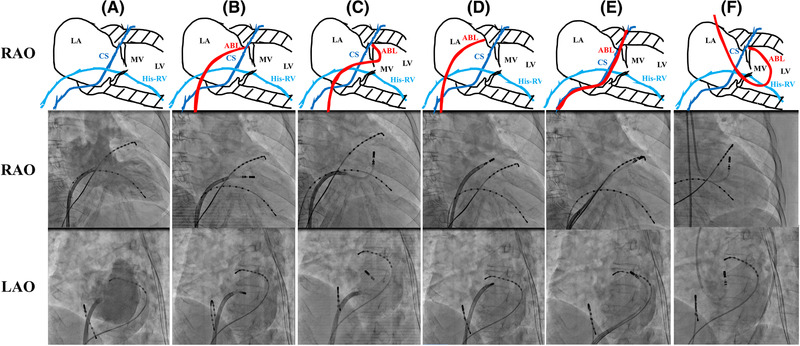
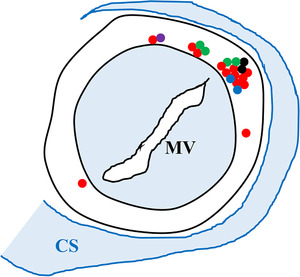
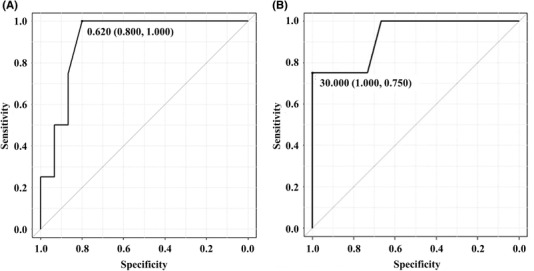
Results: Procedural success was achieved in 20 (91%) of 22 patients. Of the 22 patients, in 15 (68%) and 1 (5%) patient, a successful RFCA on the left ventricular side of the MA using the trans-interatrial septal approach and trans-coronary sinus approach was achieved. Interestingly, in four (18%) patients, a successful RFCA on the left atrial (LA) side of the MA using a trans-interatrial septal approach was achieved. Ablating MA-PVCs readily improved the NYHA functional class compared to that before. A ≥0.62 peak deflection index and ≤30 years old may be one of the important predictors of successfully ablated MA-PVCs from the LA side of the MA.
Conclusions: RFCA produces clinical benefits in patients with MA-PVCs. Further, it may be necessary to initially consider a trans-interatrial septal approach to ablate these PVCs.
Keywords: catheter ablation; clinical characteristics; clinical status; mitral annulus; premature ventricular contraction; trans-interatrial septal approach.
© 2020 The Authors. Pacing and Clinical Electrophysiology published by Wiley Periodicals LLC.
Conflict of interest statement
The authors report no relationships that could be construed as a conflict of interest.
Figures
References
-
- Takemoto M, Yoshimura H, Ohba Y, et al. Radiofrequency catheter ablation of premature ventricular complexes from right ventricular outflow tract improves left ventricular dilation and clinical status in patients without structural heart disease. J Am Coll Cardiol. 2005;45:1259‐1265. - PubMed
-
- Vasan RS, Larson MG, Benjamin EJ, Evans JC, Levy D. Left ventricular dilatation and the risk of congestive heart failure in people without myocardial infarction. N Engl J Med. 1997;336:1350‐1355. - PubMed
-
- Hachiya H, Hirao K, Sasaki T, et al. Novel ecg predictor of difficult cases of outflow tract ventricular tachycardia: peak deflection index on an inferior lead. Circ J. 2010;74:256‐261. - PubMed
MeSH terms
LinkOut - more resources
Full Text Sources
