


A New Understanding of the Mechanism of Injury to the Pelvis and Lower Limbs in Blast
- PMID: 32903553
- PMCID: PMC7438440
- DOI: 10.3389/fbioe.2020.00960
A New Understanding of the Mechanism of Injury to the Pelvis and Lower Limbs in Blast
Abstract
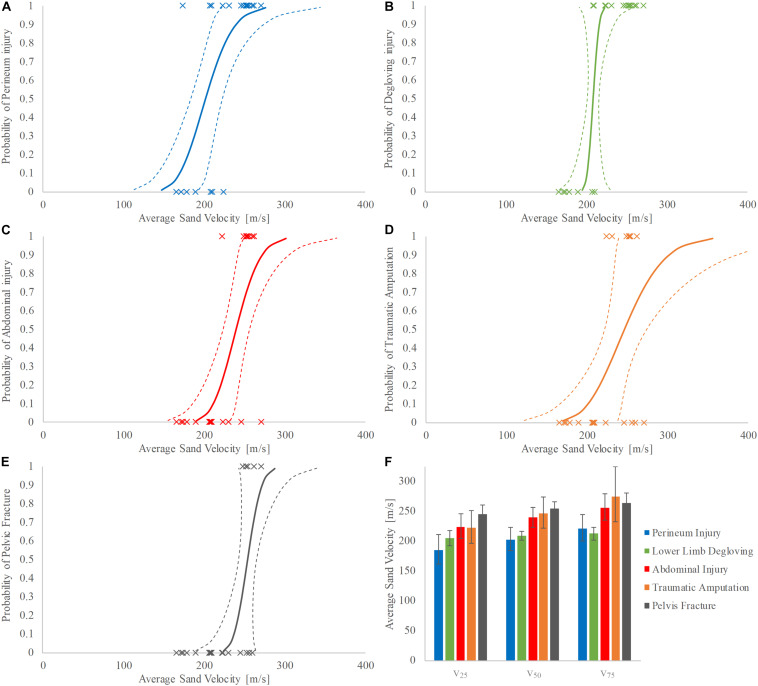
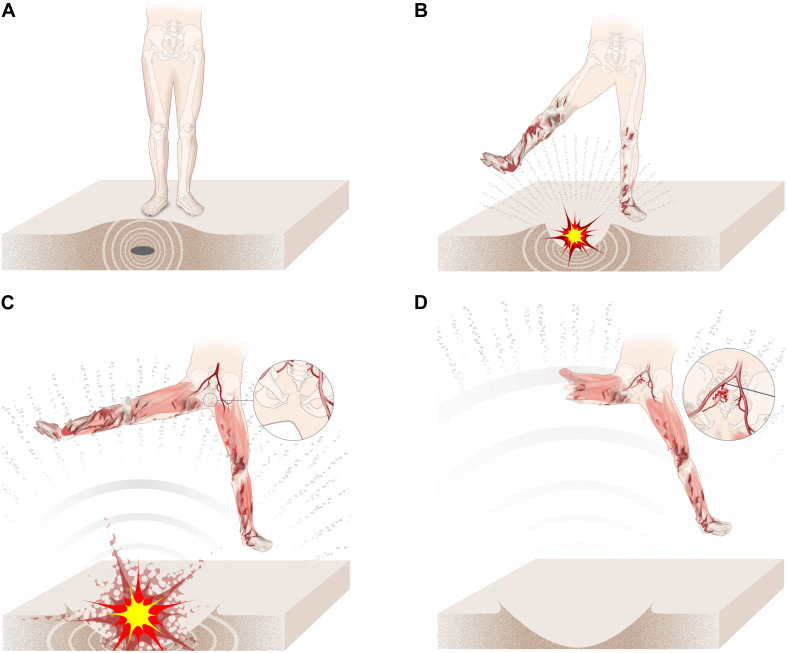
Dismounted complex blast injury (DCBI) has been one of the most severe forms of trauma sustained in recent conflicts. This injury has been partially attributed to limb flail; however, the full causative mechanism has not yet been fully determined. Soil ejecta has been hypothesized as a significant contributor to the injury but remains untested. In this study, a small-animal model of gas-gun mediated high velocity sand blast was used to investigate this mechanism. The results demonstrated a correlation between increasing sand blast velocity and injury patterns of worsening severity across the trauma range. This study is the first to replicate high velocity sand blast and the first model to reproduce the pattern of injury seen in DCBI. These findings are consistent with clinical and battlefield data. They represent a significant change in the understanding of blast injury, producing a new mechanistic theory of traumatic amputation. This mechanism of traumatic amputation is shown to be high velocity sand blast causing the initial tissue disruption, with the following blast wind and resultant limb flail completing the amputation. These findings implicate high velocity sand blast, in addition to limb flail, as a critical mechanism of injury in the dismounted blast casualty.
Keywords: biomechanics; blast injury; fracture; military; mouse; sand; soil; traumatic amputation.
Copyright © 2020 Rankin, Nguyen, Carpanen, Clasper and Masouros.
Figures
References
-
- Bowen I., Fletcher E., Richmond D. (1968). Estimate of Man’s Tolerance to the Direct Effects of Air Blast. Tech. Prog. Rep. DASA-2113. London: Def. At. Support Agency Department.
-
- Breeze J., Allanson-Bailey L. S., Hepper A. E., Midwinter M. J., Johno M. (2015). Demonstrating the effectiveness of body armour: a pilot prospective computerised surface wound mapping trial performed at the Role 3 hospital in Afghanistan. J. R. Army Med. Corps 161 36–41. - PubMed
-
- Covey D. C., Ficke J. R. (2016). “Blast and fragment injuries of the musculoskeletal system,” in Orthopedics in Disasters, eds Wolfson N., Lerner A., Roshal L. (Berlin, Heidelberg: Springer: ), 269–280. 10.1007/978-3-662-48950-5_25 - DOI
LinkOut - more resources
Full Text Sources
Research Materials
