


Clinical and Radiographic Evaluation of Pulpotomy using MTA, Biodentine and Er,Cr:YSGG Laser in primary teeth- A Clinical Study
- PMID: 32904022
- PMCID: PMC7447829
- DOI: 10.5978/islsm.20-OR-03
Clinical and Radiographic Evaluation of Pulpotomy using MTA, Biodentine and Er,Cr:YSGG Laser in primary teeth- A Clinical Study
Abstract
Background: The aim of the study was to compare the clinical and radiographic evaluation of pulpotomy using mineral trioxide aggregate (MTA), calcium silicate-based cement (Biodentine), and Er,Cr:YSGG laser in primary molars.
Materials and methods: Fifty-four primary teeth were selected for this study as per the inclusion and exclusion criteria in the age group of 4-9 years and then randomly allocated to three groups A, B & C. In group A, after removal of coronal pulp, MTA was placed at the floor of pulp chamber. In group B, calcium silicate-based cement (Biodentine) was placed at the floor of pulp chamber. In group C, decontamination of the cavity was done with Er,Cr:YSGG laser. This was followed by placement of permanent restorative material in all the groups. Clinical and radiographic success was evaluated at 3, 6 and 9 months. Data analysis was performed using Statistical Package for the Social Science-21 (SPSS-21).
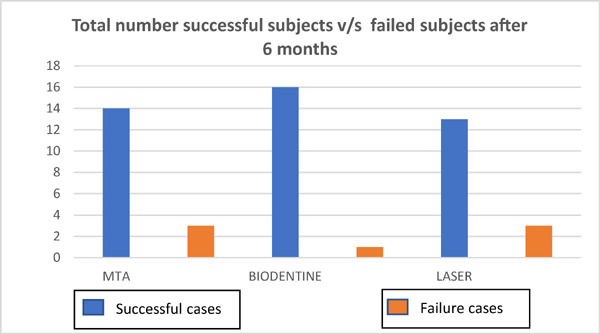
Results: At the end of 9 months, overall success rate of pulpotomy was 85.5%. There was no significant difference among the three groups (p > 0.05).
Conclusion: The study showed that the success of pulpotomy procedure is independent of the type of medicament used for pulpotomy. Moreover, the study also shows that Er,Cr:YSGG laser can be effectively used for pulpotomy procedures.
Keywords: Biodentine; Er,Cr:YSGG laser; MTA; Pulpotomy.
2020, Japan Medical Laser Laboratory.
Figures


References
-
- Parirokh M, Torabinejad M. Mineral trioxide aggregate: a comprehensive literature review—part III: clinical applications, drawbacks, and mechanism of action. J Endod. 2010. March 1;36(3):400-13. - PubMed
-
- Neelagiri NK, Geeta IB, Narayanaswamy S, Vinay CR, Aniketh TN. Direct pulp capping with a new material biodentine: a case report. J Evolution Med Dent Sci. 2015. April 27;4(34):5990-5.
LinkOut - more resources
Full Text Sources