


Lumbar and cervical viscoelastic disc replacement: Concepts and current experience
- PMID: 32904082
- PMCID: PMC7448204
- DOI: 10.5312/wjo.v11.i8.345
Lumbar and cervical viscoelastic disc replacement: Concepts and current experience
Abstract
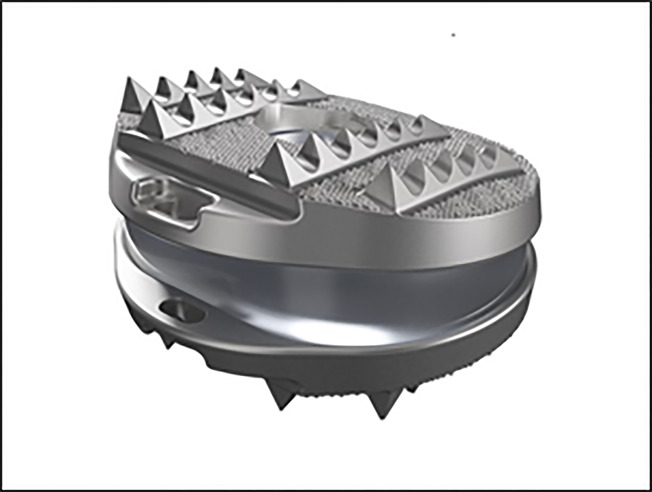
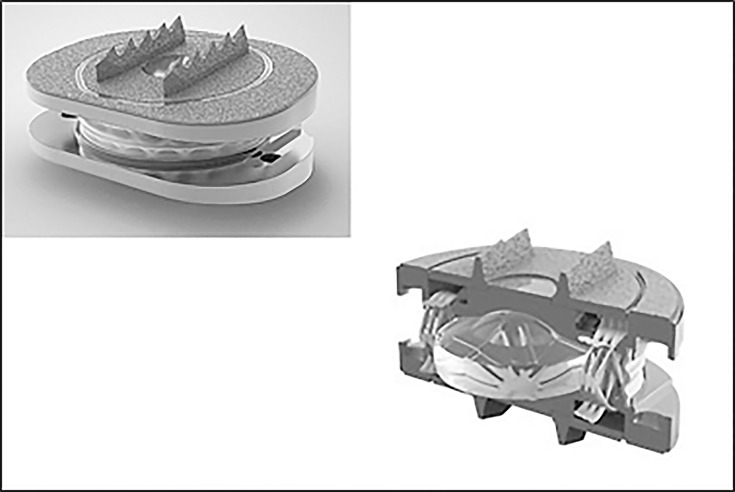
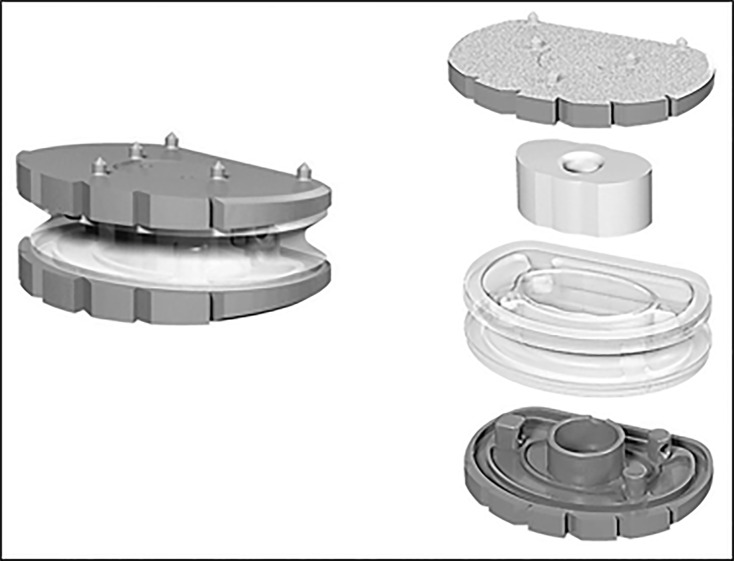
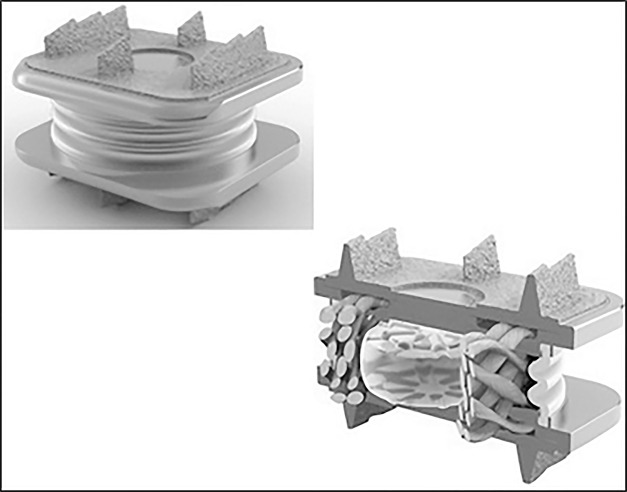
The ideal lumbar and cervical discs should provide six degrees of freedom and tri-planar (three-dimensional) motion. Although all artificial discs are intended to achieve the same goals, there is considerable heterogeneity in the design of lumbar and cervical implants. The "second generation total disc replacements" are non-articulating viscoelastic implants aiming at the reconstruction of physiologic levels of shock absorption and flexural stiffness. This review aims to give an overview of the available implants detailing the concepts and the functional results experimentally and clinically. These monobloc prostheses raise new challenges concerning the choice of materials for the constitution of the viscoelastic cushion, the connection between the components of the internal structure and the metal endplates and even the bone anchoring mode. New objectives concerning the quality of movement and mobility control must be defined.
Keywords: Cervical disc replacement; Cervical spine; Disc arthroplasty; Lumbar disc replacement; Lumbar spine; Total disc replacement; Viscoelastic.
©The Author(s) 2020. Published by Baishideng Publishing Group Inc. All rights reserved.
Conflict of interest statement
Conflict-of-interest statement: The authors declare that they have no conflict of interest.
Figures



References
-
- Abi-Hanna D, Kerferd J, Phan K, Rao P, Mobbs R. Lumbar Disk Arthroplasty for Degenerative Disk Disease: Literature Review. World Neurosurg. 2018;109:188–196. - PubMed
Publication types
LinkOut - more resources
Full Text Sources
