


COVID-19 related loneliness and sleep problems in older adults: Worries and resilience as potential moderators
- PMID: 32904342
- PMCID: PMC7455172
- DOI: 10.1016/j.paid.2020.110371
COVID-19 related loneliness and sleep problems in older adults: Worries and resilience as potential moderators
Abstract
Objectives: Older adults may experience loneliness due to social distancing and isolation during the Coronavirus disease 2019 (COVID-19) pandemic. Loneliness may further catalyze numerous poor health outcomes including impaired sleep. This study aimed to assess COVID-19 related worries and resilience as potential moderators of the loneliness-sleep problems link.
Method: In the midst of the lock-down period of COVID-19, we collected data using a web-based public platform from 243 Israeli older adults (mean age = 69.76, SD = 6.69, age range = 60-92). Participants completed measures of COVID-19 related loneliness, sleep problems, COVID-related worries, and resilience.
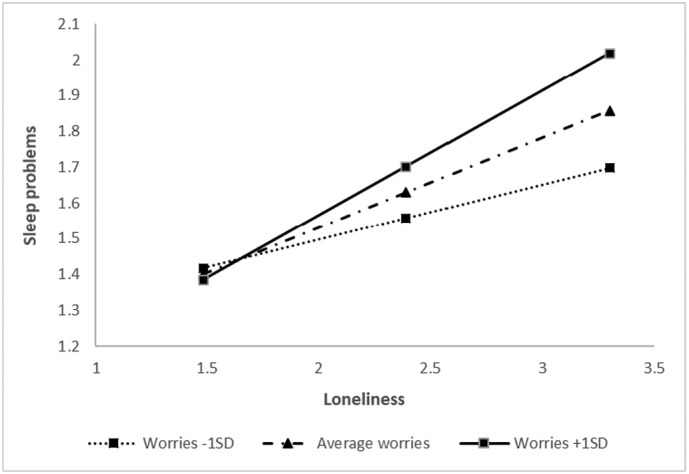
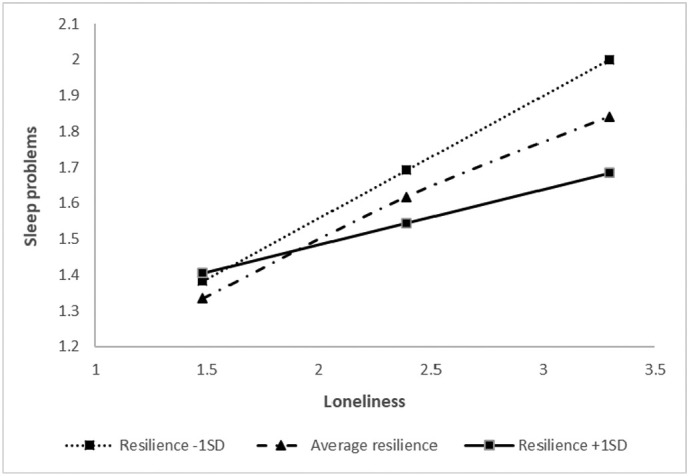
Results: COVID-19 related loneliness was related to more sleep problems. The loneliness-sleep association was especially strong among those with more COVID-19 related worries or among those with lower resilience.
Conclusion: The relationship between COVID-19 related loneliness and sleep problems is not uniform across older adults. The subjective sleep quality of those with more COVID-19 related worries or less resilience (i.e., feeling less being able to adapt to the challenging circumstances) is more susceptible to feeling lonely. Considering these variables may facilitate detection of and intervention for older adults vulnerable to aversive results in the context of COVID-19.
Keywords: COVID-19; Loneliness; Resilience; Sleep problems; Worries.
© 2020 Published by Elsevier Ltd.
Conflict of interest statement
The authors report no conflict of interest.
Figures
References
-
- Altena E., Baglioni C., Espie C.A., Ellis J., Gavriloff D., Holzinger B., Riemann D. Dealing with sleep problems during home confinement due to the COVID-19 outbreak: Practical recommendations from a task force of the European CBT-I Academy. Journal of Sleep Research. 2020;29 doi: 10.1111/jsr.13052. - DOI - PubMed
-
- Cacioppo J.T., Cacioppo S. Social relationships and health: The toxic effects of perceived social isolation. Social and Personality Psychology Compass. 2014;8:58–72. https://doi-org.mgs.ariel.ac.il/10.1111/spc3.12087 - DOI - PMC - PubMed
LinkOut - more resources
Full Text Sources
Other Literature Sources