Patellofemoral Pain Syndrome Modifies the Movement of the Rearfoot, but It Does Not Alter Plantar Pressure Distribution
- PMID: 32904777
- PMCID: PMC7458752
- DOI: 10.1055/s-0039-1698802
Patellofemoral Pain Syndrome Modifies the Movement of the Rearfoot, but It Does Not Alter Plantar Pressure Distribution
Abstract
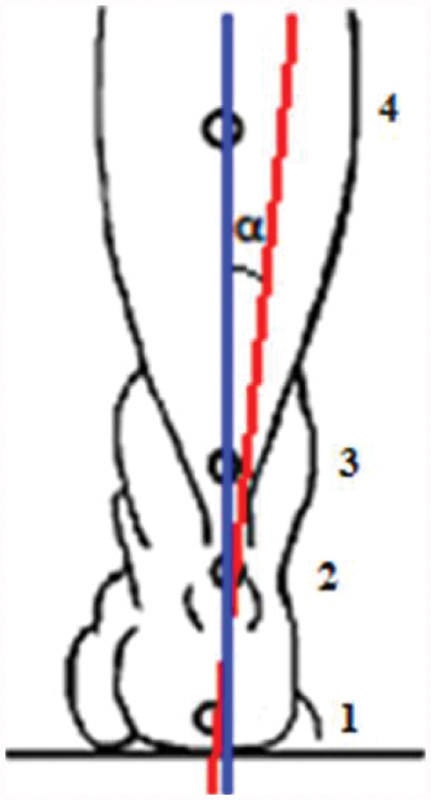
Objective To compare the plantar pressure distribution and the kinematics of the rearfoot on the stance phase of subjects with or without patellofemoral pain syndrome (PFPS). Methods A total of 26 subjects with PFPS and 31 clinically healthy subjects, who were paired regarding age, height and mass, participated in the study. The plantar pressure distribution (peak pressure) was assessed in six plantar regions, as well as the kinematics of the rearfoot (maximum eversion angle, percentage of the stance phase when the maximum angle was reached, and percentage of the stance phase in which the rearfoot was in eversion). The data were analyzed by descriptive and inferential statistics, with a significance level of p ≤ 0.05. Results The pressure on the six plantar regions analyzed and the magnitude of the maximum eversion angle of the rearfoot when walking on flat surfaces did not present differences among the subjects with PFPS. However, the PFPS subjects showed, when walking, an earlier maximum eversion angle of the rearfoot than the subjects on the control group, and stayed less time with the rearfoot in eversion. Conclusion The PFPS seems to be related to modifications on the temporal pattern on the kinematics of the rearfoot.
Keywords: biomechanical phenomena; gait; knee; patellofemoral pain syndrome.
Conflict of interest statement
Conflitos de Interesse Os autores declaram não haver conflito de interesses.
Figures


References
-
- Thijs Y, Van Tiggelen D, Roosen P, De Clercq D, Witvrouw E. A prospective study on gait-related intrinsic risk factors for patellofemoral pain. Clin J Sport Med. 2007;17(06):437–445. - PubMed
-
- Powers C M, Maffucci R, Hampton S. Rearfoot posture in subjects with patellofemoral pain. J Orthop Sports Phys Ther. 1995;22(04):155–160. - PubMed
-
- Barton C J, Levinger P, Menz H B, Webster K E. Kinematic gait characteristics associated with patellofemoral pain syndrome: a systematic review. Gait Posture. 2009;30(04):405–416. - PubMed
-
- Tiberio D. The effect of excessive subtalar joint pronation on patellofemoral mechanics: a theoretical model. J Orthop Sports Phys Ther. 1987;9(04):160–165. - PubMed
LinkOut - more resources
Full Text Sources
Medical