


Bone Metabolism in SARS-CoV-2 Disease: Possible Osteoimmunology and Gender Implications
- PMID: 32904892
- PMCID: PMC7459260
- DOI: 10.1007/s12018-020-09274-3
Bone Metabolism in SARS-CoV-2 Disease: Possible Osteoimmunology and Gender Implications
Abstract
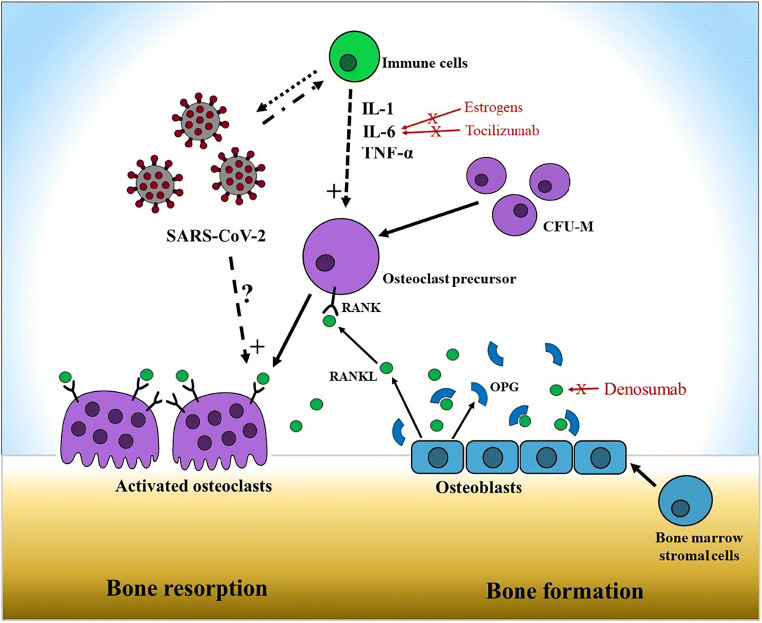
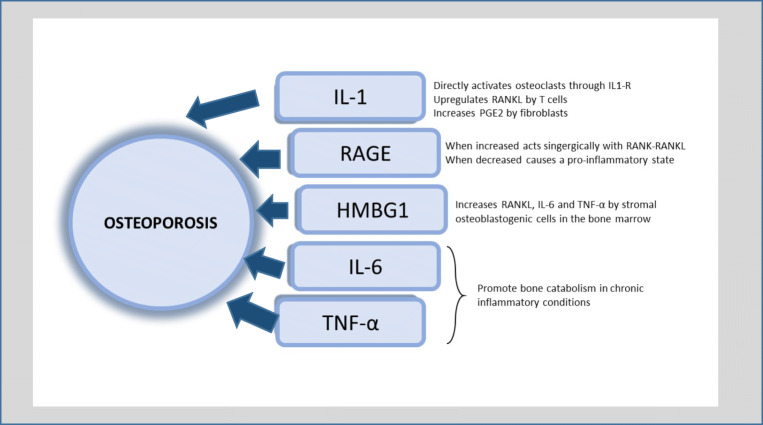
Even though inflammatory conditions are known to exert adverse effects on bone metabolism, there are no published data regarding SARS-CoV-2 infection and subsequent fracture risk. We present a brief review of the molecular mechanisms linking inflammatory diseases to increased fracture risk/osteoporosis and of the therapeutic strategies that can prevent bone resorption in patients with inflammatory disease, focusing on the RANK-RANKL system. We also make some considerations on gender differences in infection response and on their implications for survival and for the consequences of COVID-19. Several inflammatory cytokines, especially IL-1, IL-6, and TNF-α, stimulate osteoclast activity, favoring bone resorption through the RANK-RANKL system. Data from the previous SARS-CoV outbreak suggest that the present disease also has the potential to act directly on bone resorption units, although confirmation is clearly needed. Even though the available data are limited, the RANK-RANKL system may provide the best therapeutic target to prevent bone resorption after COVID-19 disease. Vitamin D supplementation in case of deficiency could definitely be beneficial for bone metabolism, as well as for the immune system. Supplementation of vitamin D in case of deficiency could be further advantageous. In COVID-19 patients, it would be useful to measure the bone metabolism markers and vitamin D. Targeting the RANK-RANKL system should be a priority, and denosumab could represent a safe and effective choice. In the near future, every effort should be made to investigate the fracture risk after SARS-CoV-2 infection.
Keywords: COVID-19; Denosumab; Fracture risk; Osteoporosis; SARS-CoV-2.
© The Author(s) 2020.
Conflict of interest statement
Conflict of InterestThe authors declare that they have no conflict of interest.
Figures
References
-
- Zhou F, Yu T, Du R, Fan G, Liu Y, Liu Z, Hiang J, Wang J, Song B, Gu X, Guan L, Wei Y, Li H, Wu X, Xu J, Tu S, Zhang Y, Chen H, Cao B. Clinical course and risk factors for mortality of adult inpatients with COVID-19 in Wuhan, China: a retrospective cohort study. Lancet. 2020;395(10229):1054–1062. doi: 10.1016/S0140-6736(20)30566-3. - DOI - PMC - PubMed
-
- Rossini M, Adami S, Bertoldo F, Diacinti D, Gatti D, Giannini S, Giusti A, Malavolta N, Minisola S, Osella G, Pedrazzoni M, Sinigaglia L, Viapiana O, Isaia GC. Guidelines for the diagnosis, prevention and management of osteoporosis. Reumatismo. 2016;68(1):1–39. doi: 10.4081/reumatismo.2016.870. - DOI - PubMed
-
- Nuti R, Commissione Intersocietaria per l’Osteoporosi SIE, SIMFER, SIMI, SIOT, SIGG, SIMG, SIOMMMS S. Linee Guida sulla gestione dell’Osteoporosi e delle Fratture da fragilità. 2017. https://www.sigg.it/wp-content/uploads/2018/05/Linee-Guida-definitive-OS.... Accessed 11 Apr 2020.
-
- Hernlund E, Svedbom A, Ivergård M, Compston J, Cooper C, Stenmark J, McCloskey EV, Jönsson G, Kanis JA. Osteoporosis in the European Union: medical management, epidemiology and economic burden: a report prepared in collaboration with the International Osteoporosis Foundation (IOF) and the European Federation of Pharmaceutical Industry Associations (EFPIA) Arch Osteoporos. 2013;8(1-2):136. doi: 10.1007/s11657-013-0136-1. - DOI - PMC - PubMed
Publication types
LinkOut - more resources
Full Text Sources
Medical
Miscellaneous