


COVID-19 Models for Hospital Surge Capacity Planning: A Systematic Review
- PMID: 32907668
- PMCID: PMC7643009
- DOI: 10.1017/dmp.2020.332
COVID-19 Models for Hospital Surge Capacity Planning: A Systematic Review
Abstract
Objective: Health system preparedness for coronavirus disease (COVID-19) includes projecting the number and timing of cases requiring various types of treatment. Several tools were developed to assist in this planning process. This review highlights models that project both caseload and hospital capacity requirements over time.
Methods: We systematically reviewed the medical and engineering literature according to Preferred Reporting Items for Systematic Reviews and Meta-Analyses (PRISMA) guidelines. We completed searches using PubMed, EMBASE, ISI Web of Science, Google Scholar, and the Google search engine.
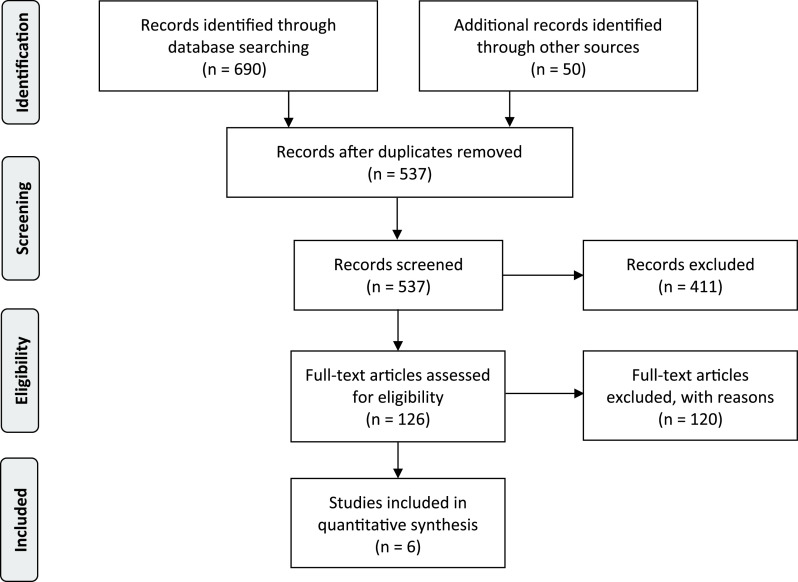
Results: The search strategy identified 690 articles. For a detailed review, we selected 6 models that met our predefined criteria. Half of the models did not include age-stratified parameters, and only 1 included the option to represent a second wave. Hospital patient flow was simplified in all models; however, some considered more complex patient pathways. One model included fatality ratios with length of stay (LOS) adjustments for survivors versus those who die, and accommodated different LOS for critical care patients with or without a ventilator.
Conclusion: The results of our study provide information to physicians, hospital administrators, emergency response personnel, and governmental agencies on available models for preparing scenario-based plans for responding to the COVID-19 or similar type of outbreak.
Keywords: COVID-19; coronavirus; hospital; pandemic; surge capacity.
Conflict of interest statement
The authors have no conflicts of interest to declare.
Figures
References
-
- World Health Organization. Statement on the second meeting of the International Health Regulations (2005) Emergency Committee regarding the outbreak of novel coronavirus (2019-nCoV). January 30, 2020. https://www.who.int/news-room/detail/30-01-2020-statement-on-the-second-.... Accessed June 8, 2020.
-
- World Health Organization. WHO Director-General’s opening remarks at the media briefing on COVID-19–11 March 2020. March 11, 2020. https://www.who.int/dg/speeches/detail/who-director-general-s-opening-re.... Accessed June 8, 2020.
-
- Center for Systems Science and Engineering (CSSE) at Johns Hopkins University (JHU). COVID-19 dashboard. June 8, 2020. https://coronavirus.jhu.edu/map.html. Accessed July 11, 2020.
-
- Ramachandran S, Kusisto L, Honan K. How New York’s coronavirus response made the pandemic worse. The Wall Street Journal June 11, 2020. https://www.wsj.com/articles/how-new-yorks-coronavirus-response-made-the.... Accessed June 12, 2020.
Publication types
MeSH terms
LinkOut - more resources
Full Text Sources
Medical
Miscellaneous
