


Infant gut microbiota characteristics generally do not modify effects of lipid-based nutrient supplementation on growth or inflammation: secondary analysis of a randomized controlled trial in Malawi
- PMID: 32908192
- PMCID: PMC7481312
- DOI: 10.1038/s41598-020-71922-x
Infant gut microbiota characteristics generally do not modify effects of lipid-based nutrient supplementation on growth or inflammation: secondary analysis of a randomized controlled trial in Malawi
Abstract
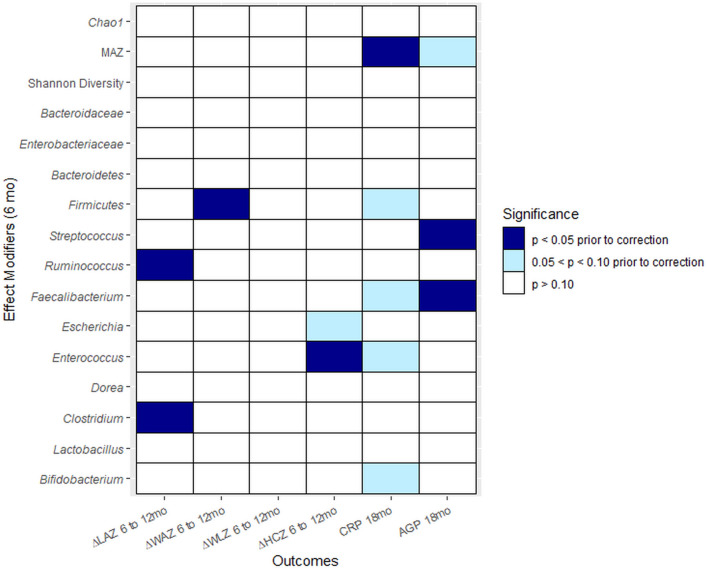
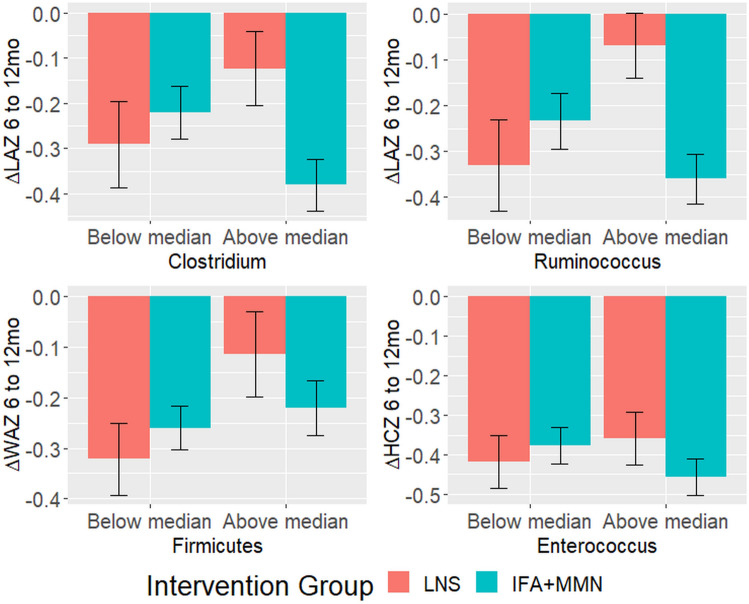
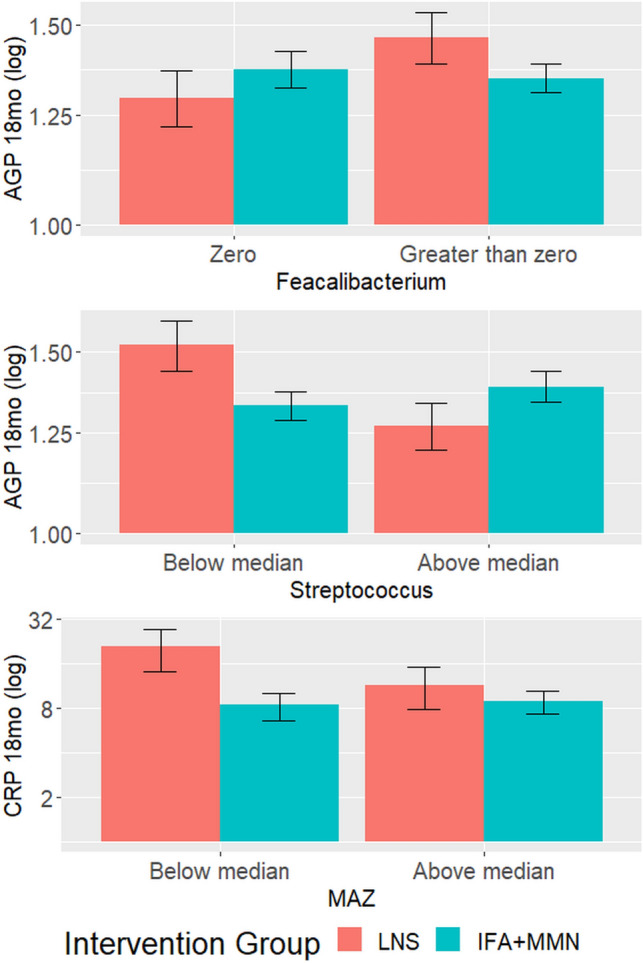
An unhealthy gut microbial community may act as a barrier to improvement in growth and health outcomes in response to nutritional interventions. The objective of this analysis was to determine whether the infant microbiota modified the effects of a randomized controlled trial of lipid-based nutrient supplements (LNS) in Malawi on growth and inflammation at 12 and 18 months, respectively. We characterized baseline microbiota composition of fecal samples at 6 months of age (n = 506, prior to infant supplementation, which extended to 18 months) using 16S rRNA gene sequencing of the V4 region. Features of the gut microbiota previously identified as being involved in fatty acid or micronutrient metabolism or in outcomes relating to growth and inflammation, especially in children, were investigated. Prior to correction for multiple hypothesis testing, the effects of LNS on growth appeared to be modified by Clostridium (p-for-interaction = 0.02), Ruminococcus (p-for-interaction = 0.007), and Firmicutes (p-for-interaction = 0.04) and effects on inflammation appeared to be modified by Faecalibacterium (p-for-interaction = 0.03) and Streptococcus (p-for-interaction = 0.004). However, after correction for multiple hypothesis testing these findings were not statistically significant, suggesting that the gut microbiota did not alter the effect of LNS on infant growth and inflammation in this cohort.
Conflict of interest statement
The authors declare no competing interests.
Figures
References
-
- Ashorn P, et al. Supplementation of maternal diets during pregnancy and for 6 months postpartum and infant diets thereafter with small-quantity lipid-based nutrient supplements does not promote child growth by 18 months of age in rural malawi: a randomized controlled trial. J. Nutr. 2015;145:1345–1353. doi: 10.3945/jn.114.207225. - DOI - PubMed
-
- Ruel, M. T., Alderman, H., Maternal & Group, C. N. S. Nutrition-sensitive interventions and programmes: how can they help to accelerate progress in improving maternal and child nutrition? The Lancet382, 536–551 (2013). - PubMed
