


Qualitative and Quantitative Comparisons of Texture Characteristics between Broiler and Jidori-niku, Japanese Indigenous Chicken Meat, Assessed by a Trained Panel
- PMID: 32908413
- PMCID: PMC7477187
- DOI: 10.2141/jpsa.0160066
Qualitative and Quantitative Comparisons of Texture Characteristics between Broiler and Jidori-niku, Japanese Indigenous Chicken Meat, Assessed by a Trained Panel
Abstract
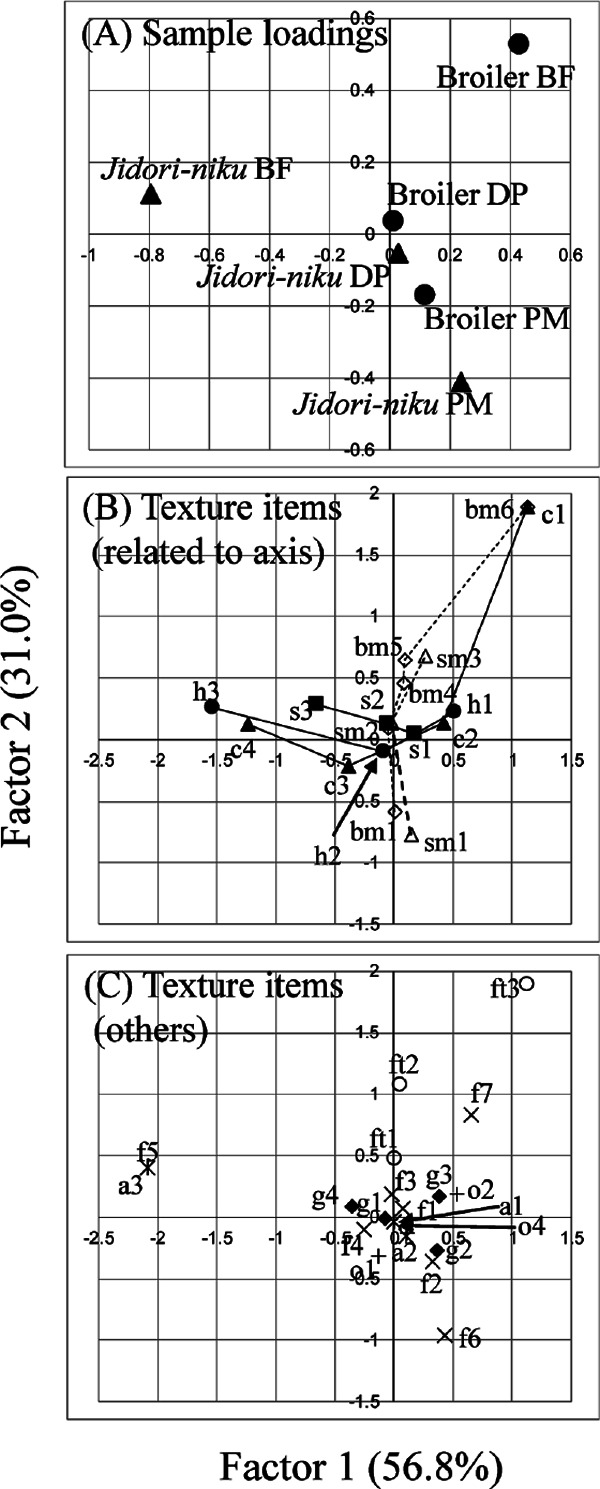
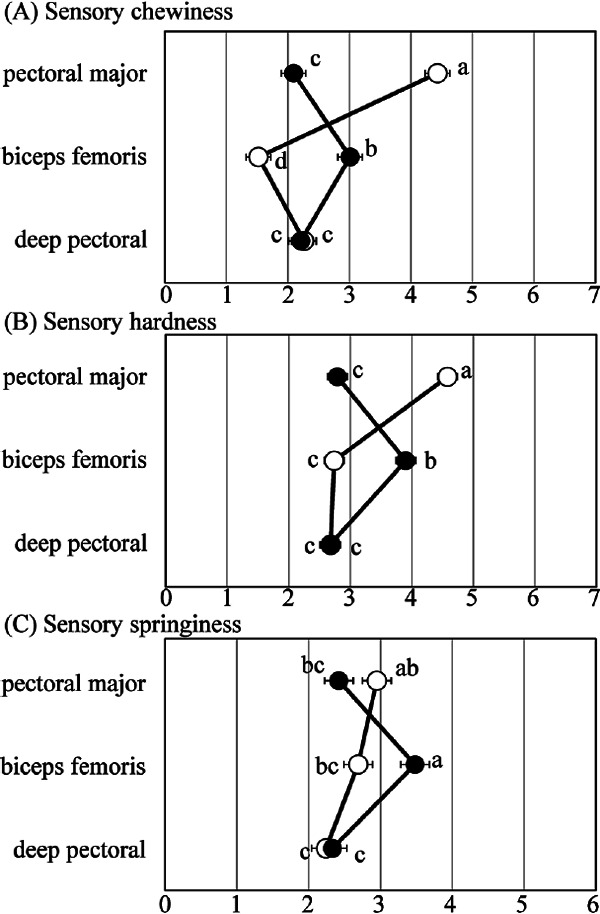
The texture of jidori-niku (Japanese indigenous native chicken meat) was characterized and compared with those of Chunky broiler chicken meat. Experiment 1: A qualitative sensory test using jidori-niku and broiler breast (pectoralis major, PM), thigh (biceps femoris, BF) and sasami (deep pectoral) meat cooked to the end-point temperature 75°C by steam-heating was administered to a trained sensory panel (n=16-17) for the selection of descriptive texture items from ISO5492 texture words. By the correspondence analysis, the characteristics of 'chewiness,' 'hardness' and 'springiness' were found to be different between jidori-niku and broiler: they likely characterize jidori-niku texture. Experiment 2: Texture characteristics in the three above-mentioned muscles in jidori-niku and broiler were compared quantitatively using the three above-mentioned texture items by the trained sensory panel. Sensory chewiness and hardness were the highest in the broiler PM and second highest in the jidori-niku BF, whereas sensory springiness was the highest in the jidori-niku BF. These results suggest that jidori-niku-like texture was characterized as a springy texture as compared to broiler meat.
Keywords: broiler; jidori-niku; sensory; springiness; texture.
2017, Japan Poultry Science Association.
Figures
References
-
- Caine WR, Aalhus JL, Best DR, Dugan MER, Jeremiah LE. Relationship of texture profile analysis and Warner-Bratzler shear force with sensory characteristics of beef rib steaks. Meat Science, 64: 333-339. 2003. - PubMed
-
- Font-i-Furnols M, Guerrero L. Consumer preference, behavior and perception about meat and meat products: An overview. Meat Science, 98: 361-371. 2014. - PubMed
-
- Fujimura S, Koga H, Takeda H, Tone N, Kadowaki M, Ishibashi T. Role of taste-active components, glutamic acid, 5′-inosinic acid and potassium ion in taste of chicken meat extract. Japanese Journal of Zootechnical Science, 67: 423-429. 1996. a.
-
- Fujimura S, Koga H, Takeda H, Tone N, Kadowaki M, Ishibashi T. Chemical compositions of pectoral meat of Japanese native chicken, Hinai-jidori, and broiler of the same and marketing age. Japanese Journal of Zootechnical Science, 67: 541-548. 1996. b
-
- Grunert KG, Bredahl L, Brunsø K. Consumer perception of meat quality and implications for product development in the meat sector – a review. Meat Science, 66: 259-272. 2004. - PubMed
LinkOut - more resources
Full Text Sources
Miscellaneous
