


Leishmania ITS1 Is Genetically Divergent in Asymptomatic and Symptomatic Visceral Leishmaniasis: Results of a Study in Southern Iran
- PMID: 32908548
- PMCID: PMC7474766
- DOI: 10.1155/2020/5351098
Leishmania ITS1 Is Genetically Divergent in Asymptomatic and Symptomatic Visceral Leishmaniasis: Results of a Study in Southern Iran
Abstract
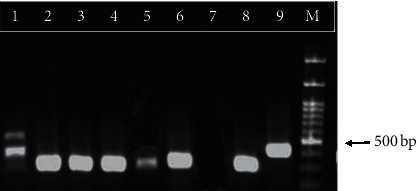
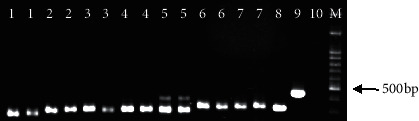
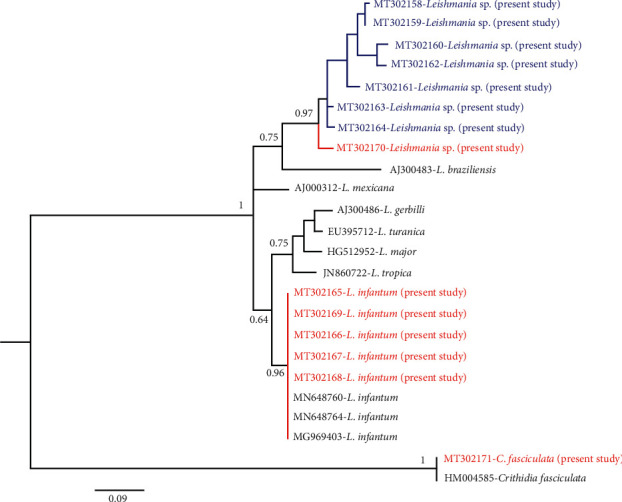
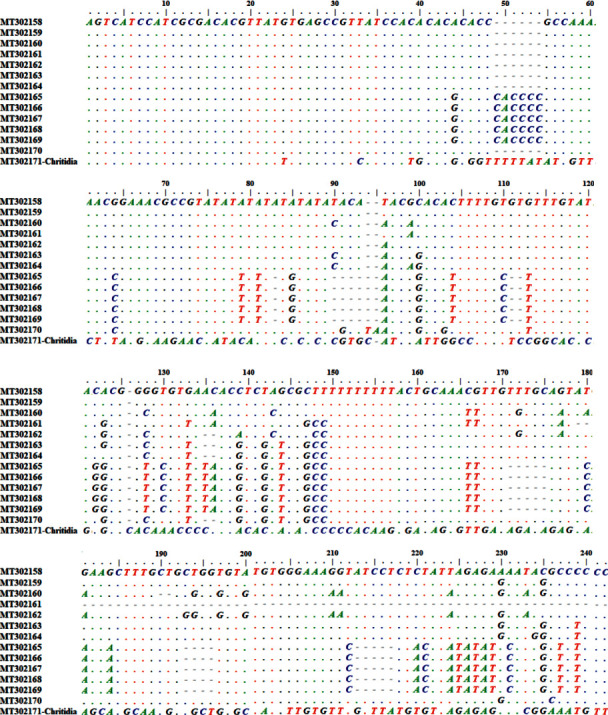
It has been documented that the genotypic traits in symptomatic and asymptomatic cases of visceral leishmaniasis (VL) may be different. The current study aimed to find out and compare the genotype and intraspecies diversity of Leishmania Internal Transcribed Spacer 1 (ITS1) from asymptomatic and symptomatic VL cases in southern Iran. Methods. Buffy coat samples from seven VL patients, with clinical signs and symptoms, and seven asymptomatic VL cases, were evaluated in this study. Samples of asymptomatic individuals were obtained from children living in a VL endemic area in southern Iran, while the samples of symptomatic subjects were obtained from patients admitted to hospitals with a diagnosis of VL. DNA was extracted from the buffy coats of the samples and PCR-amplified, targeting the ITS1of Leishmania. The PCR products were sequenced, and the consensus sequences were assembled and multiple-aligned with a set of Leishmania strains retrieved from the GenBank, using Clustal W. The phylogenetic tree was rooted, using MEGAX software, and the diversities based on haplotype and nucleotides, as well as the number of polymorphic sites, were measured using DnaSP v5.0 software. The results of ITS1 sequencing in 5 out of 7 asymptomatic VL cases showed 99.25% to 100% similarity with the Leishmania infantum ITS1 sequence (accessed number: MN648746), and one isolate was considered as just Leishmania sp. In one sample, 99.75% similarity was seen with the ITS1 sequence of Crithidia fasciculata. Of the symptomatic VL patients, the PCR product revealed a 340 bp band corresponding to L. infantum in all of the samples. By analyzing the ITS1 sequences, all seven sequences formed a clade somewhat different from other Leishmania species and considered as Leishmania sp. Haplotype and nucleotide diversity were much more prevalent in symptomatic cases where six haplotypes were seen in the ITS1 of Leishmania from symptomatic patients and only two haplotypes were observed in the samples from asymptomatic cases. The findings of the current study showed that the Leishmania ITS1 from symptomatic VL and asymptomatic cases has significant genetic differences. Besides, infection with Crithidia fasciculata was reported, for the first time, in an asymptomatic case, which deserves further study.
Copyright © 2020 Zahra Rezaei et al.
Conflict of interest statement
The authors declare no conflicts of interest.
Figures
References
-
- Alborzi A., Shahian F., Pourabbas B., Ziyaeyan M., Pouladfar G. R., Mardaneh J. Detection of Leishmania infantum kinetoplast DNA in the whole blood of asymptomatic individuals by PCR-ELISA and comparison with other infection markers in endemic areas, southern Iran. The American Journal of Tropical Medicine and Hygiene. 2008;79(6):839–842. doi: 10.4269/ajtmh.2008.79.839. - DOI - PubMed
LinkOut - more resources
Full Text Sources
