


Network Pharmacology-Based Approach to Revealing Biological Mechanisms of Qingkailing Injection against IschemicStroke: Focusing on Blood-Brain Barrier
- PMID: 32908557
- PMCID: PMC7474352
- DOI: 10.1155/2020/2914579
Network Pharmacology-Based Approach to Revealing Biological Mechanisms of Qingkailing Injection against IschemicStroke: Focusing on Blood-Brain Barrier
Abstract
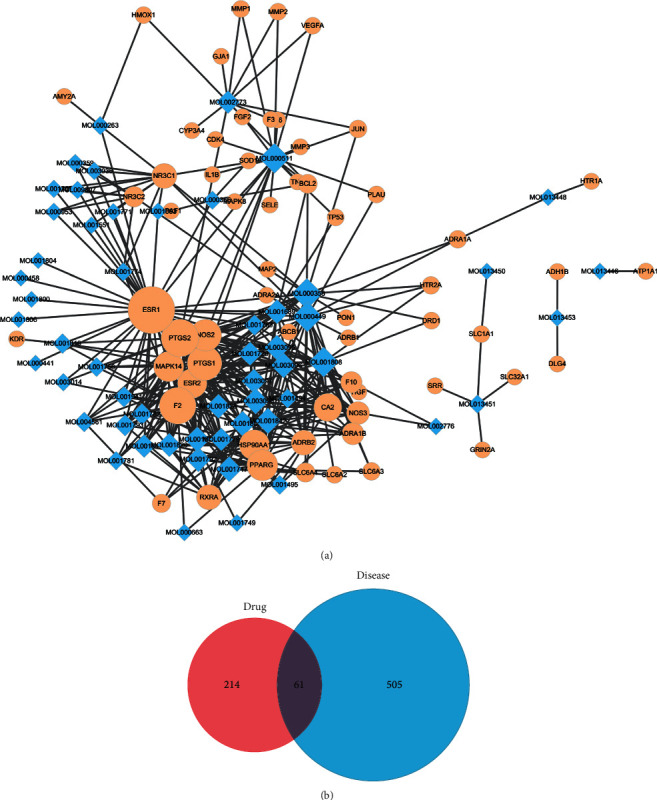
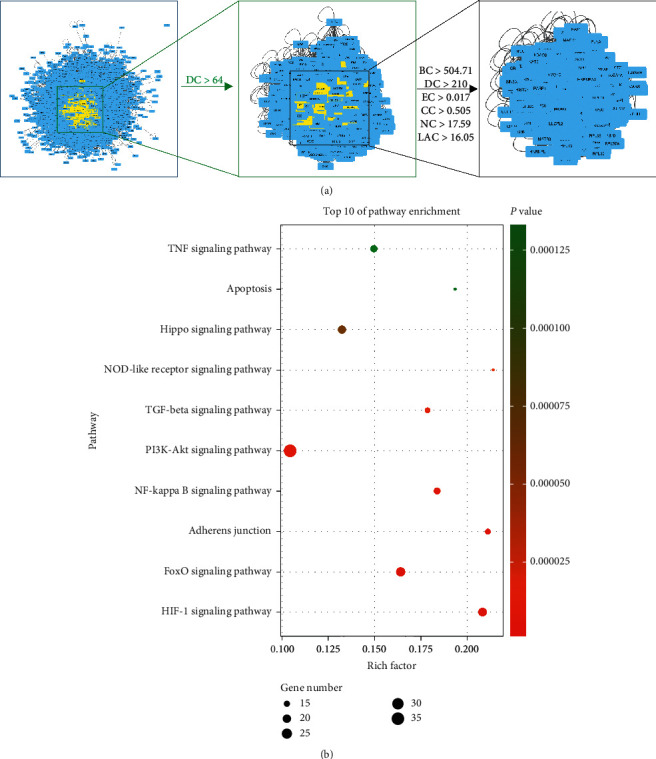
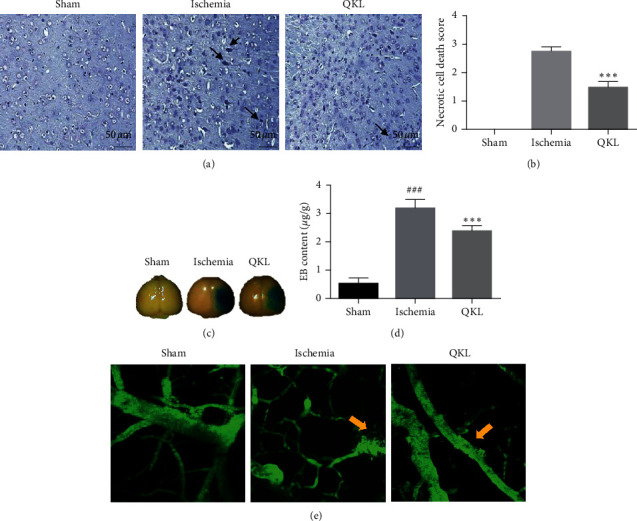
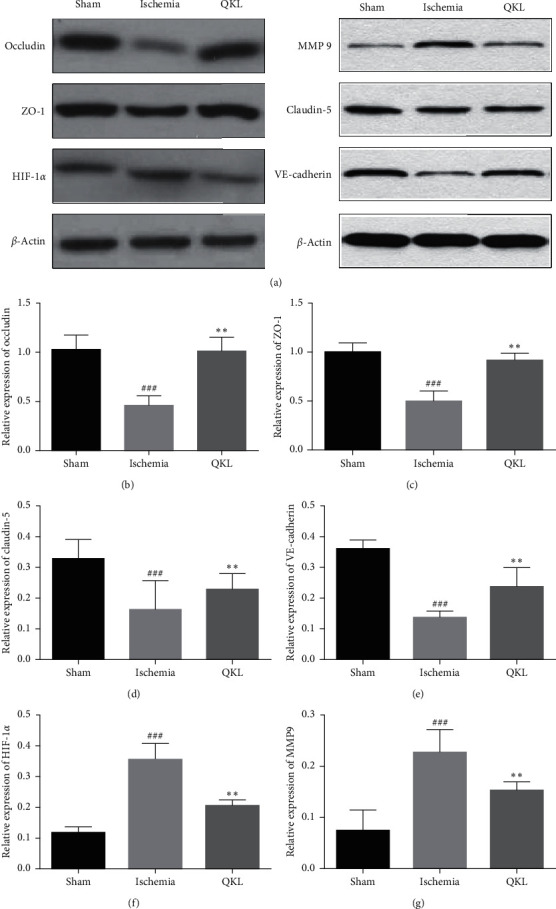
Ischemic stroke is the most common type of cerebrovascular accident worldwide. It causes long-term disability and death. Qingkailing (QKL) injection is a traditional Chinese patent medicine which has been clinically applied in the treatment of ischemic stroke for nearly thirty years. In the present study, network pharmacology combined with experimentation was used to elucidate the mechanisms of QKL. ADME screening and target prediction identified 62 active compounds and 275 targets for QKL. Topological screening of the protein-protein interaction (PPI) network was used to build a core PPI network consisting of 408 nodes and 17,830 edges. KEGG enrichment indicated that the main signaling pathway implicated in ischemic stroke involved hypoxia-inducible factor-1 (HIF-1). Experimentation showed that QKL alleviated neurological deficits, brain infraction, blood-brain barrier (BBB) leakage, and tight junction degeneration in a mouse ischemic stroke model. Two-photon laser scanning microscopy was used to evaluate BBB permeability and cerebral microvessel structure in living mice. HIF-1α, matrix metalloproteinase-9 (MMP-9), and tight junction proteins such as occludin, zonula occludins-1 (ZO-1), claudin-5, and VE-Cadherin were measured by western blotting. QKL upregulated ZO-1 and downregulated HIF-1α and MMP-9. QKL has a multiapproach, multitarget, and synergistic effect against ischemic stroke.
Copyright © 2020 Shuang Zhang et al.
Conflict of interest statement
The authors declare that the research was conducted in the absence of any commercial or financial relationships that could be construed as potential conflicts of interest.
Figures



References
-
- Benjamin E. J. Heart disease and stroke statistics-2018 update: a report from the American heart association. Circulation. 2018;137(12) - PubMed
-
- Murray C. J., Vos T., Lozano R., Naghavi M. Disability-adjusted life years (DALYs) for 291 diseases and injuries in 21 regions, 1990–2010: a systematic analysis for the global burden of disease study 2010. Lancet (London, England) 2012;380(9859):2197–2223. - PubMed
-
- SrSS Group. The national institute of neurological disorders and stroke rt-PA stroke study group tissue plasminogen activator for acute ischemic stroke. New England Journal of Medicine. 1996;333:1581–1588. - PubMed
LinkOut - more resources
Full Text Sources
Miscellaneous
