


Pharmacokinetics and Drug-Drug Interactions of Isoniazid and Efavirenz in Pregnant Women Living With HIV in High TB Incidence Settings: Importance of Genotyping
- PMID: 32909316
- PMCID: PMC8048881
- DOI: 10.1002/cpt.2044
Pharmacokinetics and Drug-Drug Interactions of Isoniazid and Efavirenz in Pregnant Women Living With HIV in High TB Incidence Settings: Importance of Genotyping
Abstract
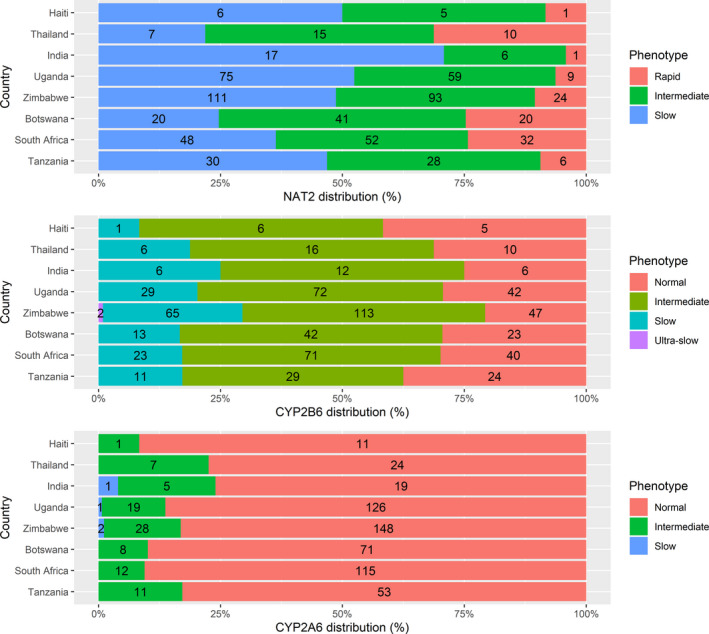
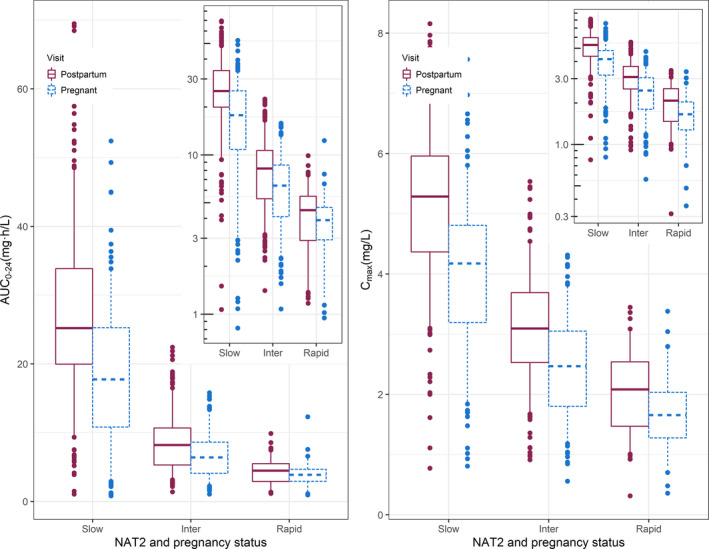
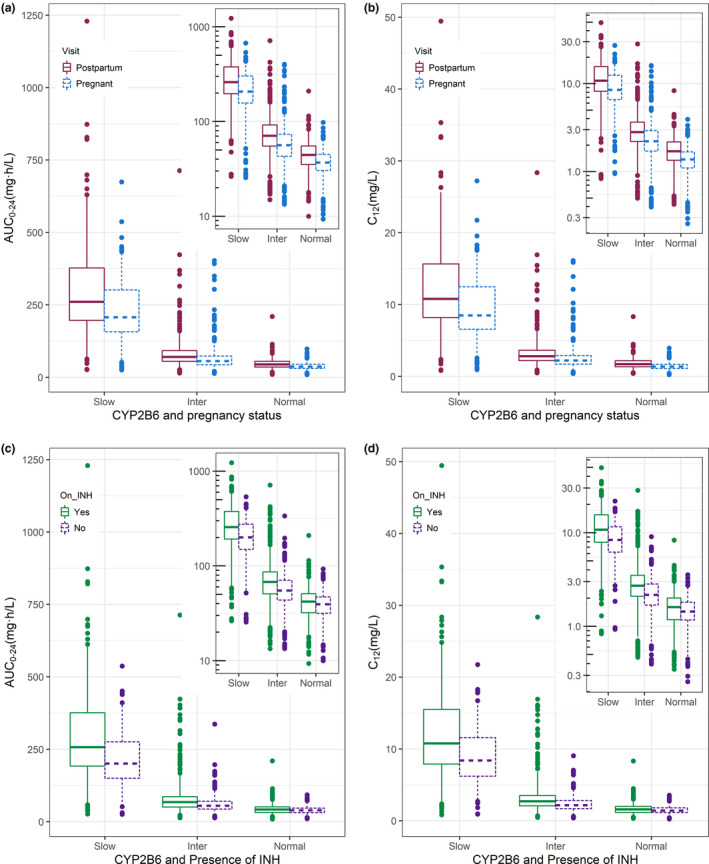
The World Health Organization guidelines recommend that individuals living with HIV receive ≥ 6 months of isoniazid preventive therapy, including pregnant women. Yet, plasma isoniazid exposure during pregnancy, in the antiretroviral therapy era, has not been well-described. We investigated pregnancy-induced and pharmacogenetic-associated pharmacokinetic changes and drug-drug interactions between isoniazid and efavirenz in pregnant women. Eight hundred forty-seven women received isoniazid for 28 weeks, either during pregnancy or at 12 weeks postpartum, and 786 women received efavirenz. After adjusting for NAT2 and CYP2B6 genotype and weight, pregnancy increased isoniazid and efavirenz clearance by 26% and 15%, respectively. Isoniazid decreased efavirenz clearance by 7% in CYP2B6 normal metabolizers and 13% in slow and intermediate metabolizers. Overall, both isoniazid and efavirenz exposures were reduced during pregnancy, but the main determinants of drug concentration were NAT2 and CYP2B6 genotypes, which resulted in a five-fold difference for both drugs between rapid and slow metabolizers.
© 2020 The Authors. Clinical Pharmacology & Therapeutics published by Wiley Periodicals LLC on behalf of American Society for Clinical Pharmacology and Therapeutics.
Conflict of interest statement
All authors declared no competing interests for this work.
Figures
References
-
- World Health Organization (WHO) . Tuberculosis Report 2017 Global (Geneva, 2017) <http://apps.who.int/bookorders>.
-
- Selwyn, P.A. et al. A prospective study of the risk of tuberculosis among intravenous drug users with human immunodeficiency virus infection. N. Engl. J. Med. 320, 545–550 (1989). - PubMed
-
- Singh, N. & Perfect, J.R. Immune reconstitution syndrome and exacerbation of infections after pregnancy. Clin. Infect. Dis. 45, 1192–1199 (2007). - PubMed
-
- World Health Organization . Latent Tuberculosis Infection Updated and Consolidated Guidelines For Programmatic Management (Geneva, 2018) <https://www.who.int/tb/publications/2018/latent‐tuberculosis‐infection/en/>. - PubMed
-
- Khoo, S.H. , Gibbons, S. , Seden, K. & Back, D.J. Systematic review: drug‐drug interactions between antiretrovirals and medications used to treat TB, malaria, hepatitis B&C and opioid dependence <https://www.who.int/hiv/topics/treatment/drug_drug_interactions_review.pdf> (2014).
Publication types
MeSH terms
Substances
Grants and funding
- R01 AI077505/AI/NIAID NIH HHS/United States
- UM1 AI068632/AI/NIAID NIH HHS/United States
- R21 MH083308/MH/NIMH NIH HHS/United States
- UM1 AI068634/AI/NIAID NIH HHS/United States
- UM1 AI069530/AI/NIAID NIH HHS/United States
- UM1 AI069399/AI/NIAID NIH HHS/United States
- UM1 AI068616/AI/NIAID NIH HHS/United States
- UM1 AI106701/AI/NIAID NIH HHS/United States
- UM1 AI069436/AI/NIAID NIH HHS/United States
- U01 AI068632/AI/NIAID NIH HHS/United States
- HHSN275201800001C/HD/NICHD NIH HHS/United States
- UM1 AI069521/AI/NIAID NIH HHS/United States
- UM1 AI069465/AI/NIAID NIH HHS/United States
- UM1 AI106716/AI/NIAID NIH HHS/United States
- U01 AI069436/AI/NIAID NIH HHS/United States
- HHSN275201800001I/HD/NICHD NIH HHS/United States
- UM1 AI068636/AI/NIAID NIH HHS/United States
LinkOut - more resources
Full Text Sources
Medical
