


Effect of Intramyocardial Grafting Collagen Scaffold With Mesenchymal Stromal Cells in Patients With Chronic Ischemic Heart Disease: A Randomized Clinical Trial
- PMID: 32910197
- PMCID: PMC7489863
- DOI: 10.1001/jamanetworkopen.2020.16236
Effect of Intramyocardial Grafting Collagen Scaffold With Mesenchymal Stromal Cells in Patients With Chronic Ischemic Heart Disease: A Randomized Clinical Trial
Abstract
Importance: Cell therapy may be helpful for cardiac disease but has been fraught with poor cell retention and survival after transplantation.
Objective: To determine whether cell-laden hydrogel treatment is safe and feasible for patients with chronic ischemic heart disease (CIHD).
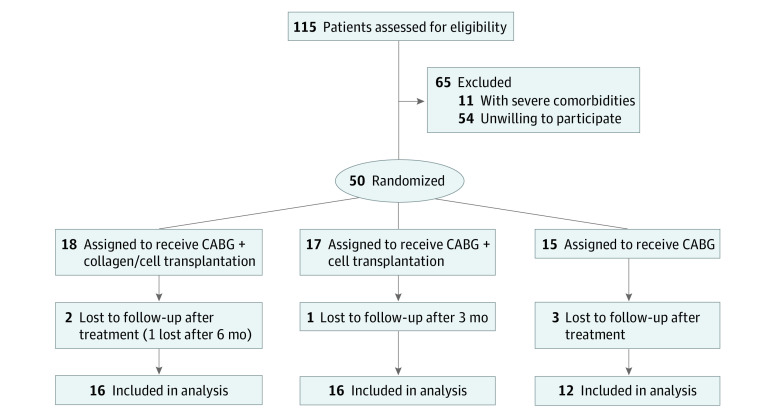
Design, setting, and participants: This randomized, double-blind clinical trial was conducted between March 1, 2016, and August 31, 2019, at a single hospital in Nanjing, China. Among 115 eligible patients with CIHD, 50 patients with left ventricular ejection fraction of 45% or less were selected to receive elective coronary artery bypass grafting (CABG) and additionally randomized to cell-plus-collagen treatment (collagen/cell group), cell treatment alone (cell group), or a control group. Sixty-five patients were excluded because of severe comorbidities or unwillingness to participate. Forty-four participants (88%) completed the study. The last patient completed 12 months of follow-up in August 2019. Analyses were prespecified and included all patients with available data.
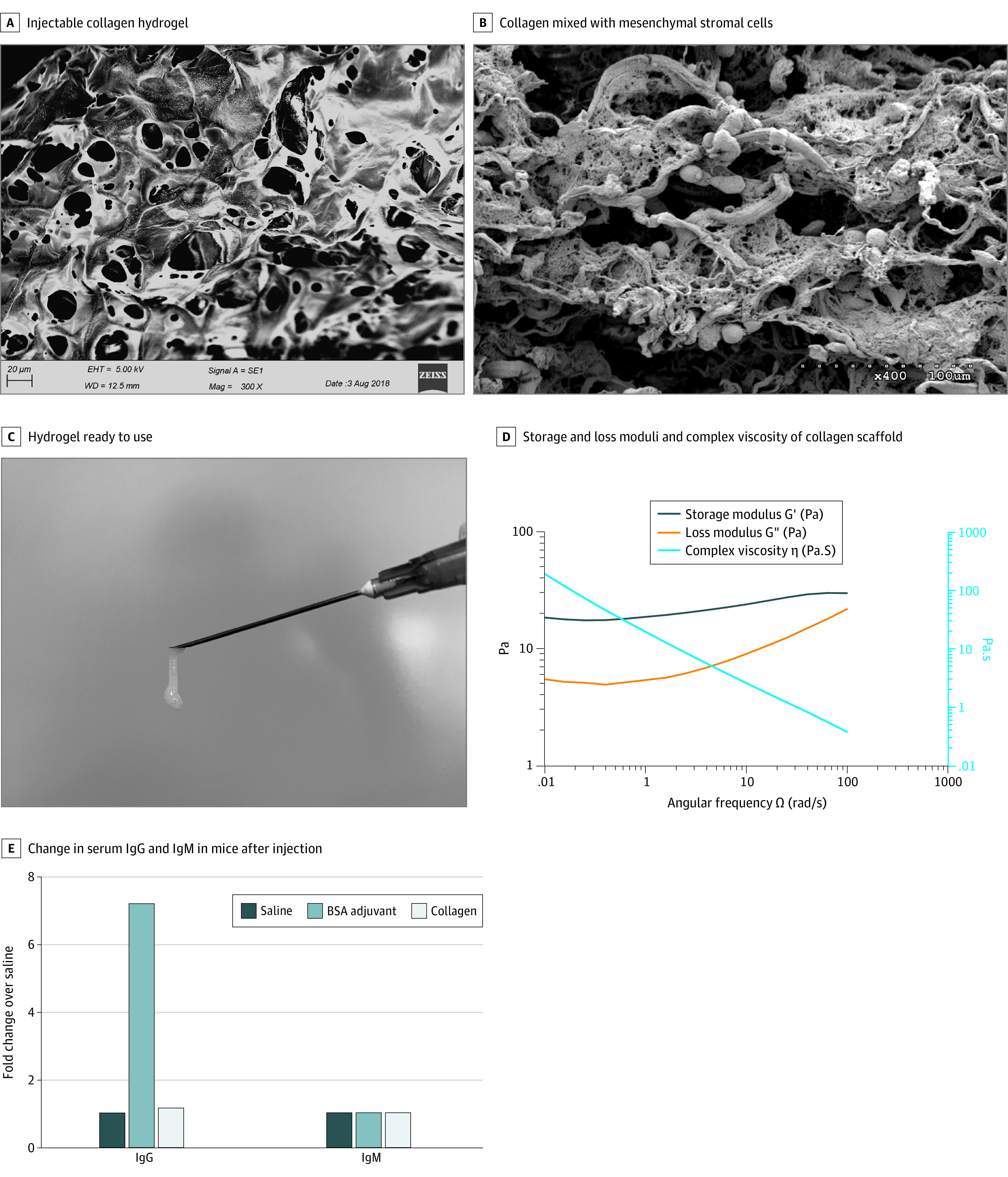
Interventions: During CABG, patients in the collagen/cell group were treated with human umbilical cord-derived mesenchymal stromal cell (hUC-MSC)-laden collagen hydrogel intramyocardial injection, and the cell group was treated with hUC-MSCs alone. Patients in the control group underwent CABG alone.
Main outcomes and measures: The primary outcome was safety of the cell-laden collagen hydrogel assessed by the incidence of serious adverse events. The secondary end point was the efficacy of treatment, according to cardiovascular magnetic resonance imaging-based left ventricular ejection fraction and infarct size.
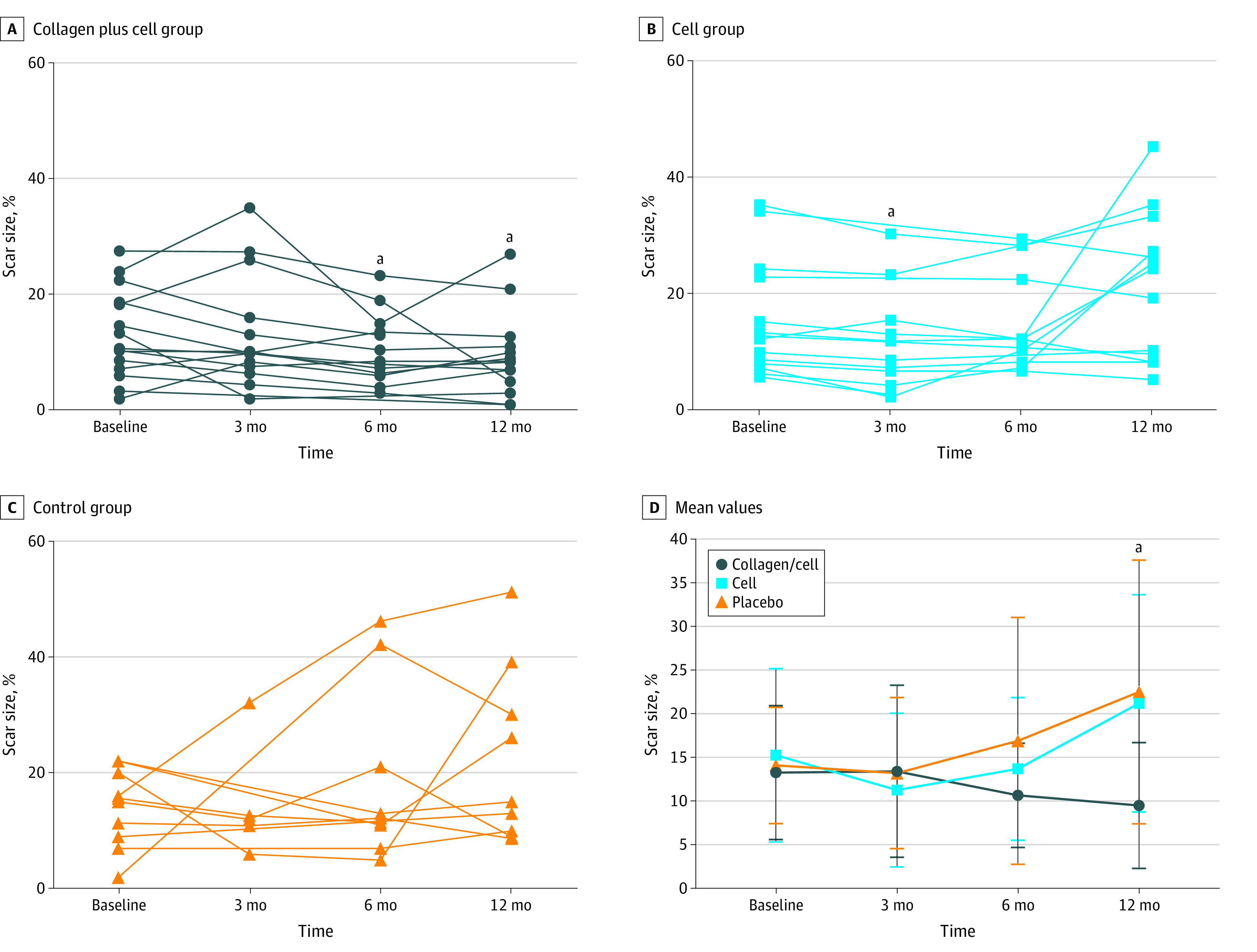
Results: Fifty patients (mean [SD] age, 62.6 [8.3] years; 38 men [76%]) were enrolled, of whom 18 were randomized to the collagen/cell group, 17 to the cell group, and 15 to the control group. Patient characteristics did not differ among groups at baseline. For the primary end point, no significant differences in serious adverse events, myocardial damage markers, and renal or liver function were observed among all groups after treatment; the collagen/cell and cell groups each had 1 case of hospitalization because of heart failure, and no serious adverse events were seen in the control group. At 12 months after treatment, the mean infarct size percentage change was -3.1% (95% CI, -6.20% to -0.02%; P = .05) in the collagen/cell group, 5.19% (-1.85% to 12.22%, P = .35) in the cell group, and 8.59% (-3.06% to 20.25%, P = .21) in the control group.
Conclusions and relevance: This study provides, to our knowledge, the first clinical evidence that the use of collagen hydrogel is safe and feasible for cell delivery. These findings provide a basis for larger clinical studies.
Trial registration: ClinicalTrials.gov Identifier: NCT02635464.
Conflict of interest statement
Figures
References
-
- Jeevanantham V, Butler M, Saad A, Abdel-Latif A, Zuba-Surma EK, Dawn B. Adult bone marrow cell therapy improves survival and induces long-term improvement in cardiac parameters: a systematic review and meta-analysis. Circulation. 2012;126(5):551-568. doi: 10.1161/CIRCULATIONAHA.111.086074 - DOI - PMC - PubMed
