


Well-being in high-risk pregnancy: an integrative review
- PMID: 32912254
- PMCID: PMC7488451
- DOI: 10.1186/s12884-020-03190-6
Well-being in high-risk pregnancy: an integrative review
Abstract
Background: A prerequisite to the interventions for well-being improvement in high-risk pregnancy (HRP) is to make the concept clear, objective, and measurable. Despite the wealth of studies into the concept of well-being in HRP, there is no clear definition for it. This study aimed to explore the concept of well-being in HRP.
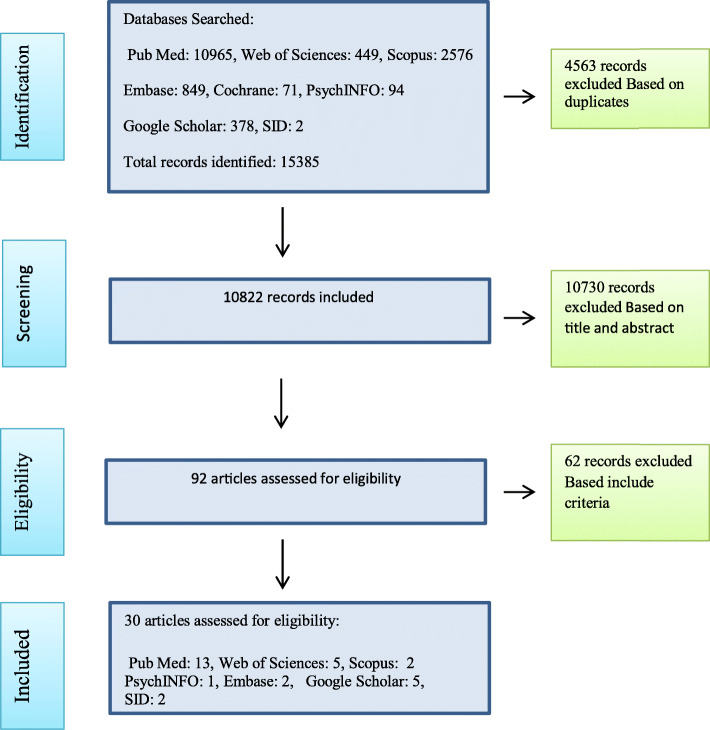
Methods: This integrative review was conducted using the Whittemore and Knafl's approach. A literature search was done without any data limitation in dictionaries, thesauruses, encyclopedias, well-being-related textbooks, midwifery, psychology, and mental health journals, and Iranian and international databases. The most primary inclusion criterion was relevance to well-being in HRP. The full-texts of all these articles were assessed using the checklists of the Joanna Briggs Institute. Data were analyzed through the constant comparison method and were managed using the MAXQDA 10 software. Meaning units were identified and coded. The codes were grouped into subcategories and categories according to the attributes, antecedents, and consequences of well-being in HRP.
Results: Thirty articles were included in the review, from which 540 codes were extracted. The codes were grouped into seven main attributes, eight main antecedents, and five main consequences of well-being in HRP. The four unique dimensions of well-being in HRP are physical, mental-emotional, social, and spiritual well-being. These dimensions differentiate well-being in HRP from well-being in low-risk pregnancy and in non-pregnancy conditions.
Conclusion: As a complex and multidimensional concept, well-being in HRP refers to the pregnant woman's evaluation of her life during HRP. It includes physical, hedonic, and eudaimonic components. The assessment of well-being in HRP should include all these components.
Keywords: High-risk pregnancy; Pregnancy; Well-being.
Conflict of interest statement
The authors declare that they have no competing interests.
References
-
- James DK, Steer PJ, Weiner CP, Gonik B, Robson SC. High-risk pregnancy: management options: Cambridge University press. 2017.
-
- Medeiros AL, Santos SR, Cabral RWL, Silva JPG, Nascimento NM. Assessing nursing diagnoses and interventions in labour and high-risk pregnancies. Rev Gaucha Enferm. 2016;37(3):e55316. - PubMed
-
- Rodrigues PB, Zambaldi CF, Cantilino A, Sougey EB. Special features of high-risk pregnancies as factors in development of mental distress: a review. Trends Psychiatry Psychother. 2016;38(3):136–140. - PubMed
-
- Oliveira DC, Mandú ENT. Women with high-risk pregnancy: experiences and perceptions of needs and care. Escola Anna Nery. 2015;19(1):93–101.
-
- Kent RA, Yazbek M, Heyns T, Coetzee I. The support needs of high-risk antenatal patients in prolonged hospitalisation. Midwifery. 2015;31(1):164–169. - PubMed
Publication types
MeSH terms
LinkOut - more resources
Full Text Sources
Medical
Research Materials
