Shoulder arthroplasty for proximal humerus fractures in the elderly: The path from Neer to Grammont
- PMID: 32913595
- PMCID: PMC7459385
- DOI: 10.4081/or.2020.8659
Shoulder arthroplasty for proximal humerus fractures in the elderly: The path from Neer to Grammont
Abstract
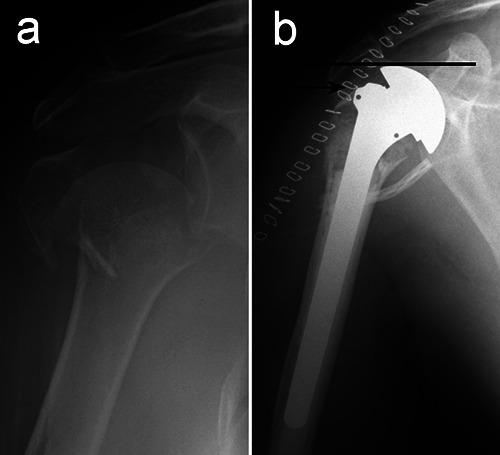
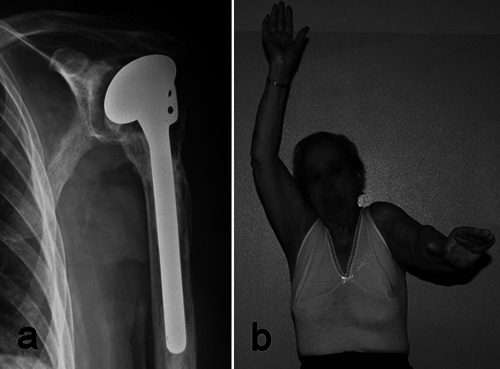
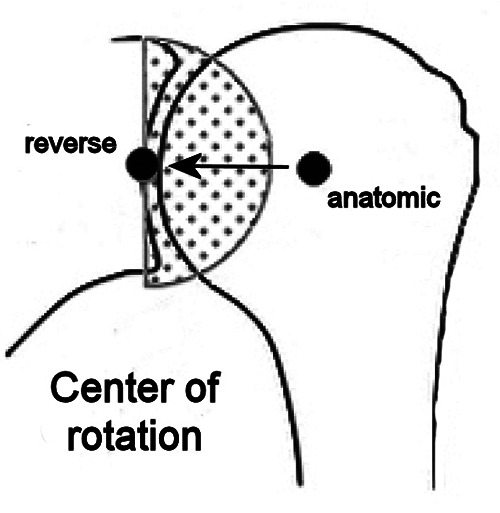
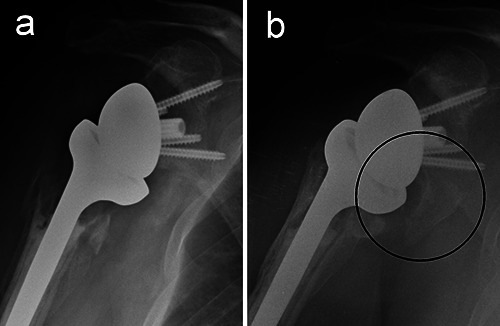
Shoulder replacement is indicated for the surgical treatment of proximal humeral fractures in elderly patients, when severe comminution and osteoporosis jeopardize the chances of success of any fixation technique. Two different implants are available for this purpose: anatomical hemiarthroplasty (HA) and reverse total shoulder arthroplasty (RTSA). HA for fractures was popularized by Charles Neer in the '50s and for several decades remained the only reliable implant for these injuries. However, many authors reported inconsistent results with HA as a consequence of the high rate of tuberosity and rotator cuff failure. In 1987, Paul Grammont designed the first successful RTSA, which was the end result of a long thought process on functional surgery of the shoulder. This implant was initially used to treat cuff tear arthropathy and shoulder pseudoparalysis, but indications have gradually expanded with time. Since RTSA does not rely on a functional cuff for shoulder elevation, it was felt that results in fractures could be improved by this prosthesis. In this study, the salient features of these implants are described to understand the rationale behind both approaches and highlight their pros and cons. Several clinical studies comparing HA vs RTSA for proximal humeral fractures have been published during the last two decades. A literature review is carried out to analyze and compare outcomes of both implants, analyzing clinical results, radiographic findings and complications. The final goal is to provide an overview of the different factors to consider for making a choice between these two prostheses.
Keywords: elderly; osteoporosis; proximal humeral fractures; reverse shoulder arthroplasty; shoulder hemiarthroplasty.
©Copyright: the Author(s).
Conflict of interest statement
Conflict of interest: The authors declare that they have no conflict of interest.
Figures
References
-
- Court-Brown CM, Caesar B. Epidemiology of adult fractures: A review. Injury 2006;37:691-7. - PubMed
-
- Calvo E, Morcillo D, Foruria AM, et al. Nondisplaced proximal humeral fractures: high incidence among outpatient-treated osteoporotic fractures and severe impact on upper extremity function and patient subjective health perception. J Shoulder Elbow Surg 2011;20:795-801. - PubMed
-
- Murray IR, Amin AK, White TO, Robinson CM. Proximal humeral fractures: current concepts in classification, treatment and outcomes. J Bone Joint Surg Br 2011;93:1-11. - PubMed
-
- Piccioli A, Maccauro G, Rossi B, et al. Surgical treatment of pathologic fractures of humerus. Injury. 2010; 41:1112-6. - PubMed
LinkOut - more resources
Full Text Sources
Miscellaneous