


Patient race and opioid misuse history influence provider risk perceptions for future opioid-related problems
- PMID: 32915023
- PMCID: PMC7490831
- DOI: 10.1037/amp0000636
Patient race and opioid misuse history influence provider risk perceptions for future opioid-related problems
Abstract
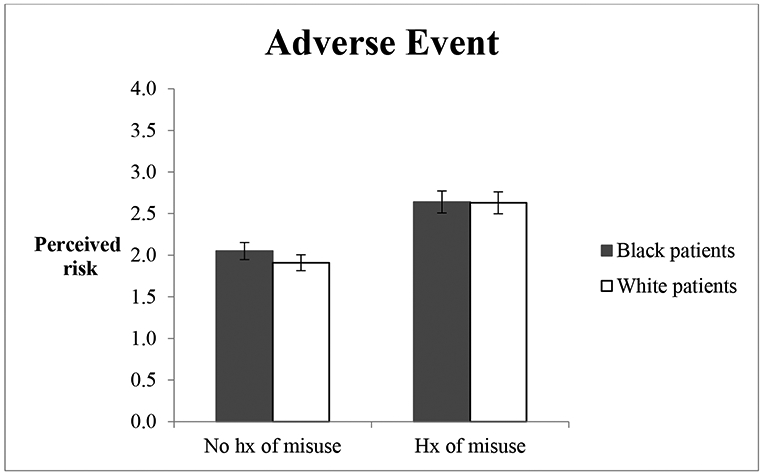
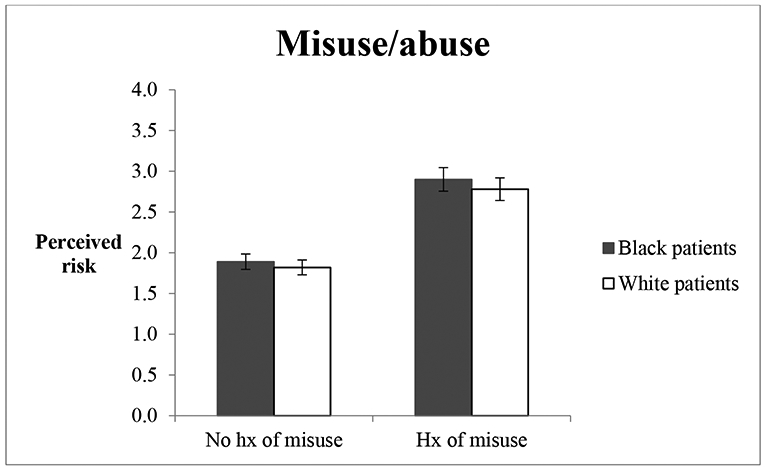
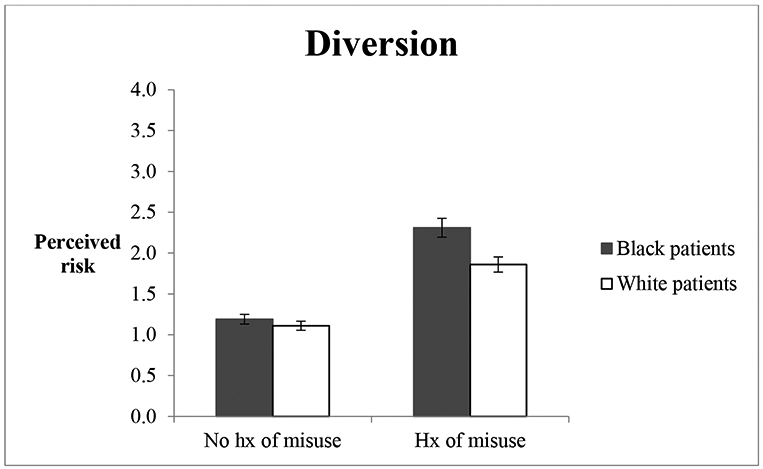
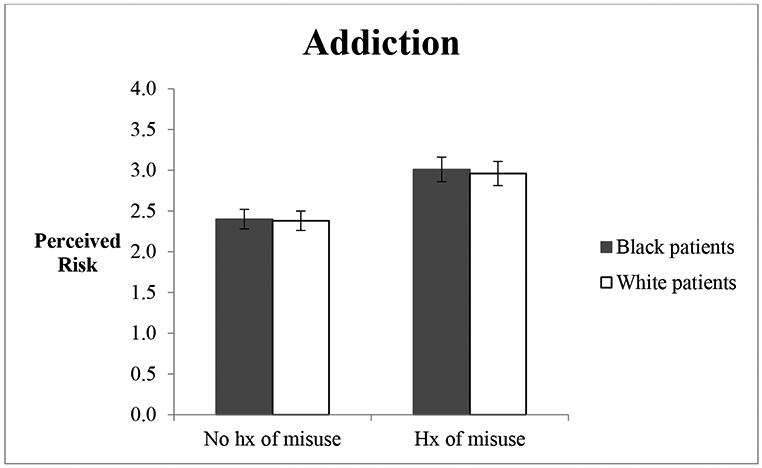
In response to the dual public health crises of chronic pain and opioid use, providers have become more vigilant about assessing patients for risk of opioid-related problems. Little is known about how providers are making these risk assessments. Given previous studies indicating that Black patients are at increased risk for suboptimal pain care, which may be related to stereotypes about drug abuse, the current study examined how patient race and previous opioid misuse behaviors impact providers' risk assessments for future prescription opioid-related problems. Physician residents and fellows (N = 135) viewed videos and read vignettes about 8 virtual patients with chronic pain who varied by race (Black/White) and history of prescription opioid misuse (absent/present). Providers rated patients' risk for future prescription opioid-related adverse events, misuse/abuse, addiction, and diversion, and also completed measures of implicit racial attitudes and explicit beliefs about race differences in pain. Two significant interactions emerged indicating that Black patients were perceived to be at greater risk for future adverse events (when previous misuse was absent) and diversion (when previous misuse was present). Significant main effects indicated that Black patients and patients with previous misuse were perceived to be at greater risk for future misuse/abuse of prescription opioids, and that patients with previous misuse were perceived to be at greater risk of addiction. These findings suggest that racial minorities and patients with a history of prescription opioid misuse are particularly vulnerable to any unintended consequences of efforts to stem the dual public health crises of chronic pain and opioid use. (PsycInfo Database Record (c) 2020 APA, all rights reserved).
Figures
References
-
- Addison J (2019, July 18). How racial inequity is playing out in the opioid crisis. Retrieved from https://www.pbs.org/newshour/health/how-racial-inequity-is-playing-out-i...
-
- Adewumi AD, Hollingworth SA, Maravilla JC, Connor JP, & Alati R (2018). Prescribed dose of opioids and overdose: a systematic review and meta-analysis of unintentional prescription opioid overdose. CNS drugs, 32(2), 101–116. - PubMed
-
- Ajzen I (2002). Perceived behavioral control, self-efficacy, locus of control, and the theory of planned behavior 1. Journal of Applied Social Psychology, 32(4), 665–683.
-
- Anderson KO, Green CR, & Payne R (2009). Racial and ethnic disparities in pain: Causes and consequences of unequal care. The Journal of Pain, 10(12), 1187–1204. - PubMed
MeSH terms
Substances
Grants and funding
LinkOut - more resources
Full Text Sources
Medical