


Emotion regulation as a transdiagnostic factor underlying co-occurring chronic pain and problematic opioid use
- PMID: 32915024
- PMCID: PMC8100821
- DOI: 10.1037/amp0000678
Emotion regulation as a transdiagnostic factor underlying co-occurring chronic pain and problematic opioid use
Abstract
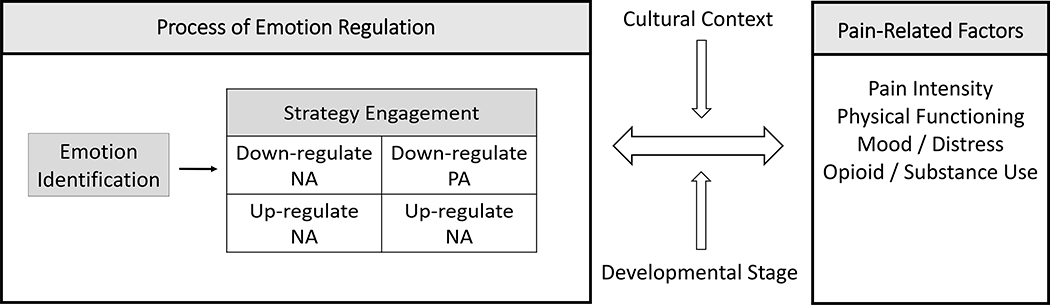
Chronic pain is a common and costly condition, and some people with chronic pain engage in problematic opioid use. There is a critical need to identify factors underlying this co-occurrence, so that treatment can be targeted to improve outcomes. We propose that difficulty with emotion regulation (ER) is a transdiagnostic factor that underlies the co-occurrence of chronic pain and problematic opioid use (CP-POU). In this narrative review, we draw from prominent models of ER to summarize the literature characterizing ER in chronic pain and CP-POU. We conclude that chronic pain is associated with various ER difficulties, including emotion identification and the up- and down-regulation of both positive and negative emotion. Little research has examined ER specifically in CP-POU; however, initial evidence suggests CP-POU is characterized by difficulties with ER that are similar to those found in chronic pain more generally. There is great potential to expand the treatment of ER to improve pain-related outcomes in chronic pain and CP-POU. More research is needed, however, to elucidate ER in CP-POU and to determine which types of ER strategies are optimal for different clinical presentations and categories of problematic opioid use. (PsycInfo Database Record (c) 2020 APA, all rights reserved).
Figures
References
-
- Abbass A, Town J, Holmes H, Luyten P, Cooper A, Russell L, … Bernier D (In Press). Short-term Psychodynamic Psychotherapy for Functional Somatic Disorders: A Meta-analysis of Randomized Controlled Trials. Psychotherapy and Psychosomatics. - PubMed
-
- Affleck G, Tennen H, Urrows S, Higgins P, & Abeles M (2000). Downward comparisons in daily life with chronic pain: Dynamic relations with pain intensity and mood. Journal of Social and Clinical Psychology, 19(4), 499–518.
-
- Affleck G, Urrows S, Tennen H, Higgins P, & Abeles M (1996). Sequential daily relations of sleep, pain intensity, and attention to pain among women with fibromyalgia. Pain, 68(2–3), 363–368. - PubMed
-
- Aldao A, Nolen-Hoeksema S, & Schweizer S (2010). Emotion-regulation strategies across psychopathology: A meta-analytic review. Clinical Psychology Review, 30(2), 217–237. - PubMed
Publication types
MeSH terms
Substances
Grants and funding
LinkOut - more resources
Full Text Sources
Medical
Miscellaneous