


Immunohistochemistry as a screening tool for NTRK gene fusions: results of a first Belgian ring trial
- PMID: 32915263
- PMCID: PMC7969564
- DOI: 10.1007/s00428-020-02921-6
Immunohistochemistry as a screening tool for NTRK gene fusions: results of a first Belgian ring trial
Abstract
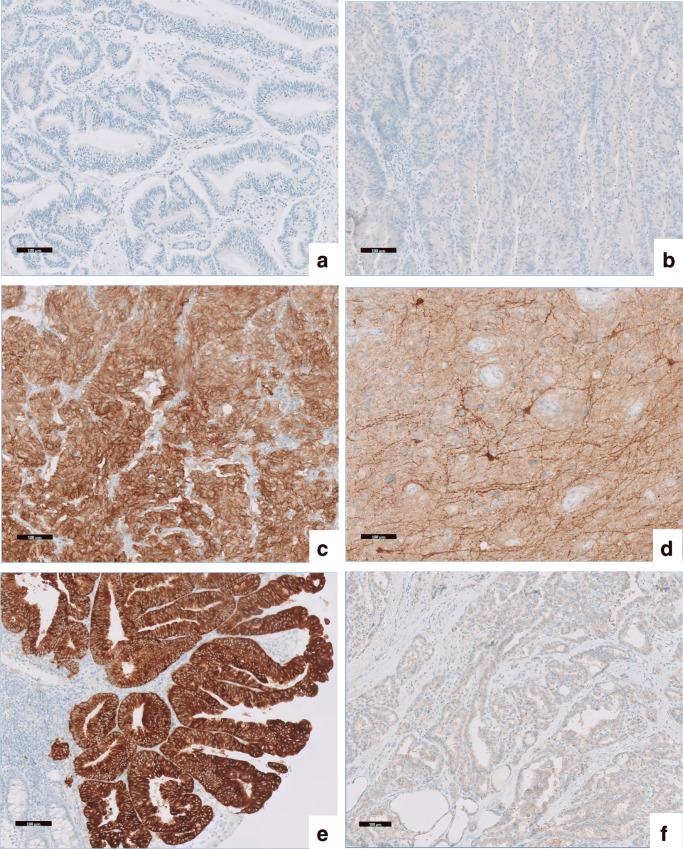
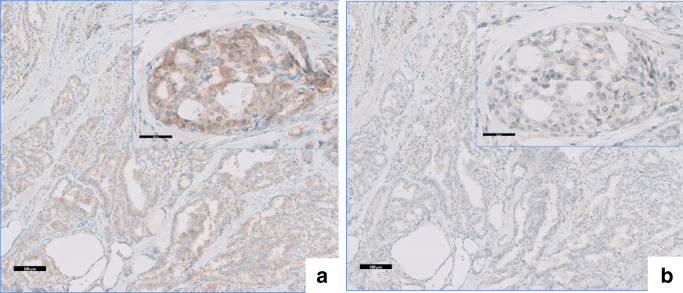
A Belgian ring trial for pan-TRK immunohistochemistry (IHC) staining was organised to harmonise pan-TRK IHC staining protocols and interpretation. As a reference method, the VENTANA pan-TRK Assay (clone EPR17341) on the Benchmark Ultra platform was selected. Six samples were selected: 2 negative, 2 fusion positive and 2 samples with wild-type endogenous TRK expression. Each participating laboratory stained the slides using their routine pan-TRK IHC and reported their results. In addition, they were asked to return one TRK-stained slide from each case. The coordinating lab evaluated these slides, compared them with the reference method and scored them. Two clones were used during the ring trial: A7H6R (Cell Signaling) and EPR17341 (Abcam/Ventana). Seven protocols achieved a sufficient performance mark, and three labs were advised to further optimise the protocol. Interpretation of pan-TRK IHC proved to be challenging in cases with physiological TRK expression. In addition, depending on the NTRK fusion partner, the staining can vary strongly in both intensity and staining pattern. Labs using the Ventana ready-to-use system based on the EPR17341 clone and using the recommended protocol settings scored best. However, given some small optimisation, all labs scored well on the technical staining and the succeeding evaluation.
Keywords: Cancer screening; Immunohistochemistry; NTRK fusions; Ring trial; TRK inhibitor.
Conflict of interest statement
Author PP received research grants from Bayer. Author BW received research grants from Bayer. The other authors, KDW, LS, SL, VS, GB, FD, ND, LH, LL, JVH, KW and KZ, declare that they have no conflict of interest.
Figures
References
Publication types
MeSH terms
Substances
LinkOut - more resources
Full Text Sources
Medical
Research Materials
Miscellaneous
