


NRG1 fusion-driven tumors: biology, detection, and the therapeutic role of afatinib and other ErbB-targeting agents
- PMID: 32916265
- PMCID: PMC8911318
- DOI: 10.1016/j.annonc.2020.08.2335
NRG1 fusion-driven tumors: biology, detection, and the therapeutic role of afatinib and other ErbB-targeting agents
Abstract
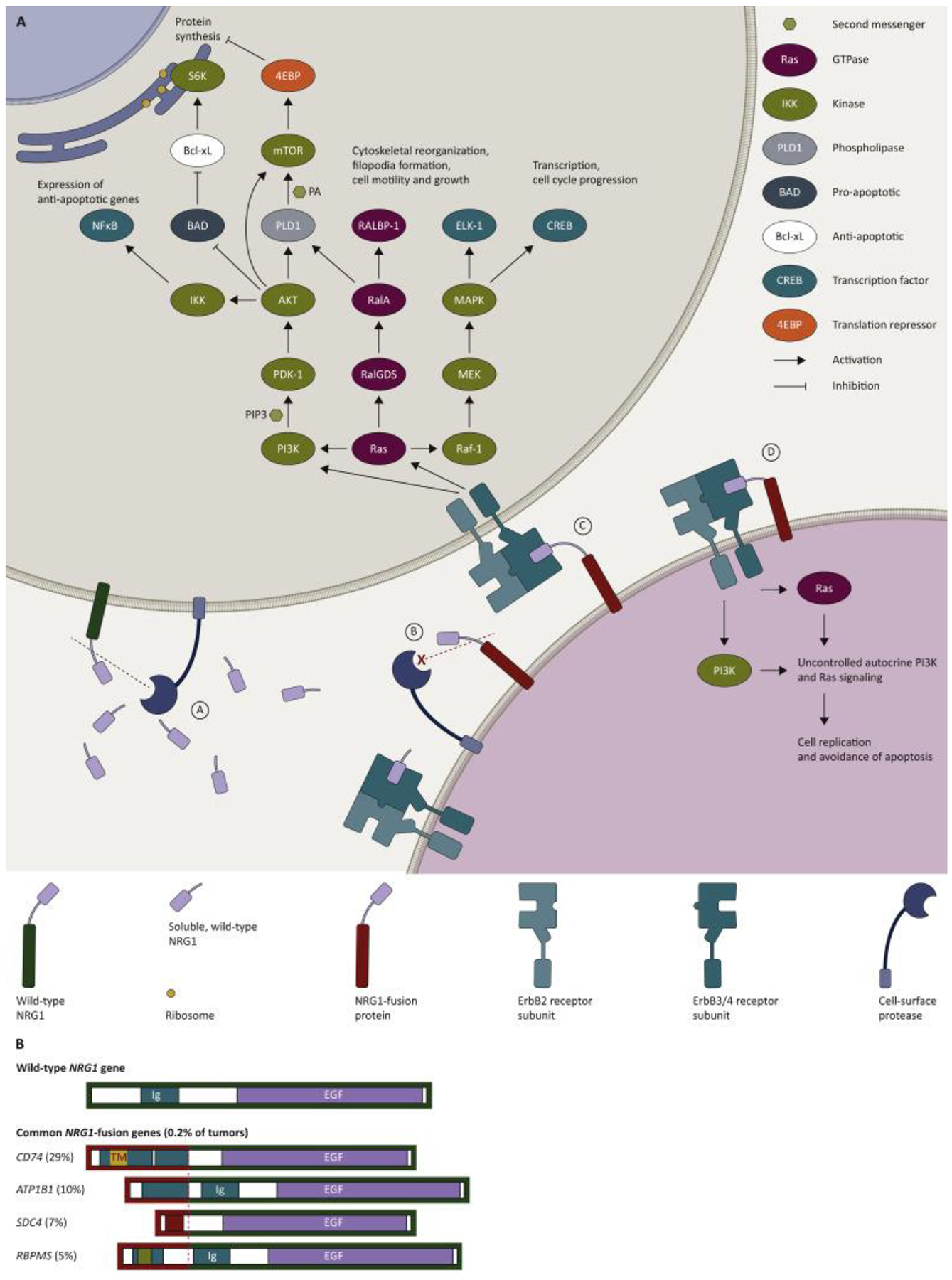
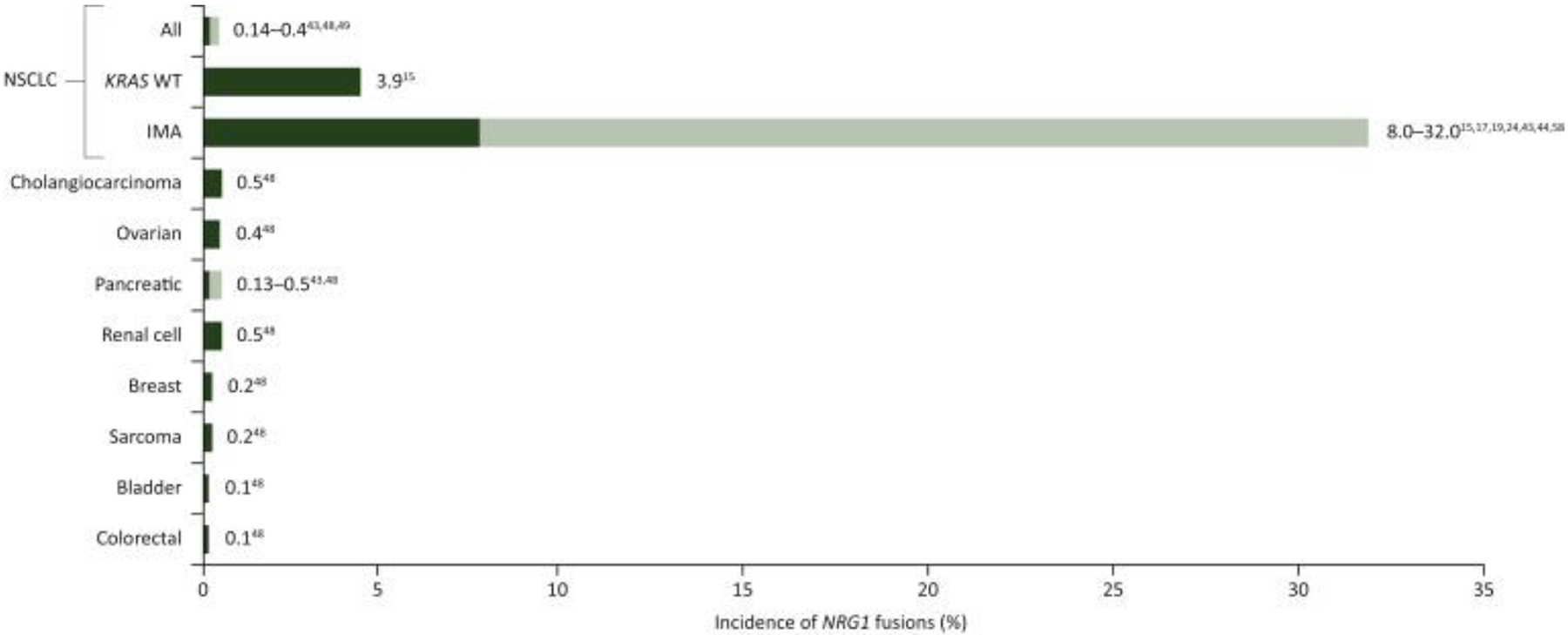
Oncogenic gene fusions are hybrid genes that result from structural DNA rearrangements, leading to deregulated activity. Fusions involving the neuregulin-1 gene (NRG1) result in ErbB-mediated pathway activation and therefore present a rational candidate for targeted treatment. The most frequently reported NRG1 fusion is CD74-NRG1, which most commonly occurs in patients with invasive mucinous adenocarcinomas (IMAs) of the lung, although several other NRG1 fusion partners have been identified in patients with lung cancer, including ATP1B1, SDC4, and RBPMS. NRG1 fusions are also present in patients with other solid tumors, such as pancreatic ductal adenocarcinoma. In general, NRG1 fusions are rare across different types of cancer, with a reported incidence of <1%, with the notable exception of IMA, which represents ≈2%-10% of lung adenocarcinomas and has a reported incidence of ≈10%-30% for NRG1 fusions. A substantial proportion (≈20%) of NRG1 fusion-positive non-small-cell lung cancer cases are nonmucinous adenocarcinomas. ErbB-targeted treatments, such as afatinib, a pan-ErbB tyrosine kinase inhibitor, are potential therapeutic strategies to address unmet treatment needs in patients harboring NRG1 fusions.
Keywords: ErbB-targeted treatment; NRG1; afatinib; gene fusion; invasive mucinous adenocarcinoma; non-small-cell lung cancer.
Copyright © 2020 The Authors. Published by Elsevier Ltd.. All rights reserved.
Conflict of interest statement
Disclosures JL reports receipt of honoraria for academic/accredited talks from Roche and AstraZeneca; membership of an advisory board and consultancy for AstraZeneca, Boehringer Ingelheim, Roche, Pfizer, and Takeda; and receipt of research grants (funds to institution) from AstraZeneca, Roche, and Eli Lilly. SVL reports membership of an advisory board and consultancy for AstraZeneca, Boehringer Ingelheim, Bristol-Myers Squibb, Catalyst, Celgene, G1 Therapeutics, Genentech/Roche, Guardant Health, Janssen, Eli Lilly, Loxo, MSD, Pfizer, PharmaMar, Regeneron, and Takeda; and receipt of research grants (funds to institution) from Alkermes, AstraZeneca, Bayer, Blueprint, Bristol-Myers Squibb, Corvus, Genentech, Eli Lilly, Lycera, Merck, Merus, Molecular Partners, Pfizer, Rain, RAPT, Spectrum, and Turning Point Therapeutics. KT reports employment with Foundation Medicine; receipt of honoraria from BMS and Merck; and receipt of research grants from AstraZeneca. PC reports membership of an advisory board and consultancy for Roche, Pfizer, AstraZeneca, Novartis, Merck, Takeda, and Bristol-Myers Squibb; and receipt of honoraria from Boehringer Ingelheim, Roche, Pfizer, Novartis, Merck, Takeda, and AstraZeneca. JC reports consulting/advisory relationship with AstraZeneca, Boehringer Ingelheim, BMS, Eli Lilly, Novartis, MSD, Pfizer, Roche, and Takeda; and receipt of research funding from AstraZeneca, Boehringer Ingelheim, Pfizer, and Novartis. MRJ reports employment with QIAGEN Inc. AD reports receipt of honoraria from and membership of an advisory board for Ignyta/Genentech/Roche, Loxo/Bayer/Eli Lilly, Takeda, Ariad, Millenium, TP Therapeutics, AstraZeneca, Pfizer, Blueprint Medicines, Helsinn, Beigene, BergenBio, Hengrui Therapeutics, Exelixis, Tyra Biosciences, Verastem, MORE Health, and AbbVie; associated research grants (funds to institution) from Pfizer, Exelixis, GlaxoSmithKline, Teva, Taiho, and PharmaMar; research grants from Foundation Medicine; royalties from Wolters Kluwer; CME honoraria from Medscape, OncLive, PeerVoice, Physicians Education Resources, Targeted Oncology, and Research to Practice; and other fees from Merck (food/beverage), Puma (food/beverage), Merus, and Boehringer Ingelheim. AC reports employment with Boehringer Ingelheim. SG reports employment with AstraZeneca as of 4 May 2020. FS reports employment with Boehringer Ingelheim RCV GmbH & Co KG. MD reports membership of an advisory council or committee for Roche, BMS, NanoString, MSD, AstraZeneca, Abbvie, Takeda, Boehringer Ingelheim, Blueprint, Merus, and Pfizer; consulting fees from Roche, BMS, MSD, AstraZeneca, Abbvie, Takeda, Boehringer Ingelheim, and Pfizer; and receipt of research grants from Novartis, NanoString, and Blueprint. The other authors have declared no conflicts of interest.
Figures
Comment in
-
Plain language summary of NRG1 fusions in cancer: current knowledge and treatment with afatinib and other drugs.Future Oncol. 2022 Aug;18(26):2865-2870. doi: 10.2217/fon-2022-0073. Epub 2022 Jul 25. Future Oncol. 2022. PMID: 35876504
References
-
- Singh VK, Coumar MS. Chronic myeloid leukemia: existing therapeutic options and strategies to overcome drug resistance. Mini Rev Med Chem. 2019;19:333–345. - PubMed
Publication types
MeSH terms
Substances
Grants and funding
LinkOut - more resources
Full Text Sources
Other Literature Sources
Medical
Research Materials
Miscellaneous
