


Rapid implementation of a mobile prone team during the COVID-19 pandemic
- PMID: 32916611
- PMCID: PMC7446722
- DOI: 10.1016/j.jcrc.2020.08.020
Rapid implementation of a mobile prone team during the COVID-19 pandemic
Abstract
Purpose: The coronavirus disease 2019 (COVID-19) is associated with high rates of acute respiratory distress syndrome (ARDS). Prone positioning improves mortality in moderate-to-severe ARDS. Strategies to increase prone positioning under crisis conditions are needed.
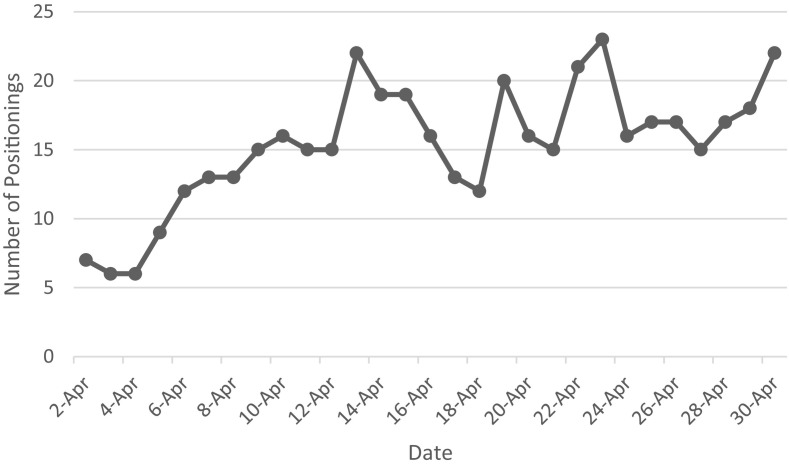
Material and methods: We describe the development of a mobile prone team during the height of the crisis in New York City and describe characteristics and outcomes of mechanically ventilated patients who received prone positioning between April 2, 2020 and April 30, 2020.
Results: Ninety patients underwent prone positioning for moderate-to-severe ARDS. Sixty-six patients (73.3%) were men, with a median age of 64 years (IQR 53-71), and the median PaO2:FiO2 ratio was 107 (IQR 85-140) prior to prone positioning. Patients required an average of 3 ± 2.2 prone sessions and the median time of each prone session was 19 h (IQR 17.5-20.75). By the end of the study period, proning was discontinued in sixty-seven (65.1%) cases due to clinical improvement, twenty (19.4%) cases due to lack of clinical improvement, six (5.8%) cases for clinical worsening, and ten (9.7%) cases due to a contraindication.
Conclusion: The rapid development of a mobile prone team safely provided prone positioning to a large number of COVID-19 patients with moderate-to-severe ARDS.
Keywords: Acute respiratory distress syndrome (ARDS); Coronavirus disease 2019 (COVID-19); Prone positioning.
Copyright © 2020 Elsevier Inc. All rights reserved.
Conflict of interest statement
Declaration of Competing Interest Dr. Brodie receives research support from ALung Technologies, he was previously on their medical advisory board. He has been on the medical advisory boards for Baxter, BREETHE, Xenios and Hemovent. Patrick Ryan reports honorarium from Mölnlycke Health Care. The other authors report no other conflicts of interest.
Figures
References
-
- Bellani G., Laffey J.G., Pham T., Fan E., Brochard L., Esteban A. Pesenti a, Investigators LS, group ET. Epidemiology, patterns of care, and mortality for patients with acute respiratory distress syndrome in intensive care units in 50 countries. JAMA. 2016;315:788–800. - PubMed
-
- Guerin C., Beuret P., Constantin J.M., Bellani G., Garcia-Olivares P., Roca O. Mercat a, investigators of the Apronet study group tRNtRrdlSFdA-R, the ETG. A prospective international observational prevalence study on prone positioning of ARDS patients: the APRONET (ARDS prone position Network) study. Intensive Care Med. 2018;44:22–37. - PubMed
-
- Guerin C., Reignier J., Richard J.C., Beuret P., Gacouin A., Boulain T. Prone positioning in severe acute respiratory distress syndrome. N Engl J Med. 2013;368:2159–2168. - PubMed
-
- Sud S., Friedrich J.O., Taccone P., Polli F., Adhikari N.K., Latini R. Prone ventilation reduces mortality in patients with acute respiratory failure and severe hypoxemia: systematic review and meta-analysis. Intensive Care Med. 2010;36:585–599. - PubMed
MeSH terms
LinkOut - more resources
Full Text Sources
Medical
Miscellaneous
