. 2020 Sep 2;6(36):eabd3083.
doi: 10.1126/sciadv.abd3083. Print 2020 Sep.

Low-cost measurement of face mask efficacy for filtering expelled droplets during speech

Affiliations

Low-cost measurement of face mask efficacy for filtering expelled droplets during speech

Emma P Fischer et al. Sci Adv. .

Abstract

Mandates for mask use in public during the recent coronavirus disease 2019 (COVID-19) pandemic, worsened by global shortage of commercial supplies, have led to widespread use of homemade masks and mask alternatives. It is assumed that wearing such masks reduces the likelihood for an infected person to spread the disease, but many of these mask designs have not been tested in practice. We have demonstrated a simple optical measurement method to evaluate the efficacy of masks to reduce the transmission of respiratory droplets during regular speech. In proof-of-principle studies, we compared a variety of commonly available mask types and observed that some mask types approach the performance of standard surgical masks, while some mask alternatives, such as neck gaiters or bandanas, offer very little protection. Our measurement setup is inexpensive and can be built and operated by nonexperts, allowing for rapid evaluation of mask performance during speech, sneezing, or coughing.


Figures

Fig. 1
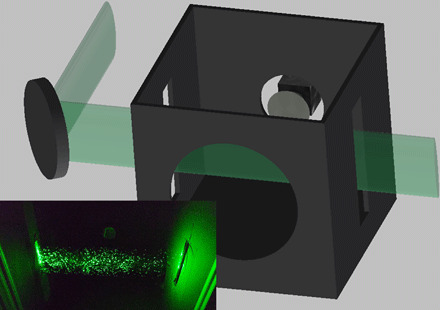
Fig. 1. Schematic of the experimental setup.
A laser beam is expanded vertically by a cylindrical lens and shined through slits in the enclosure. The camera is located at the back of the box, with a hole for the speaker in the front. The inset shows scattering for water particles from a spray bottle with the front of the box removed. Photo credit: Martin Fischer, Duke University.
Fig. 2
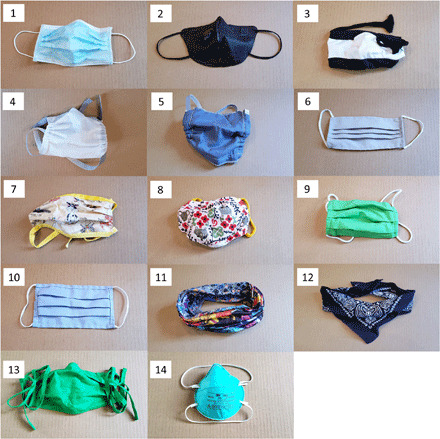
Fig. 2. Pictures of face masks under investigation.
We tested 14 different face masks or mask alternatives and one mask material. Photo credit: Emma Fischer, Duke University. For photos showing the masks as actually worn, see fig. S8 (Supplementary Materials).
Fig. 3
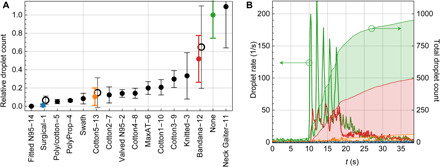
Fig. 3. Droplet transmission through face masks.
(A) Relative droplet transmission through the corresponding mask. Each solid data point represents the mean and SD over 10 trials for the same mask, normalized to the control trial (no mask), and tested by one speaker. Hollow data points are the mean and SDs of the relative counts over four speakers. A plot with a logarithmic scale is shown in fig. S1. The numbers on the x-axis labels correspond to the mask numbers in Fig. 2 and Table 1. (B) The time evolution of the droplet count (left axis) is shown for representative examples, marked with the corresponding color in (A): no mask (green), bandana (red), cotton mask (orange), and surgical (blue, not visible on this scale). The cumulative droplet count for these cases is also shown (right axis). t, time.
Fig. 4
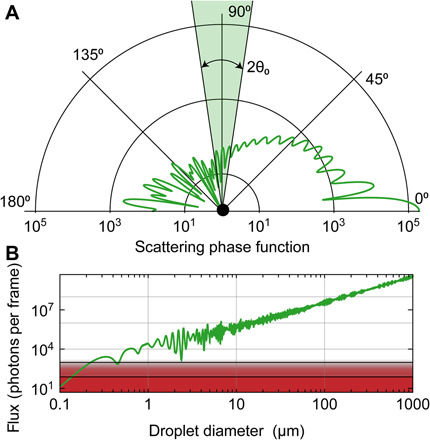
Fig. 4. Light scattering properties.
(A) Angle distribution (scattering phase function) for light scattered by a water droplet of 5 μm diameter for illumination with green laser light. Note the logarithmic radial scale. 0° is the forward direction, and 180° is the backward direction. The camera records at around 90°, indicated by the green segment (not to scale). (B) Calculated number of photons recorded by the camera in one frame as a function of the droplet diameter. The red shaded area and the two solid lines indicate the detection thresholds of the camera. For ideal conditions (all photons impinge on a single pixel), the camera requires at least about 75 photons per frame corresponding to a droplet diameter of 0.1 μm; for photons distributed over multiple pixels, the threshold is around 960 photons and corresponds to a diameter of 0.5 μm.

References

    1. Stadnytskyi V., Bax C. E., Bax A., Anfinrud P., The airborne lifetime of small speech droplets and their potential importance in SARS-CoV-2 transmission. Proc. Natl. Acad. Sci. U.S.A. 117, 11875–11877 (2020). - PMC - PubMed
    1. Anfinrud P., Stadnytskyi V., Bax C. E., Bax A., Visualizing speech-generated oral fluid droplets with laser light scattering. N. Engl. J. Med. 382, 2061–2063 (2020). - PMC - PubMed
    1. Belkin N. L., The evolution of the surgical mask: Filtering efficiency versus effectiveness. Infect. Control Hosp. Epidemiol. 18, 49–57 (1997). - PubMed
    1. Dharmadhikari A. S., Mphahlele M., Stoltz A., Venter K., Mathebula R., Masotla T., Lubbe W., Pagano M., First M., Jensen P. A., van der Walt M., Nardell E. A., Surgical face masks worn by patients with multidrug-resistant tuberculosis: Impact on infectivity of air on a hospital ward. Am. J. Respir. Crit. Care Med. 185, 1104–1109 (2012). - PMC - PubMed
    1. Advice on the use of masks in the context of COVID-19, WHO Reference Number: WHO/2019-nCov/IPC_Masks/2020.4 (World Health Organization, 2020).

Publication types

LinkOut - more resources