


Antibiotic Overuse After Hospital Discharge: A Multi-hospital Cohort Study
- PMID: 32918077
- PMCID: PMC7947015
- DOI: 10.1093/cid/ciaa1372
Antibiotic Overuse After Hospital Discharge: A Multi-hospital Cohort Study
Abstract
Background: Antibiotics are commonly prescribed to patients as they leave the hospital. We aimed to create a comprehensive metric to characterize antibiotic overuse after discharge among hospitalized patients treated for pneumonia or urinary tract infection (UTI), and to determine whether overuse varied across hospitals and conditions.
Methods: In a retrospective cohort study of hospitalized patients treated for pneumonia or UTI in 46 hospitals between 1 July 2017-30 July 2019, we quantified the proportion of patients discharged with antibiotic overuse, defined as unnecessary antibiotic use, excess antibiotic duration, or suboptimal fluoroquinolone use. Using linear regression, we assessed hospital-level associations between antibiotic overuse after discharge in patients treated for pneumonia versus a UTI.
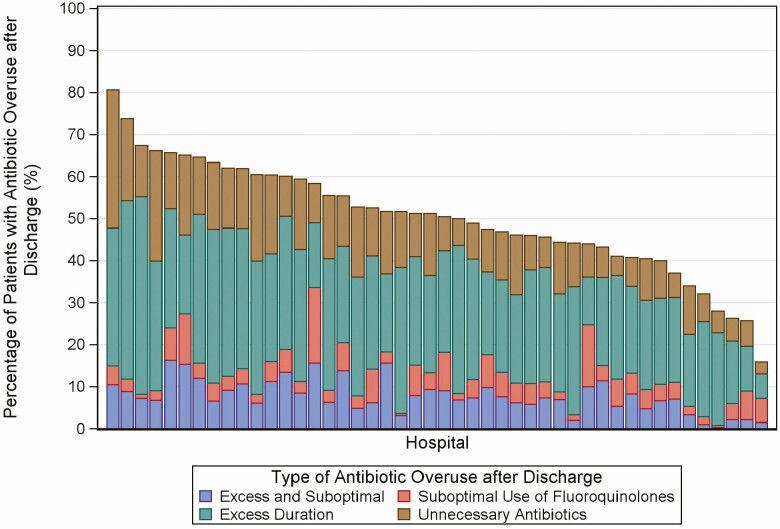
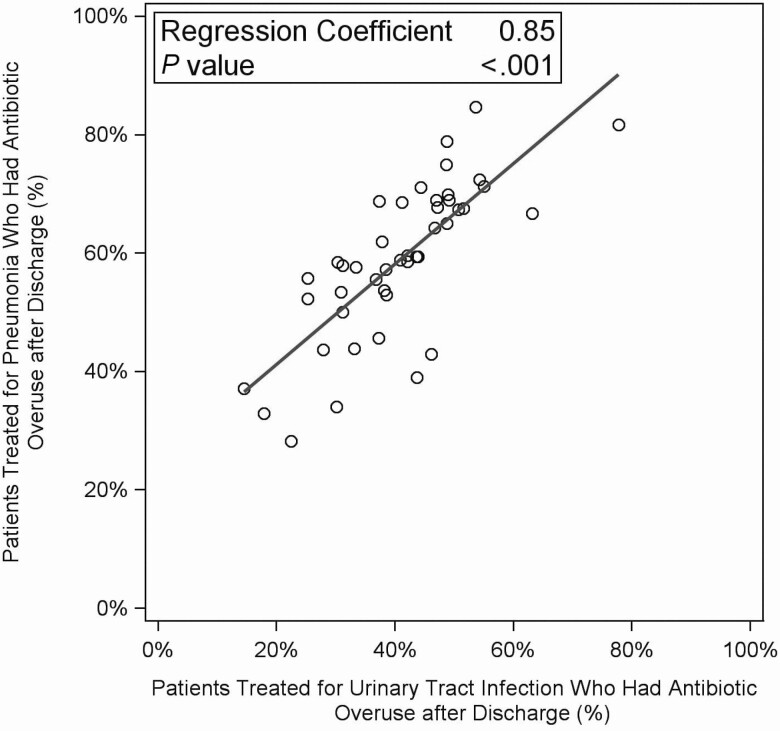
Results: Of 21 825 patients treated for infection (12 445 with pneumonia; 9380 with a UTI), nearly half (49.1%) had antibiotic overuse after discharge (56.9% with pneumonia; 38.7% with a UTI). For pneumonia, 63.1% of overuse days after discharge were due to excess duration; for UTIs, 43.9% were due to treatment of asymptomatic bacteriuria. The percentage of patients discharged with antibiotic overuse varied 5-fold among hospitals (from 15.9% [95% confidence interval, 8.7%-24.6%] to 80.6% [95% confidence interval, 69.4%-88.1%]) and was strongly correlated between conditions (regression coefficient = 0.85; P < .001).
Conclusions: Antibiotic overuse after discharge was common and varied widely between hospitals. Antibiotic overuse after discharge was associated between conditions, suggesting that the prescribing culture, physician behavior, or organizational processes contribute to overprescribing at discharge. Multifaceted efforts focusing on all 3 types of overuse and multiple conditions should be considered to improve antibiotic prescribing at discharge.
Keywords: antibiotic stewardship; pneumonia; quality of care; transitions of care; urinary tract infection.
© The Author(s) 2020. Published by Oxford University Press for the Infectious Diseases Society of America.
Figures
References
-
- Dyer AP, Dodds Ashley E, Anderson DJ, et al. Total duration of antimicrobial therapy resulting from inpatient hospitalization. Infect Control Hosp Epidemiol 2019; 40:847–54. - PubMed
