


Geometric Perfusion Deficits: A Novel OCT Angiography Biomarker for Diabetic Retinopathy Based on Oxygen Diffusion
- PMID: 32918905
- PMCID: PMC8015788
- DOI: 10.1016/j.ajo.2020.09.007
Geometric Perfusion Deficits: A Novel OCT Angiography Biomarker for Diabetic Retinopathy Based on Oxygen Diffusion
Abstract
Purpose: To develop geometric perfusion deficits (GPD), an optical coherence tomography angiography (OCTA) biomarker based on oxygen diffusion, and to evaluate its utility in a pilot study of healthy subjects and patients with diabetic retinopathy (DR).
Design: Retrospective cross-sectional study.
Methods: Commercial spectral-domain optical coherence tomography angiography (OCTA) instruments were used to acquire repeated 3 × 3-mm2 and 6 × 6-mm2 motion-corrected macular OCTA volumes. En face OCTA images corresponding to the superficial capillary plexus (SCP), deep capillary plexus (DCP), and full retinal projections were obtained using automatic segmentation. For each projection, the GPD percentage and the vessel density percentage, the control metric, were computed, and their values were compared between the normal and DR eyes. The repeated OCTA acquisitions were used to assess the test-retest repeatability of the GPD and vessel density percentages.
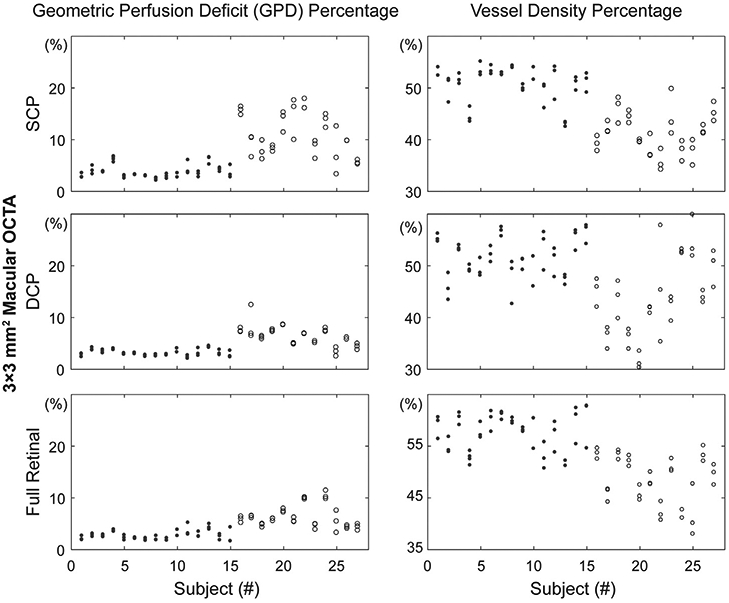
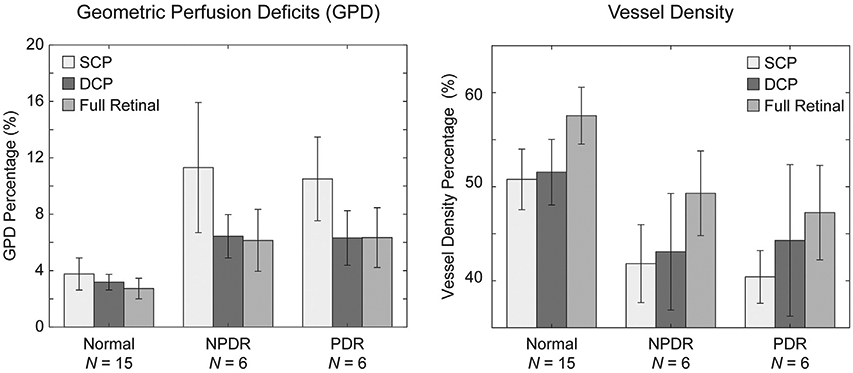
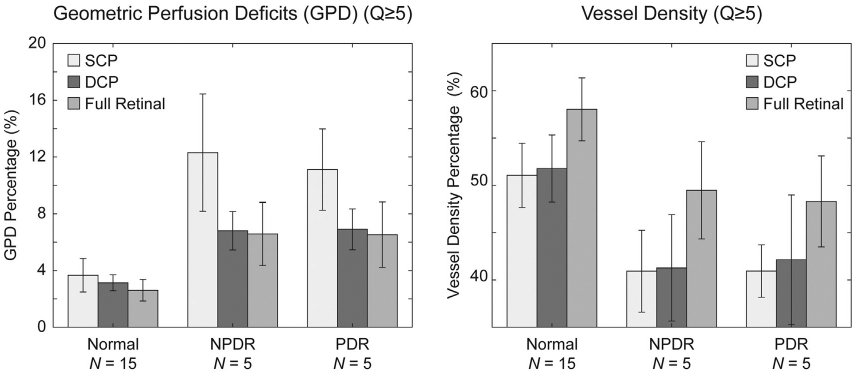
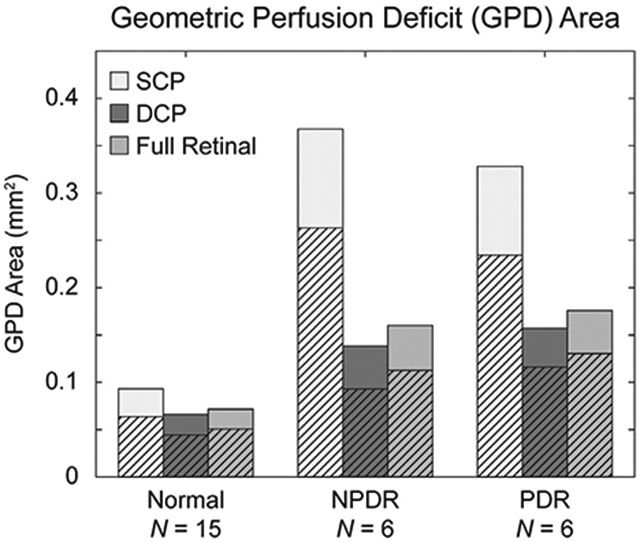
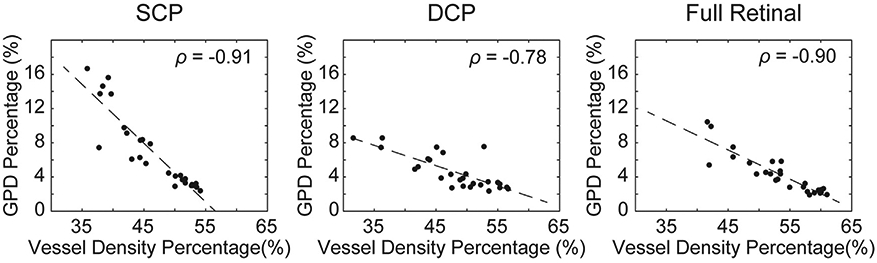
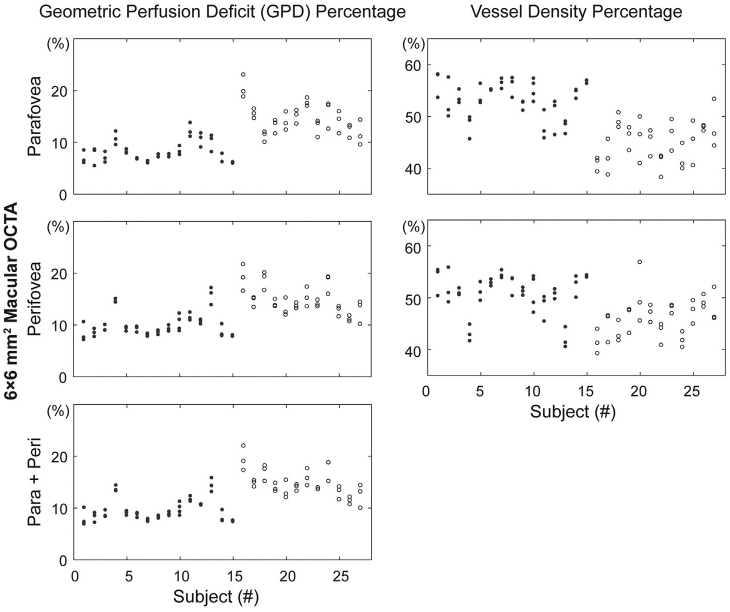
Results: Repeated OCTA scans of 15 normal eyes and 12 DR eyes were obtained. For all en face projections, GPD percentages were significantly higher in DR eyes than in normal eyes; vessel density percentages were significantly lower in all but 1 projection (DCP). Large GPD areas were used to identify focal perfusion deficits. Test-retest analysis showed that the GPD percentage had superior repeatability than the vessel density percentage in most cases. A strong negative correlation between the GPD percentage and the vessel density percentage was also found.
Conclusions: Geometric perfusion deficits, an OCTA biomarker based on oxygen diffusion, provides a quantitative metric of macular microvascular remodeling with a strong physiological underpinning. The GPD percentage may serve as a useful biomarker for detecting and monitoring DR.
Copyright © 2020 Elsevier Inc. All rights reserved.
Figures
References
-
- Hammes H-P, Lin J, Renner O, et al. Pericytes and the pathogenesis of diabetic retinopathy. Diabetes 2002;51(10): 3107–3112. - PubMed
-
- Frank RN. Diabetic retinopathy. N Engl J Med 2004;350(1): 48–58. - PubMed
-
- Aiello LP, Avery RL, Arrigg PG, et al. Vascular endothelial growth factor in ocular fluid of patients with diabetic retinopathy and other retinal disorders. N Engl J Med 1994;331(22): 1480–1487. - PubMed
-
- Early Treatment Diabetic Retinopathy Study Research Group. Classification of diabetic retinopathy from fluorescein angiograms: ETDRS report number 11. Ophthalmology 1991; 98(5, Supplement):807–822. - PubMed
-
- Conrath J, Giorgi R, Raccah D, Ridings B. Foveal avascular zone in diabetic retinopathy: quantitative vs qualitative assessment. Eye 2005;19(3):322–326. - PubMed
Publication types
MeSH terms
Substances
Grants and funding
LinkOut - more resources
Full Text Sources
Other Literature Sources
Medical
Research Materials
Miscellaneous
