


Effects of cerium and tungsten substitution on antiviral and antibacterial properties of lanthanum molybdate
- PMID: 32919679
- PMCID: PMC7402209
- DOI: 10.1016/j.msec.2020.111323
Effects of cerium and tungsten substitution on antiviral and antibacterial properties of lanthanum molybdate
Abstract
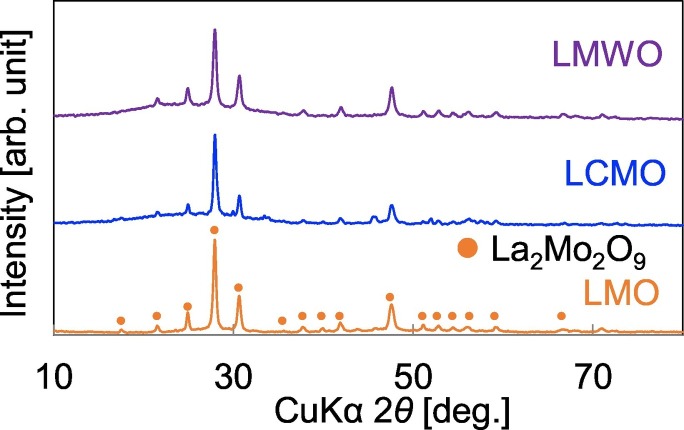
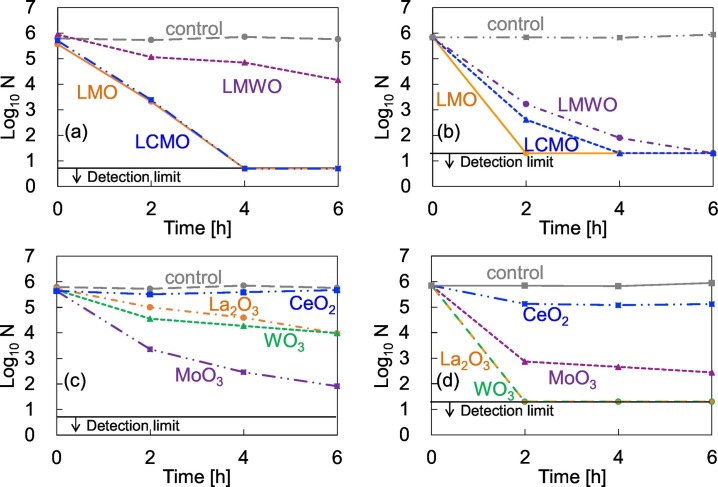
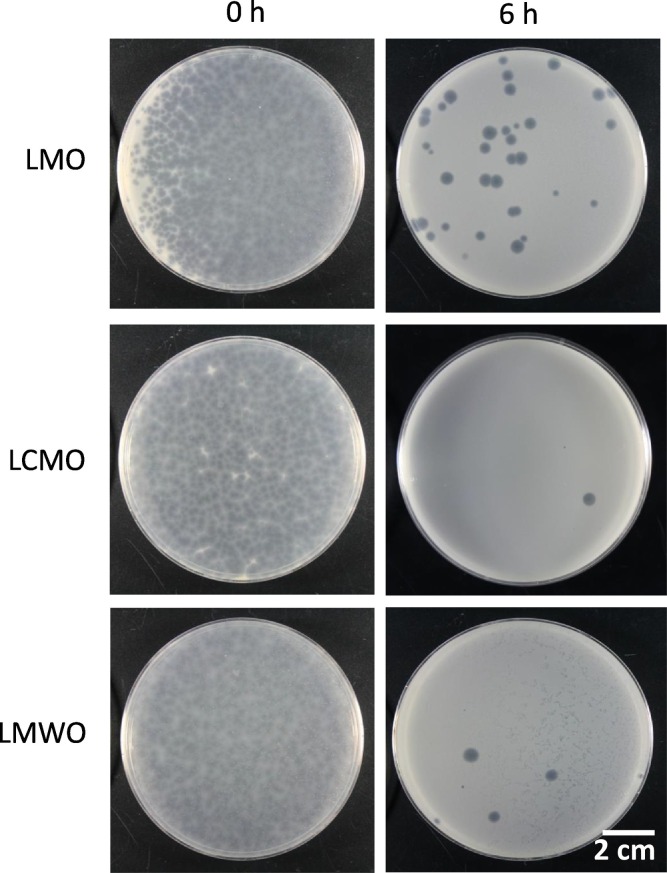
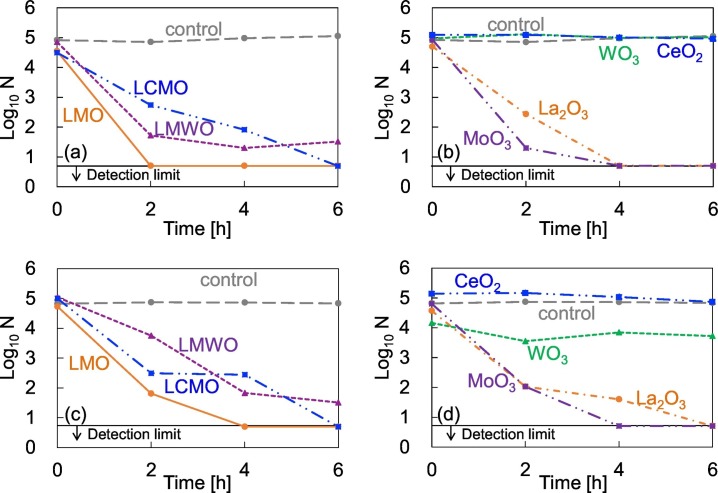
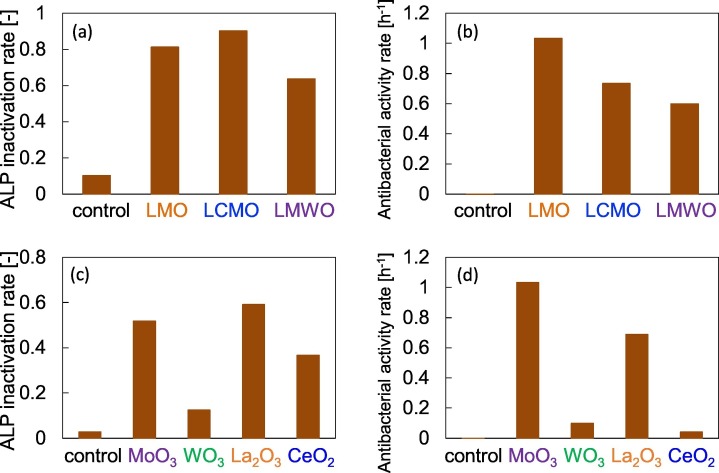
Powders of cerium (Ce)-substituted and tungsten (W)-substituted La2Mo2O9 (LMO) were prepared using polymerizable complex method. Their antiviral and antibacterial performances were then evaluated using bacteriophage Qβ, bacteriophage Φ6, Escherichia coli, and Staphylococcus aureus. The obtained powders, which were almost single-phase, exhibited both antiviral and antibacterial properties. Effects of dissolved ions on their antiviral activity against bacteriophage Qβ were remarkable. A certain contribution of direct contact to the powder surface was also inferred along with the dissolved ion effect for antiviral activity against bacteriophage Φ6. Dissolved ion effects and pH values suggest that both Mo and W are in the form of polyacids. Antiviral activity against bacteriophage Φ6 was improved by substituting Ce for La in LMO. Similarly to LMO, Ce-substituted LMO exhibited hydrophobicity. Inactivation of alkaline phosphatase enzyme proteins was inferred as one mechanism of the antiviral and antibacterial activities of the obtained powders.
Keywords: Antibacterial; Antiviral; Ce; La(2)Mo(2)O(9); W.
Copyright © 2020 Elsevier B.V. All rights reserved.
Conflict of interest statement
Declaration of competing interest The authors declare that they have no known competing financial interests or personal relationships that could have appeared to influence the work reported in this paper.
Figures





References
-
- Zodrow K., Brunet L., Mahendra S., Li D., Zhang A., Li Q., Alvarez P.J.J. Polysulfone ultrafiltration membranes impregnated with silver nanoparticles show improved biofouling resistance and virus removal. Water Res. 2009;43:715–723. - PubMed
-
- Nakano R., Ishiguro H., Yao Y., Kajioka J., Fujishima A., Sunada K., Minoshima M., Hashimoto K., Kubota Y. Photocatalytic inactivation of influenza virus by titanium dioxide thin film. Photochem. Photobiol. Sci. 2012;11:1293–1298. - PubMed
-
- Zhanga C., Li Y., Shuai D., Shen Y., Wang D. Progress and challenges in photocatalytic disinfection of waterborne viruses: a review to fill current knowledge gaps. Chem. Eng. J. 2019;355:399–415.
MeSH terms
Substances
LinkOut - more resources
Full Text Sources
Other Literature Sources
Molecular Biology Databases
