Proprotein convertase subtilisin/kexin type 9 inhibition in cardiovascular disease: current status and future perspectives
- PMID: 32921006
- PMCID: PMC7487297
- DOI: 10.3904/kjim.2020.140
Proprotein convertase subtilisin/kexin type 9 inhibition in cardiovascular disease: current status and future perspectives
Abstract
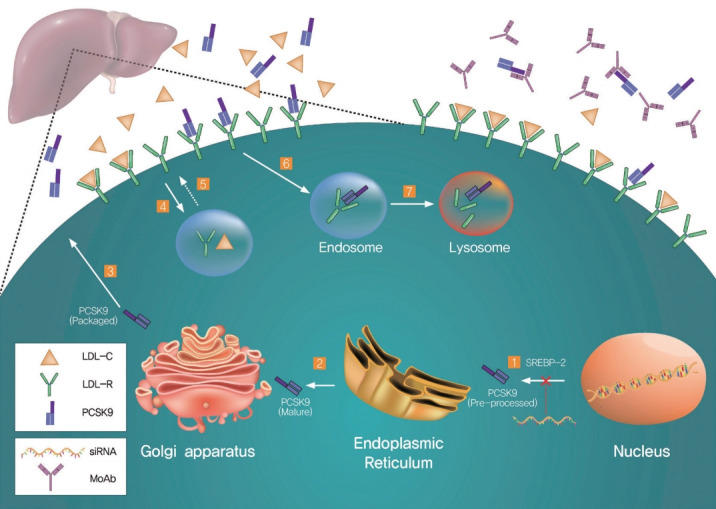
Proprotein convertase subtilisin/kexin type 9 (PCSK9) targets the degradation of low-density lipoprotein (LDL) receptors; it has been proved that its inhibition improves cardiovascular outcomes in patients with established atherosclerotic cardiovascular disease (ASCVD). Herein, we review the current status of PCSK9 inhibitors in clinical practice and the future scope of PCSK9 inhibition. The results of two recent large clinical trials reveal that two PCSK9 monoclonal antibodies evolocumab and alirocumab reduce the risk of a cardiovascular event on top of background statin therapy in patients with stable ASCVD and those with recent acute coronary syndrome, respectively. However, there are several ongoing concerns regarding the efficacy in reducing mortality, cost-effectiveness, and long-term safety of extremely low LDL cholesterol levels with PCSK9 inhibition. The results of ongoing cardiovascular outcomes trials with PCSK9 monoclonal antibodies for primary prevention and with small interfering RNA to PCSK9 for secondary prevention may help to shape the use of this new therapeutic class.
Keywords: Antibodies, monoclonal; Cardiovascular diseases; Cholesterol, LDL; PCSK9 protein, human.
Conflict of interest statement
No potential conflict of interest relevant to this article was reported.
Figures
References
-
- Ference BA, Ginsberg HN, Graham I, et al. Low-density lipoproteins cause atherosclerotic cardiovascular disease. 1. Evidence from genetic, epidemiologic, and clinical studies: a consensus statement from the European Atherosclerosis Society Consensus Panel. Eur Heart J. 2017;38:2459–2472. - PMC - PubMed
-
- Jernberg T, Hasvold P, Henriksson M, Hjelm H, Thuresson M, Janzon M. Cardiovascular risk in post-myocardial infarction patients: nationwide real world data demonstrate the importance of a long-term perspective. Eur Heart J. 2015;36:1163–1170. - PubMed
Publication types
MeSH terms
Substances
LinkOut - more resources
Full Text Sources
Miscellaneous