


Impact of IL-34, IFN-α and IFN-λ1 on activity of systemic lupus erythematosus in Egyptian patients
- PMID: 32921829
- PMCID: PMC7477477
- DOI: 10.5114/reum.2020.98434
Impact of IL-34, IFN-α and IFN-λ1 on activity of systemic lupus erythematosus in Egyptian patients
Abstract
Background: Systemic lupus erythematosus (SLE) is an autoimmune, multi-system inflammatory disease. Among cytokines involved in SLE pathogenesis, interferons (particularly IFN-α) and interleukin 34 play a pivotal role. Interestingly, the gene signatures of type III (IFN-λ1) and type I IFNs may overlap. Increased levels of IFN-λ also have been reported in SLE.Objectives: The aim of this study was to assess serum levels of IL-34, IFN-λ1, IFN-α and the relationship between these cytokines and clinical and laboratory parameters and response to treatment in a cohort of Egyptian SLE patients.
Material and methods: The study included 82 newly diagnosed SLE patients: male 17.1% (n = 14), female 82.9% (n = 68), mean age ±SD: 48.6 ±8.2 and 60 healthy subjects matched by age and gender as a control group. Medical history, physical examination and laboratory tests for confirming SLE diagnosis and assessment of disease activity were collected. The assessment of serum levels of studied cytokines were performed using the ELISA method.All studied patients after first cytokine evaluation were treated with a combination of antimalarial drugs, glucocorticosteroids and/or immunosuppressive drugs with follow-up after six months of treatment.
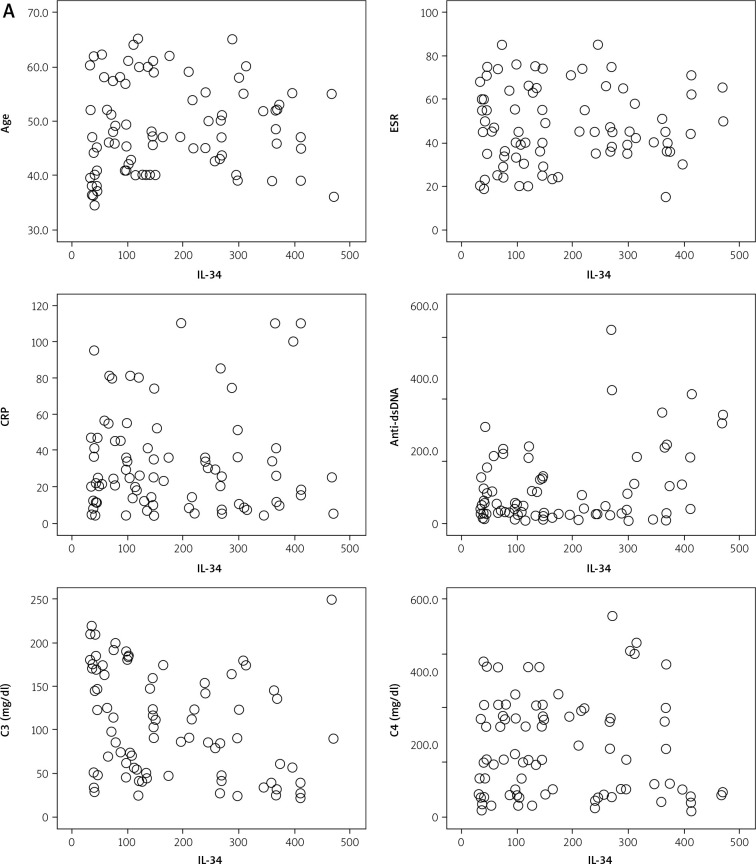
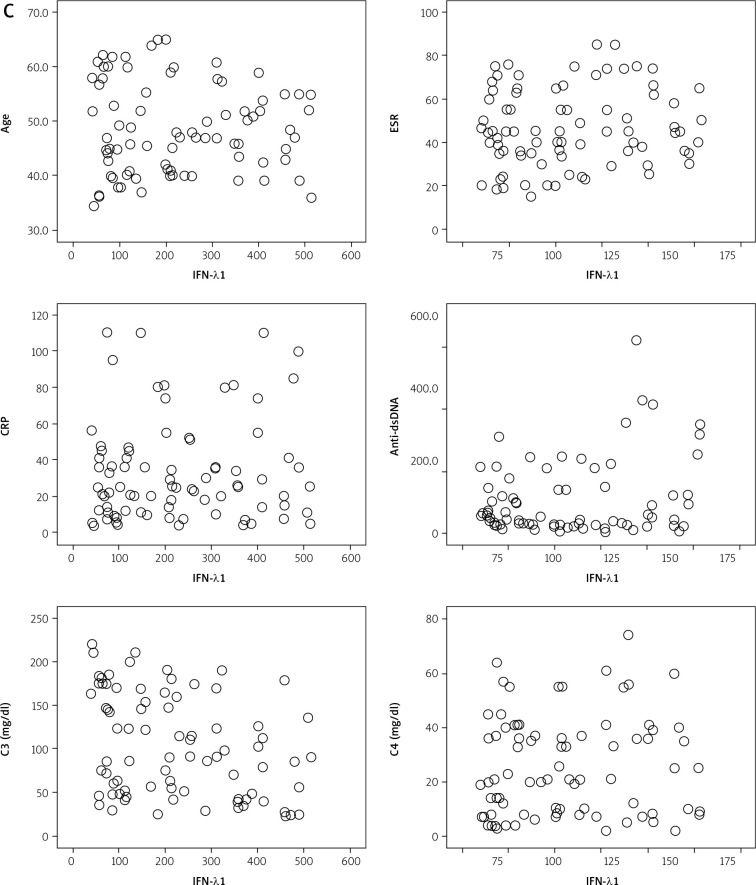
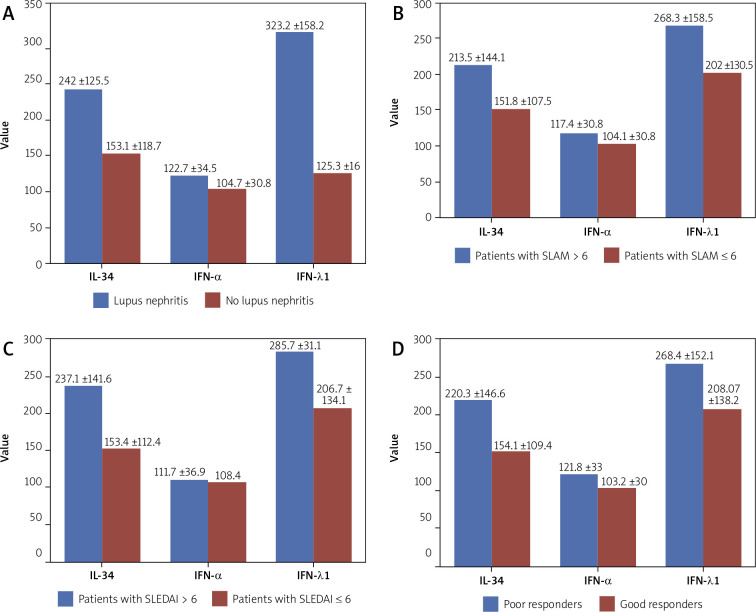
Results: In the SLE group the mean serum levels of IL-34, IFN-α and IFN-λ1 were 175.9 ±125.9 pg/ml, 109.3 ±32.5 pg/ml and 227.9 ±144.8 pg/ml respectively. These cytokine levels were significantly higher in the SLE group than in healthy controls. 39% of SLE patients (n = 32) had SLAM > 6 and 26.8% (n = 22) had SLEDAI >6. There were 21 SLE patients (25.6%) with lupus nephritis.IL-34 and IFN-λ1 were positively correlated with anti-dsDNA antibodies but negatively correlated with C3 complement component (p ≤ 0.05). IL-34, INF-α and IFN-λ1 were significantly higher in lupus nephritis patients, and correlated with poorest response to treatment.IL-34 and IFN-λ1 were correlated with higher SLAM > 6 and SLEDAI > 6 results; there was no such correlation between IFN-α and disease activity.Accumulation of three or more clinical features during follow-up was significantly associated with high levels of studied cytokines. Triple high positivity was found in 17 patients (20.7%) and correlated with presence of anti-dsDNA antibodies, low levels of C3 component of complement and lupus nephritis.
Conclusions: SLE patients with high serum levels of IL-34, IFN-α and IFN-λ1 more often had lupus nephritis and poor response to immunosuppressive treatment.The triple cytokine elevation was strongly associated with higher disease activity. These results may indicate the need to distinguish this group of patients with such aggressive phenotype and consider targeted multi-therapy.
Keywords: disease activity; interferon; interleukin; systemic lupus erythematosus.
Copyright © 2020 Narodowy Instytut Geriatrii, Reumatologii i Rehabilitacji w Warszawie.
Conflict of interest statement
The authors declare no conflict of interest.
Figures

References
LinkOut - more resources
Full Text Sources
Miscellaneous
