


The Role of Testosterone and Gibberellic Acid in the Melanization of Cryptococcus neoformans
- PMID: 32922377
- PMCID: PMC7456850
- DOI: 10.3389/fmicb.2020.01921
The Role of Testosterone and Gibberellic Acid in the Melanization of Cryptococcus neoformans
Abstract
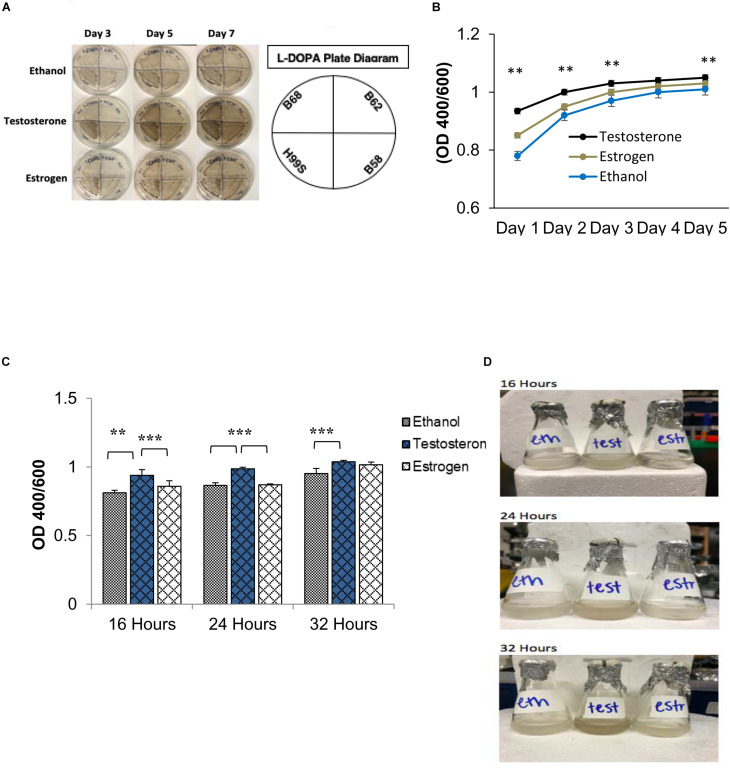
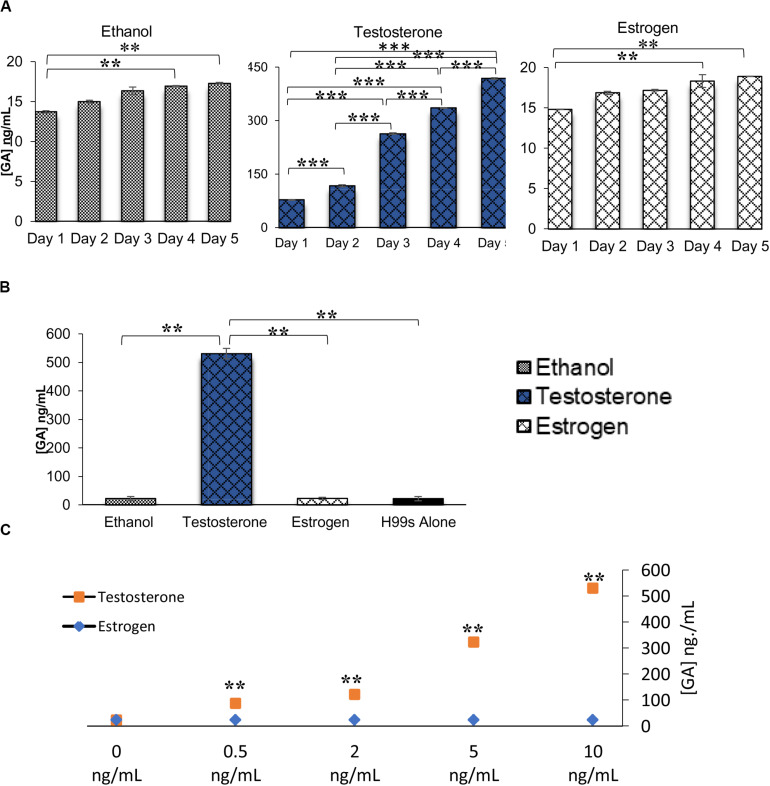
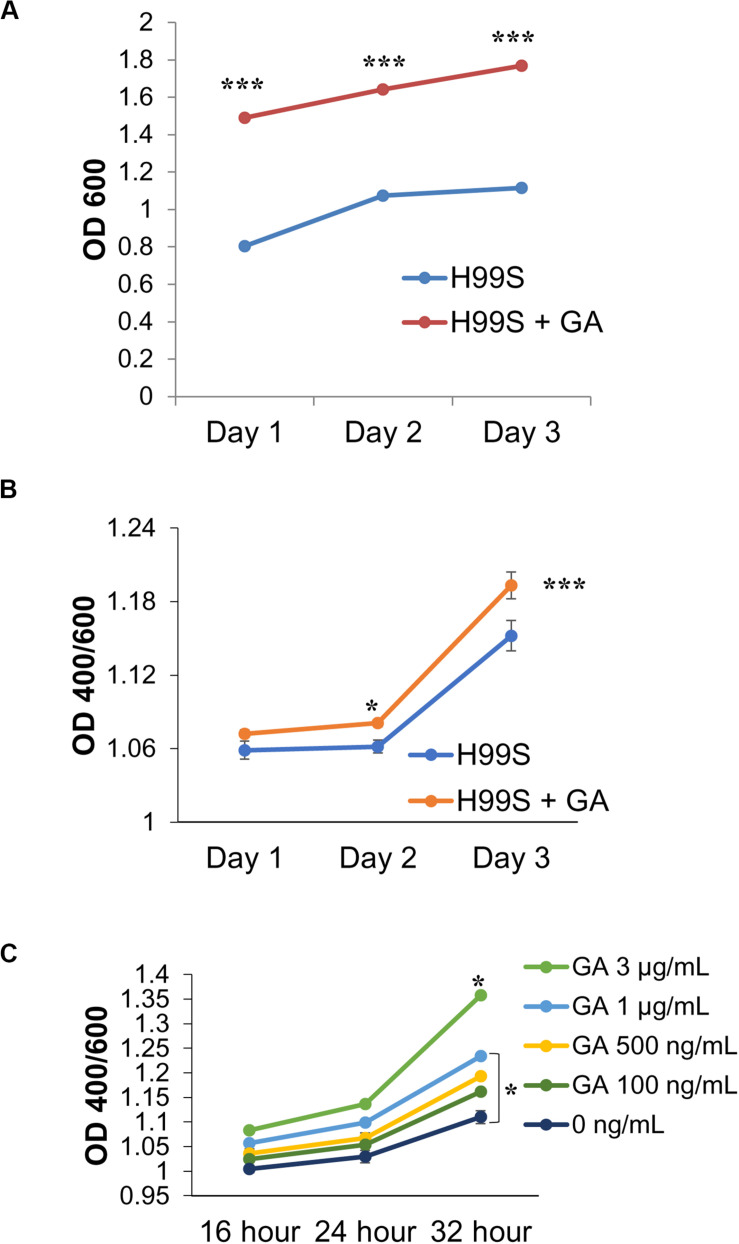
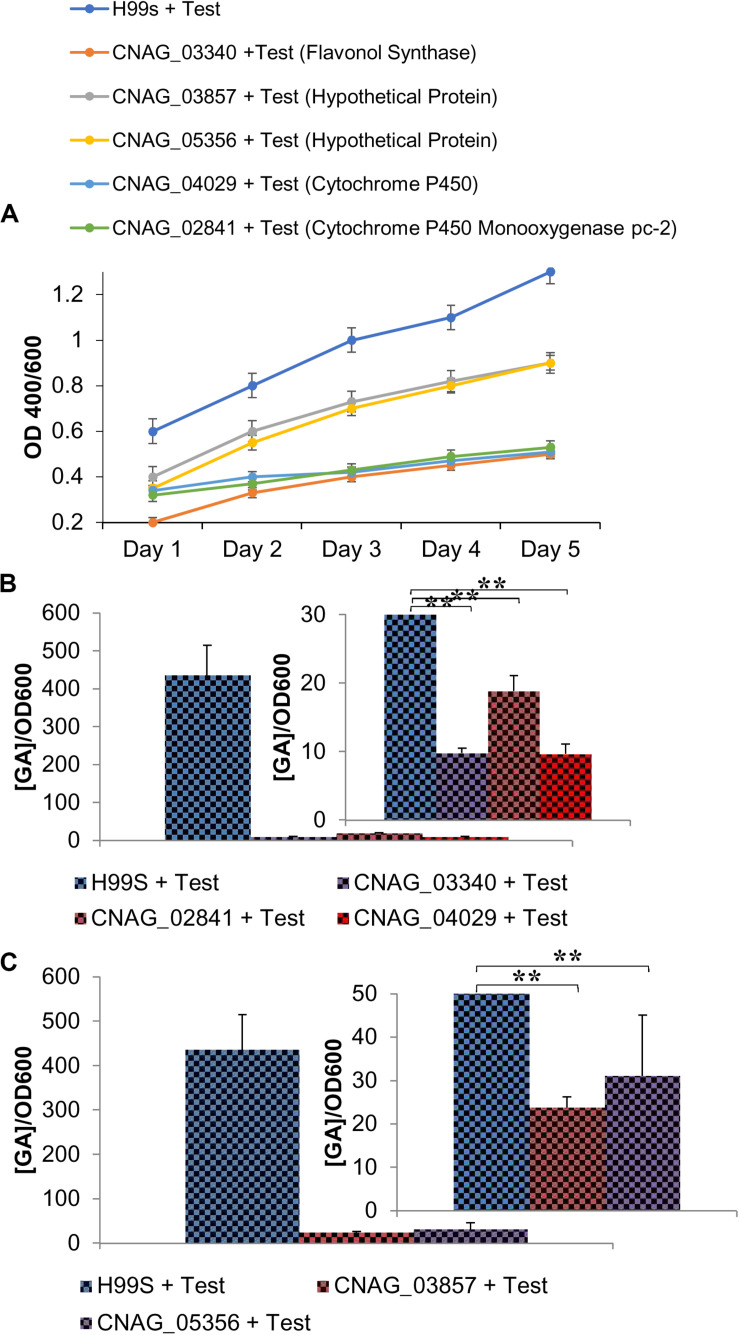
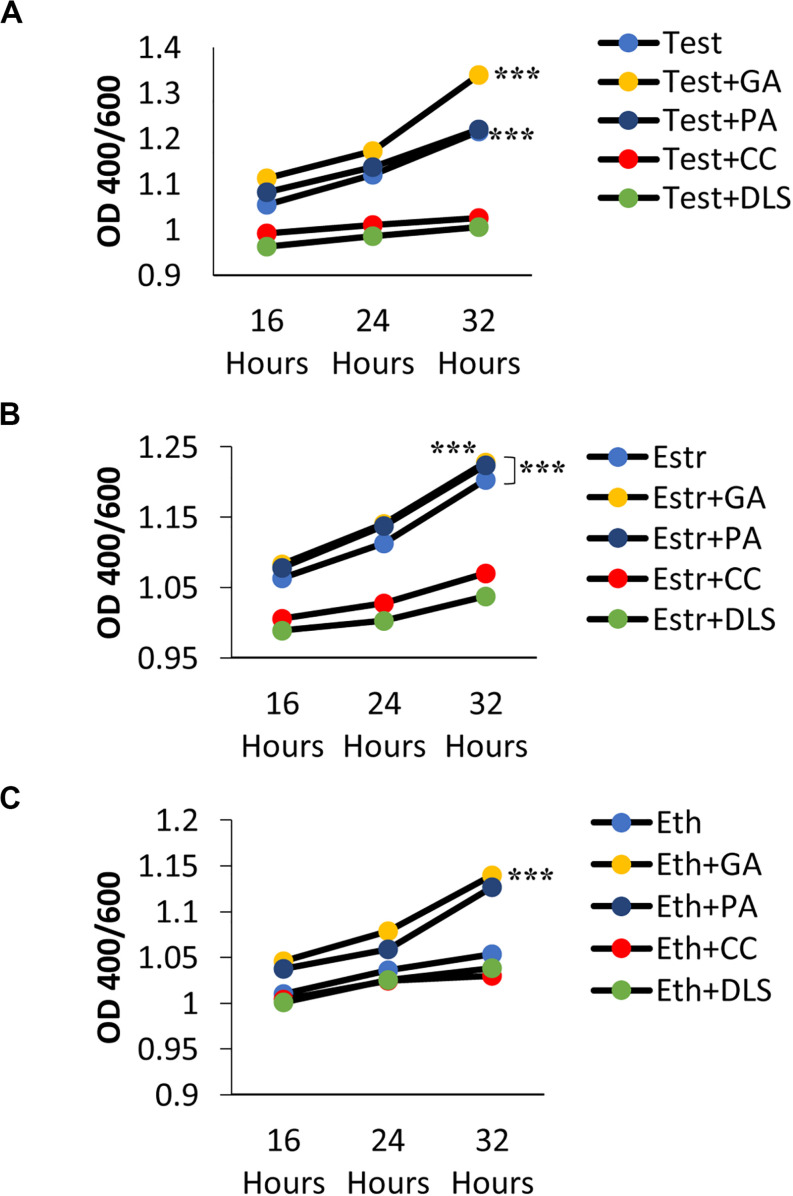
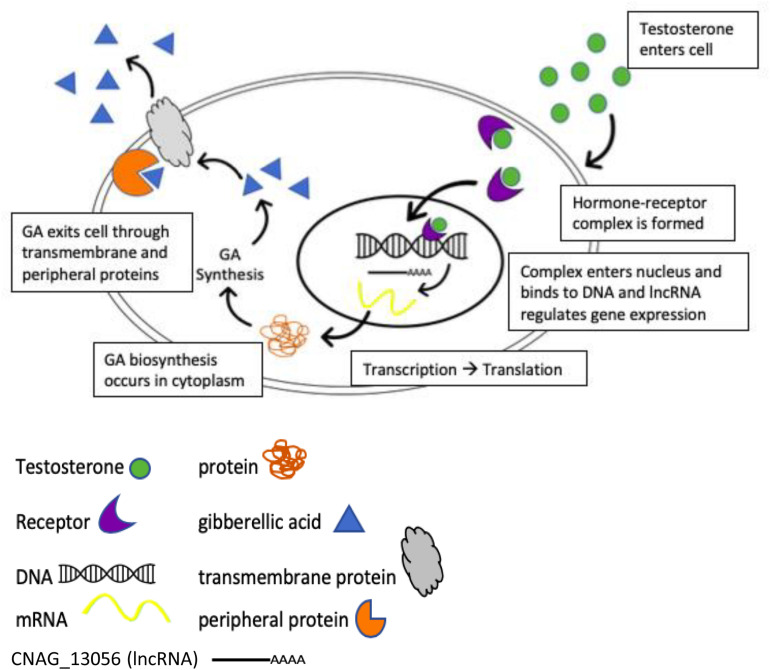
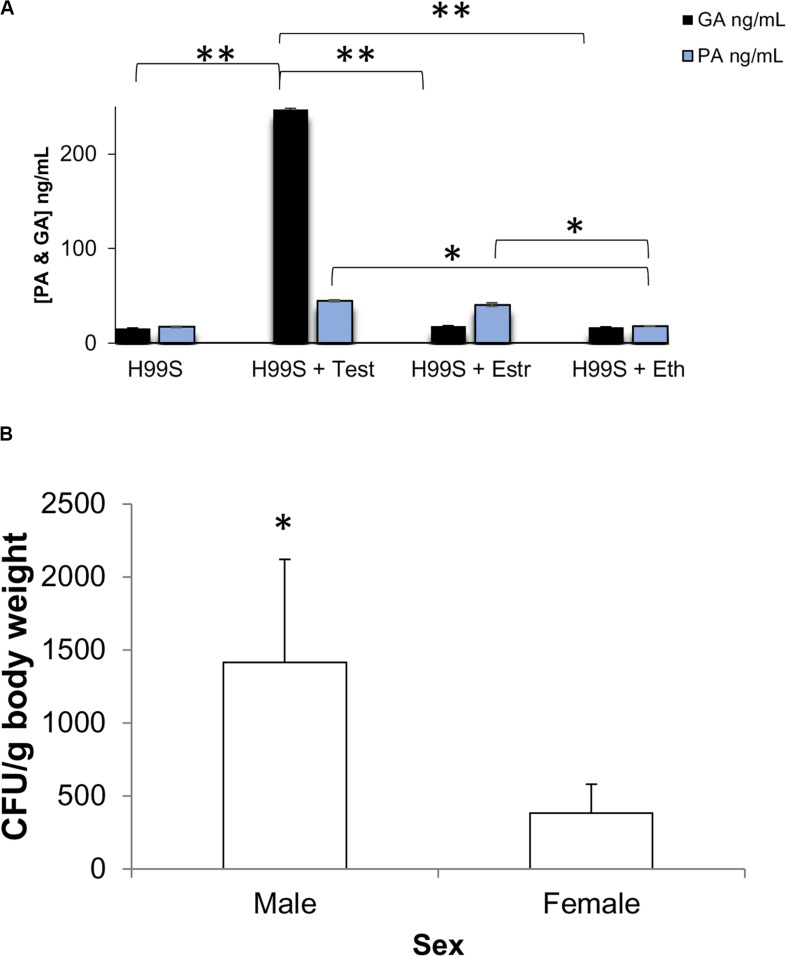
Cryptococcus neoformans, a spore-producing pathogenic yeast, affects immunocompromised individuals causing meningoencephalitis. Once C. neoformans is introduced via the respiratory tract, it is engulfed by macrophages and other phagocytes. One of C. neoformans's primary virulence factors is the pigment melanin, which is formed in the cell wall and protects the yeast against UV radiation and oxidizing agents produced by macrophages during phagocytosis. To better understand the observed sex bias (3:1; male:female) in C. neoformans infections, the phenotype of various virulence factors was determined in the presence of exogenous sex hormones. C. neoformans melanized faster in the presence of testosterone than it did in the presence of estradiol. Using a combination of RNA sequencing analysis and ELISA results, we identified a growth hormone, gibberellic acid (GA), produced in C. neoformans that was highly upregulated in the presence of testosterone. A variety of knockout strains of genes involved in the GA biosynthesis pathway showed significantly reduced melanization in the presence of testosterone. Additionally, inhibitors of GA also reduced melanization in the presence of testosterone. Thus, these data suggest that the gibberellic biosynthesis pathway is involved in melanization in C. neoformans, and the melanization difference observed in the presence of testosterone may be due to increased production of GA, which may partly explain the sex bias observed in C. neoformans infections.
Keywords: Cryptococcus neoformans; gibberellic acid; melanization; pantothenic acid; testosterone.
Copyright © 2020 Tucker, Guess and McClelland.
Figures
References
-
- Bisson G. P., Nthobatsong R., Thakur R., Lesetedi G., Vinekar K., Tebas P., et al. (2008). The use of HAART is associated with decreased risk of death during initial treatment of cryptococcal meningitis in adults in Botswana. J. Acquir. Immune Defic. Syndr. 49 227–229. 10.1097/QAI.0b013e318183181e - DOI - PMC - PubMed
LinkOut - more resources
Full Text Sources
