


COVID-19 Infection: Viral Macro- and Micro-Vascular Coagulopathy and Thromboembolism/Prophylactic and Therapeutic Management
- PMID: 32924567
- PMCID: PMC7492826
- DOI: 10.1177/1074248420958973
COVID-19 Infection: Viral Macro- and Micro-Vascular Coagulopathy and Thromboembolism/Prophylactic and Therapeutic Management
Abstract
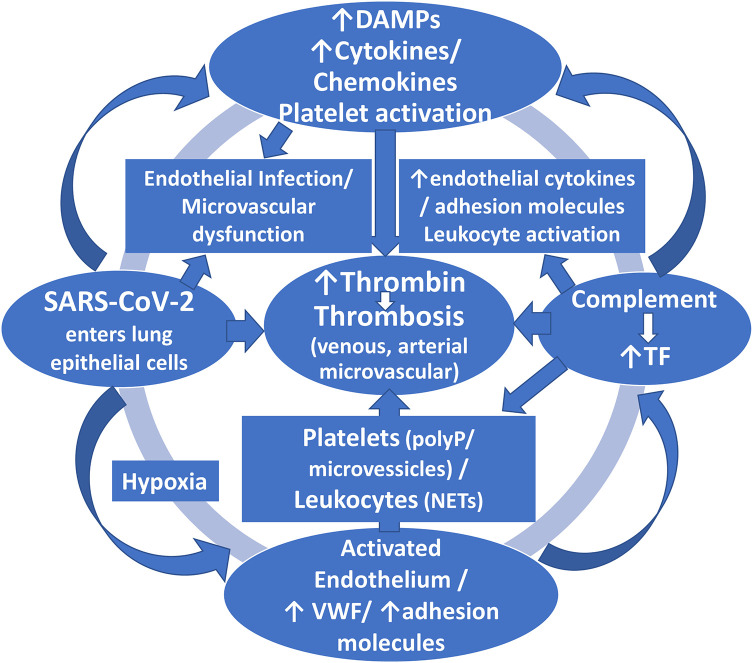
Coronavirus-2019 (COVID-19) predisposes patients to arterial and venous thrombosis commonly complicating the clinical course of hospitalized patients and attributed to the inflammatory state, endothelial dysfunction, platelet activation and blood stasis. This viral coagulopathy may occur despite thromboprophylaxis and raises mortality; the risk appears highest among critically ill inpatients monitored in the intensive care unit. The prevalence of venous thromboembolism in COVID-19 patients has been reported to reach ∼10-35%, while autopsies raise it to nearly 60%. The most common thrombotic complication is pulmonary embolism, which though may occur in the absence of a recognizable deep venous thrombosis and may be due to pulmonary arterial thrombosis rather than embolism, resulting in thrombotic occlusion of small- to mid-sized pulmonary arteries and subsequent infarction of lung parenchyma. This micro-thrombotic pattern seems more specific for COVID-19 and is associated with an intense immuno-inflammatory reaction that results in diffuse occlusive thrombotic micro-angiopathy with alveolar damage and vascular angiogenesis. Furthermore, thrombosis has also been observed in various arterial sites, including coronary, cerebral and peripheral arteries. Biomarkers related to coagulation, platelet activation and inflammation have been suggested as useful diagnostic and prognostic tools for COVID-19-associated coagulopathy; among them, D-dimer remains a key biomarker employed in clinical practice. Various medical societies have issued guidelines or consensus statements regarding thromboprophylaxis and treatment of these thrombotic complications specifically adapted to COVID-19 patients. All these issues are detailed in this review, data from meta-analyses and current guidelines are tabulated, while the relevant mechanisms of this virus-associated coagulopathy are pictorially illustrated.
Keywords: COVID-19; SARS-CoV-2; arterial thrombosis; coagulopathy; deep venous thrombosis; endothelial dysfunction; pulmonary arterial thrombosis; pulmonary embolism; venous thromboembolism.
Conflict of interest statement
Figures
References
-
- Manolis AS, Manolis TA. Cardiovascular complications of the Coronavirus (COVID-19) infection. Rhythmos. 2020;15:23–28.
-
- Manolis AS, Manolis TA, Manolis AA, Melita H. The controversy of renin-angiotensin-system blocker facilitation versus countering COVID-19 Infection. J Cardiovasc Pharmacol. 2020. (in press) 2020 August 3 doi:10.1097/FJC.0000000000000894. Online ahead of print. - PubMed
-
- Manolis AS, Manolis TA. Pediatric inflammatory multisystem syndrome temporally associated with SARS-Cov-2 infection (PIMS-TS): Kawasaki-like multisystem inflammatory syndrome in children (MIS-C) during the COVID-19 pandemic with predominant myocarditis. Rhythmos. 2020;15(3):42–46.
Publication types
MeSH terms
Substances
LinkOut - more resources
Full Text Sources
Medical
Miscellaneous
