


Blunted opioid regulation of the HPA stress response during nicotine withdrawal: therapeutic implications
- PMID: 32928024
- PMCID: PMC8007667
- DOI: 10.1080/10253890.2020.1823367
Blunted opioid regulation of the HPA stress response during nicotine withdrawal: therapeutic implications
Abstract
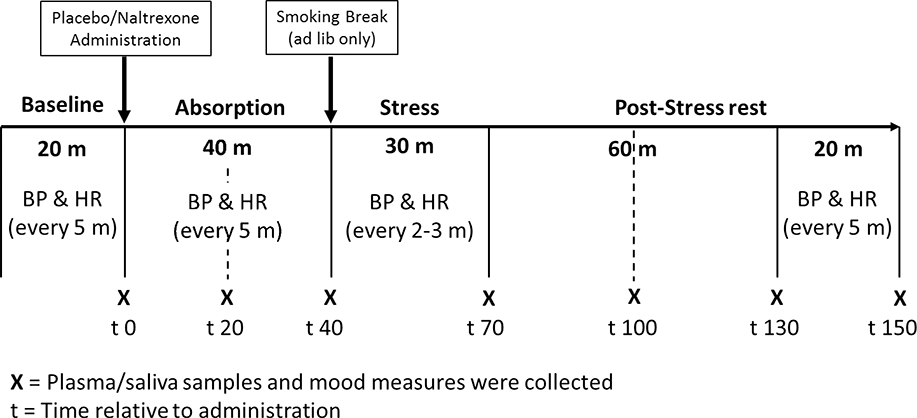
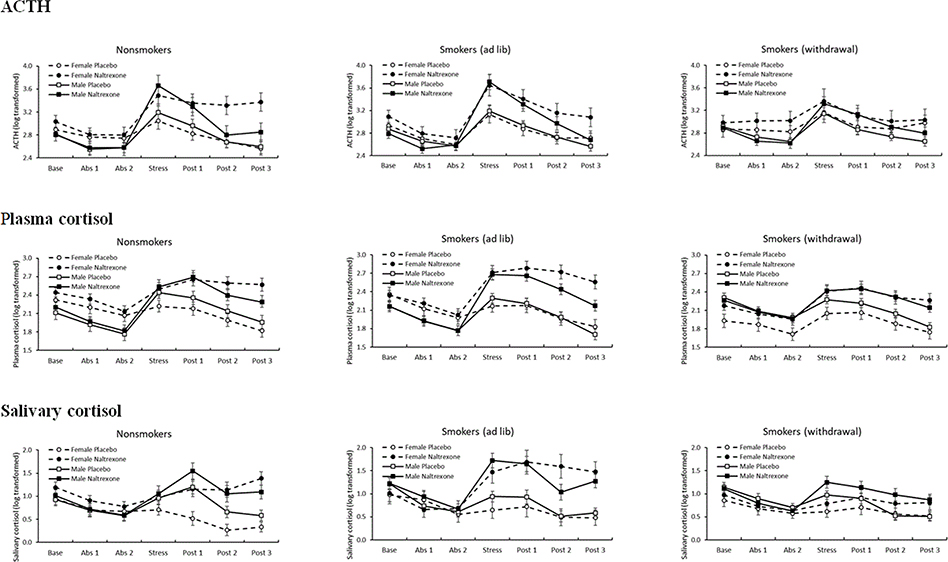
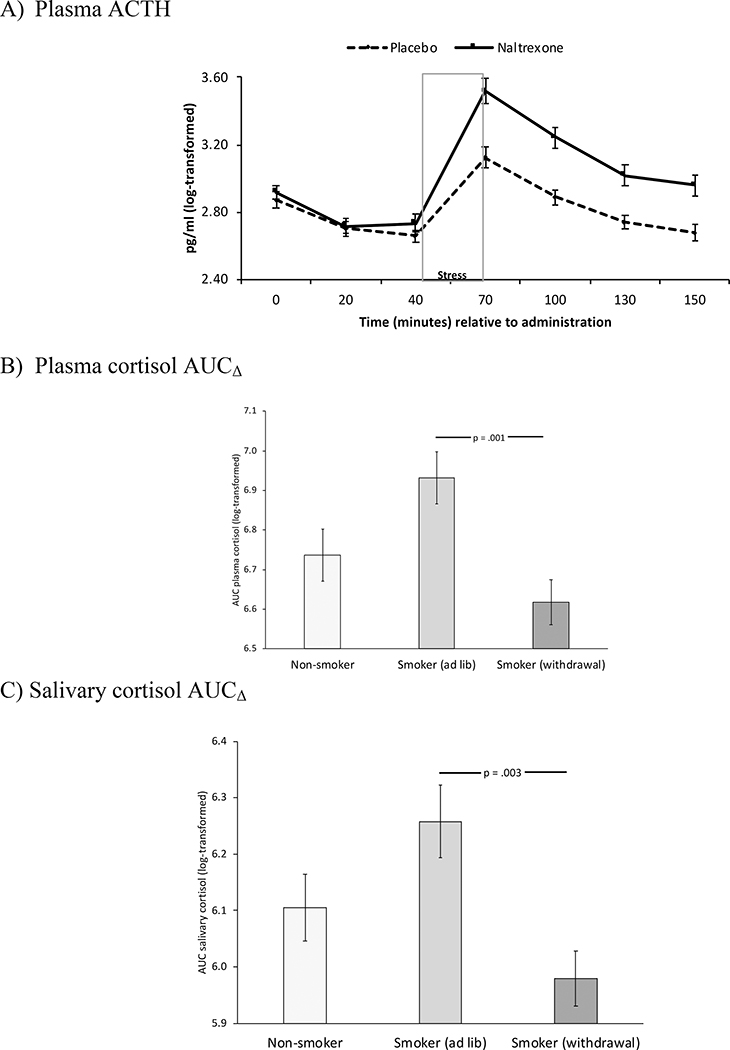
Endogenous opioids regulate pain, drug reward, and stress responses. We have previously shown reduced hypothalamic-pituitary-adrenal (HPA) responses to psychological stress and to opioid blockade among dependent smokers. In this study, we examined the extent to which biologically confirmed nicotine withdrawal alters endogenous opioid regulation of HPA axis functioning during rest and in response to acute stress. Smokers were randomly assigned to one of two conditions; 24 h withdrawal from all nicotine-containing products (n = 62) or smoking ad libitum (n = 44). A nonsmoking comparison group (n = 43) was also included. Participants (85 males and 64 females) completed two acute stress sessions during which a placebo or 50 mg of naltrexone (opioid antagonist) were administered using a double-blind design. Blood and saliva samples (assayed for cortisol and adrenocorticotropic hormone, i.e. ACTH) and mood measures were obtained during a resting absorption period, after acute stress (public speaking, mental arithmetic, and cold pressor tasks), and during an extended recovery period. Results indicated that opioid blockade (naltrexone) was associated with increased ACTH and cortisol responses to stress, and tobacco withdrawal was associated with blunted hormonal responses. A pattern of sex differences also emerged, with women exhibiting reduced ACTH responses to stress and higher ACTH and plasma cortisol responses to opioid blockade. These results indicated that compared to ad libitum smoking, nicotine withdrawal is associated with blunted opioid modulation of the HPA axis. Sex may modulate these effects. Blunted endogenous opioid regulation may underlie an incentive process that reinforces smoking behavior and may warrant therapeutic attention.
Keywords: Endogenous opioid function; HPA; addiction; nicotine withdrawal; stress.
Conflict of interest statement
Conflict of Interest
The authors have no conflicts of interest to report.
Figures
References
-
- Stratakis CA, Chrousos GP. Neuroendocrinology and pathophysiology of the stress system. AnnNYAcadSci. 1995;771:1–18. - PubMed
-
- McEwen BS. The brain is an important target of adrenal steroid actions. A comparison of synthetic and natural steroids. Ann N Y Acad Sci. 1997;823:201–13. - PubMed
-
- Kudielka BM, Buske-Kirschbaum A, Hellhammer DH, Kirschbaum C. HPA axis responses to laboratory psychosocial stress in healthy elderly adults, younger adults, and children: impact of age and gender. Psychoneuroendocrinology. 2004;29:83–98. - PubMed
-
- al’Absi M, Arnett DK. Adrenocortical responses to psychological stress and risk for hypertension. Biomed Pharmacother. 2000;54(5):234–44. - PubMed
Publication types
MeSH terms
Substances
Grants and funding
LinkOut - more resources
Full Text Sources
