


Recruitment of adolescents with suicidal ideation in the emergency department: lessons from a randomized controlled pilot trial of a youth suicide prevention intervention
- PMID: 32928140
- PMCID: PMC7490899
- DOI: 10.1186/s12874-020-01117-5
Recruitment of adolescents with suicidal ideation in the emergency department: lessons from a randomized controlled pilot trial of a youth suicide prevention intervention
Abstract
Background: Emergency Departments (EDs) are a first point-of-contact for many youth with mental health and suicidality concerns and can serve as an effective recruitment source for randomized controlled trials (RCTs) of mental health interventions. However, recruitment in acute care settings is impeded by several challenges. This pilot RCT of a youth suicide prevention intervention recruited adolescents aged 12 to 17 years presenting to a pediatric hospital ED with suicide related behaviors.
Methods: Recruitment barriers were identified during the initial study recruitment period and included: the time of day of ED presentations, challenges inherent to study presentation, engagement and participation during an acute presentation, challenges approaching and enrolling acutely suicidal patients and families, ED environmental factors, and youth and parental concerns regarding the study. We calculated the average recruitment productivity for published trials of adolescent suicide prevention strategies which included the ED as a recruitment site in order to compare our recruitment productivity.
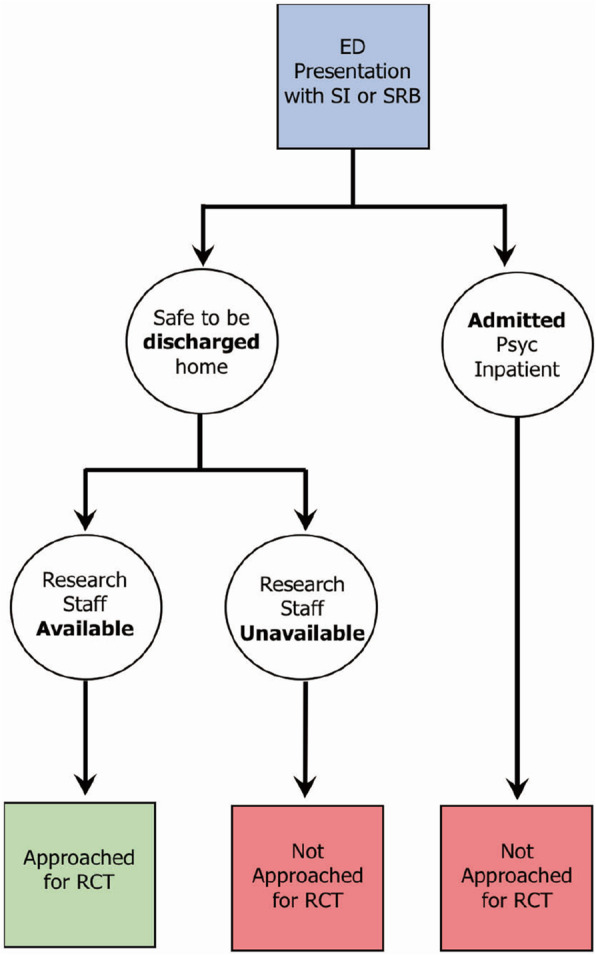
Results: In response to identified barriers, an enhanced ED-centered recruitment strategy was developed to address low recruitment rate, specifically (i) engaging a wider network of ED and outpatient psychiatry staff (ii) dissemination of study pamphlets across multiple areas of the ED and relevant outpatient clinics. Following implementation of the enhanced recruitment strategy, the pre-post recruitment productivity, a ratio of patients screened to patients randomized, was computed. A total of 120 patients were approached for participation, 89 (74.2%) were screened and 45 (37.5%) were consented for the study from March 2018 to April 2019. The screening to randomization ratio for the study period prior to the introduction of the enhanced recruitment strategies was 3:1, which decreased to 1.8:1 following the implementation of enhanced recruitment strategies. The ratio for the total recruitment period was 2.1:1. This was lower than the average ratio of 3.2:1 for published trials.
Conclusions: EDs are feasible sites for participant recruitment in RCTs examining new interventions for acute mental health problems, including suicidality. Engaging multi-disciplinary ED staff to support recruitment for such studies, proactively addressing anticipated concerns, and creating a robust recruitment pathway that includes approach at outpatient appointments can optimize recruitment.
Trial registration: ClinicalTrials.gov : NCT03488602 , retrospectively registered April 4, 2018.
Keywords: Adolescents; Clinical trials; Emergency departments; Interventions; Mental health; Pediatrics; Recruitment; Suicide; Youth.
Conflict of interest statement
The authors declare that they have no competing interests.
Figures

References
-
- Canadian Institute for Health Information. Child and youth mental health in Canada — Infographic [Internet]. 2019. Available from: https://www.cihi.ca/en/child-and-youth-mental-health-in-canada-infographic [cited 2019 4 Jun].
-
- Canadian Institute for Health Information. Care for Children and Youth With Mental Disorders. 2015. Available from: https://secure.cihi.ca/free_products/CIHI CYMH Final for pubs_EN_web.pdf [cited 2019 3 Sept].
-
- Newton AS, Rosychuk RJ, Carlisle CE, Zhang X, Bethell J, Rhodes AE. Time trends in emergency department visits for suicide-related Behaviours by girls and boys in Alberta. Can J Psychiatr. 2016;61(7):422–427.
Publication types
MeSH terms
Associated data
Grants and funding
LinkOut - more resources
Full Text Sources
Medical
Miscellaneous
