


The relations among worry, meta-worry, intolerance of uncertainty and attentional bias for threat in men at high risk for generalized anxiety disorder: a network analysis
- PMID: 32928164
- PMCID: PMC7491186
- DOI: 10.1186/s12888-020-02849-w
The relations among worry, meta-worry, intolerance of uncertainty and attentional bias for threat in men at high risk for generalized anxiety disorder: a network analysis
Abstract
Background: Improving the psychotherapies for generalized anxiety disorder (GAD) is dependent on a deeper understanding of the relations between GAD and its associated cognitive factors. In the present study, we investigate how the core feature of GAD (i.e., worry) and its associated cognitive factors, such as meta-worry, intolerance of uncertainty, and attention bias towards threat, relate to each other in men at high risk for GAD.
Methods: We used network analysis to explore the relations among these variables in a cross-sectional sample of 122 men at high risk for generalized anxiety disorder. Specifically, we computed the expected influence and predictability of each variable.
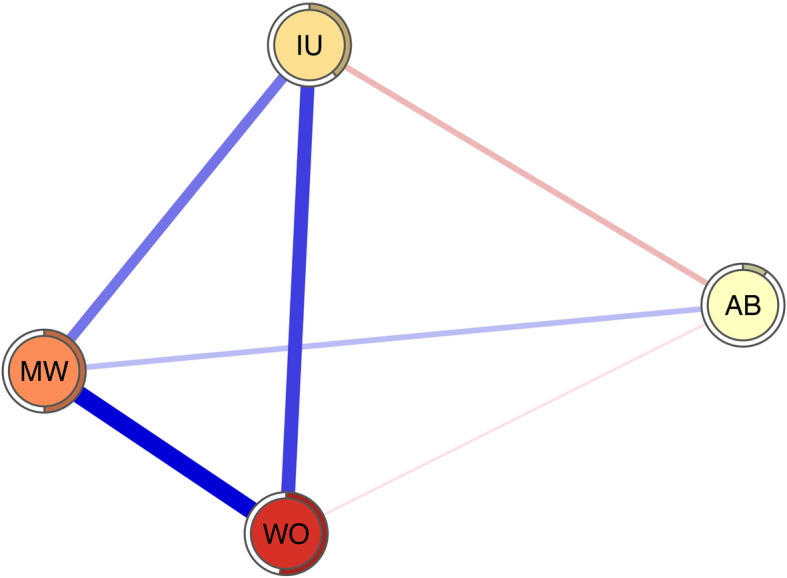
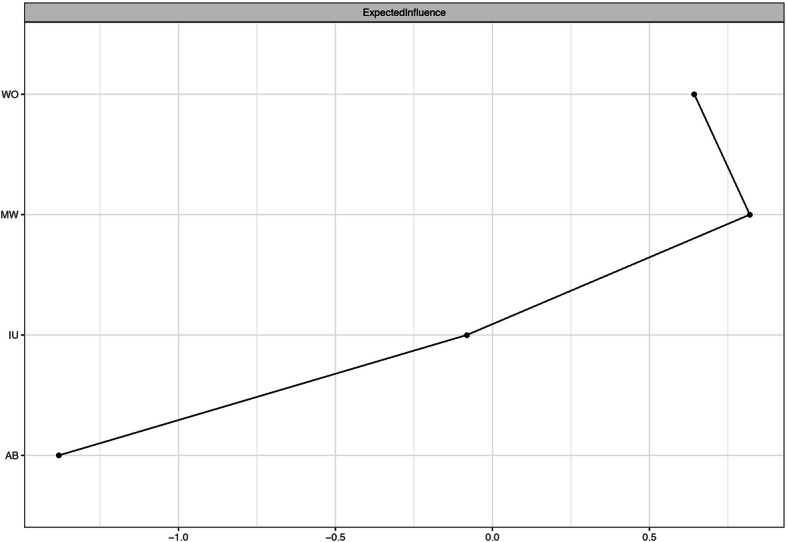
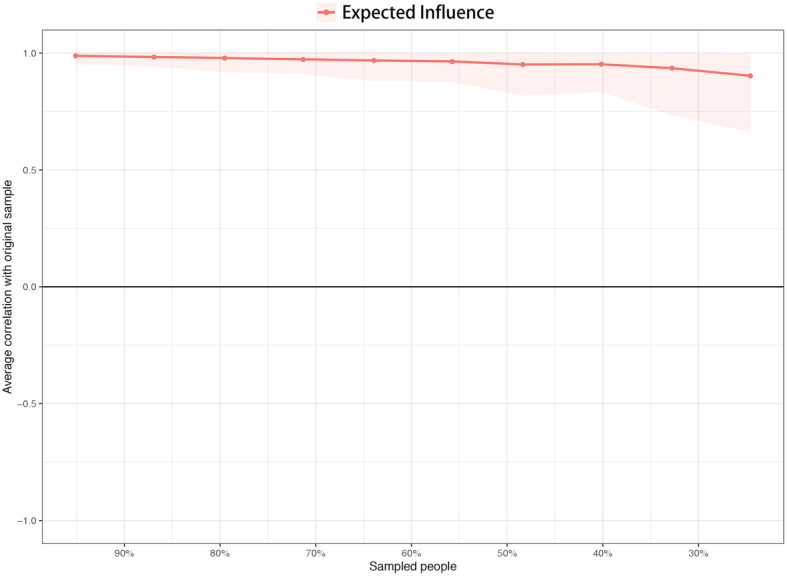
Results: In the final network, we found that worry and meta-worry had the highest expected influence and predictability. In contrast, attention bias towards threat showed the lowest expected influence and predictability. The estimates of the expected influence of the nodes were stable (correlation stability coefficient = 0.52).
Conclusions: The present study is the first to investigate the relations among worry, meta-worry, intolerance of uncertainty, and attention bias towards threat in men at high risk for generalized anxiety disorder. These findings indicate that worry and meta-worry may play important roles in the present network. The implications for clinical interventions and future studies are discussed.
Keywords: Attention bias; Generalized anxiety disorder; High risk; Intolerance of uncertainty; Meta-worry; Network analysis; Worry.
Conflict of interest statement
The authors declare that they have no competing interests.
Figures
References
-
- American Psychiatric Association . Diagnostic and statistical manual of mental disorders. 5. Washington DC: American Psychiatric Association; 2013.
-
- Tyrer P, Baldwin D. Generalised anxiety disorder. Lancet. 2006;368(9553):2156–2166. - PubMed
-
- Kroenke K, Spitzer RL, Williams JBW, Monahan PO, Lowe B. Anxiety disorders in primary care: prevalence, impairment, comorbidity, and detection. Ann Intern Med. 2007;146(5):317–325. - PubMed
-
- Kessler RC, DuPont RL, Berglund P, Wittchen HU. Impairment in pure and comorbid generalized anxiety disorder and major depression at 12 months in two national surveys. Am J Psychiatry. 1999;156(12):1915–1923. - PubMed
-
- Yonkers KA, Warshaw MG, Massion AO, Keller MB. Phenomenology and course of generalised anxiety disorder. Br J Psychiatry. 1996;168(3):308–313. - PubMed
Publication types
MeSH terms
Grants and funding
LinkOut - more resources
Full Text Sources
