


Targeting vulnerable groups of health poverty alleviation in rural China- what is the role of the New Rural Cooperative Medical Scheme for the middle age and elderly population?
- PMID: 32928229
- PMCID: PMC7489030
- DOI: 10.1186/s12939-020-01236-x
Targeting vulnerable groups of health poverty alleviation in rural China- what is the role of the New Rural Cooperative Medical Scheme for the middle age and elderly population?
Abstract
Background: In light of the health poverty alleviation policy, we explore whether the New Rural Cooperative Medical System (NRCMS) has effectively reduced the economic burden of medical expenses on rural middle-aged and elderly people and other impoverished vulnerable groups. The study aims to provide evidence that can be used to improve the medical insurance system.
Methods: Data were obtained from the 2015 China Health and Retirement Longitudinal Study (CHARLS). The method of calculating the catastrophic health expenditure (CHE) and impoverishment by medical expense (IME) was adopted from the World Health Organization (WHO). The treatment effect model was used to identify the determinants of CHE for rural middle-aged and elderly people.
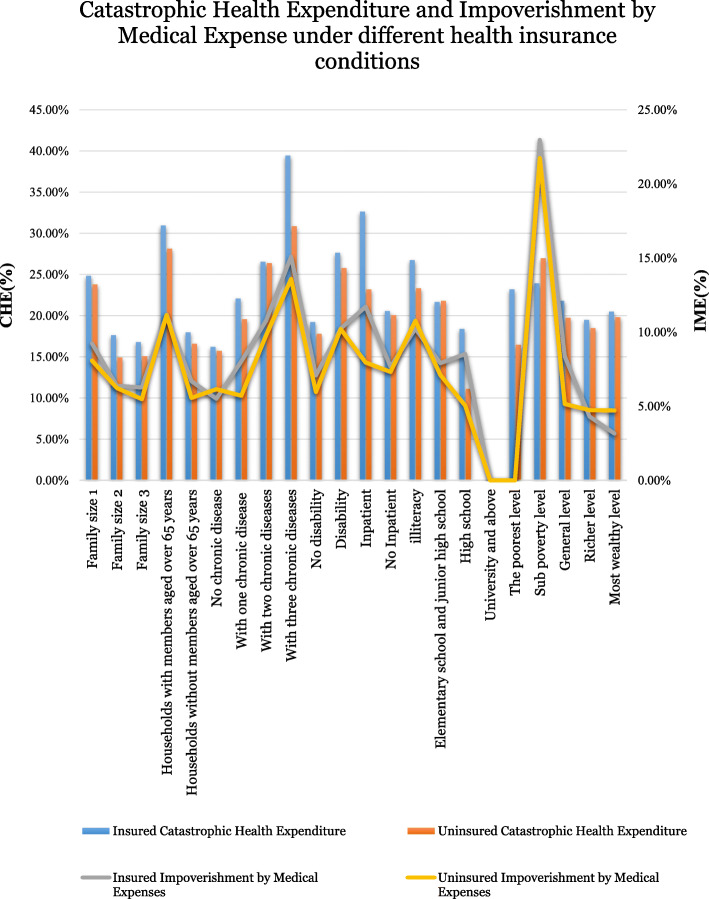
Results: The incidence of CHE in rural China for middle-aged and elderly people is 21.8%, and the IME is 8.0%. The households that had enrolled in the NRCMS suffered higher CHE (21.9%) and IME (8.0%), than those that had not enrolled (CHE: 20.6% and IME: 7.7%). The NRCMS did not provide sufficient economic protection from CHE for households with three or more chronic diseases, inpatients, or households with members aged over 65 years. Key risk factors for the CHE included education levels, households with inpatients, households with members aged over 65 years, and households with disabilities.
Conclusions: Although the NRCMS has reduced barriers to the usage of household health services by reducing people's out-of-pocket payments, it has not effectively reduced the risk of these households falling into poverty. Our research identifies the characteristics of vulnerable groups that the NRCMS does not provide enough support for, and which puts them at a greater risk of falling into poverty due to health impoverishment.
Keywords: China; Health poverty alleviation; Middle-aged and elderly people; New rural cooperative medical system; Vulnerable population.
Conflict of interest statement
The authors declare that they have no competing interests.
Figures
References
-
- The Word Bank Data. https://data.worldbank.org.cn/indicator/SI.POV.DDAY?locations=1W&start=1... Accessed 1 Jun 2020.
-
- Sumner A. Where do the poor live? World Dev. 2012;40(5). 10.1016/j.worlddev.2011.09.007 Accessed 1 Jun 2020.
-
- United Nations draft outcome document of the United Nations Summit for the adoption of the Post-2015 Development Agenda. 2015. https://sustainabledevelopment.un.org/sdg1 Accessed 1 Jun 2020.
-
- The National Bureau of Statistics of China . The series of economic and social development achievements in the 40 years of reform and opening up. 2018.
-
- United Nations (UN) The Millennium Development Goals Report 2015. 2015.
Publication types
MeSH terms
LinkOut - more resources
Full Text Sources
Medical
