


Enterotropism of highly pathogenic avian influenza virus H5N8 from the 2016/2017 epidemic in some wild bird species
- PMID: 32928280
- PMCID: PMC7491185
- DOI: 10.1186/s13567-020-00841-6
Enterotropism of highly pathogenic avian influenza virus H5N8 from the 2016/2017 epidemic in some wild bird species
Abstract
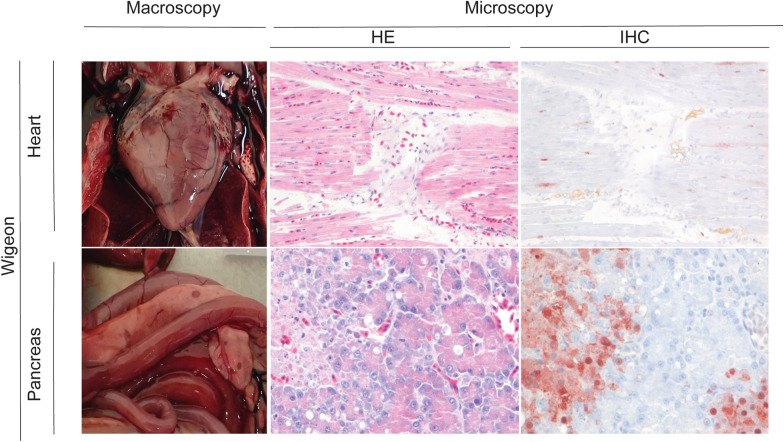
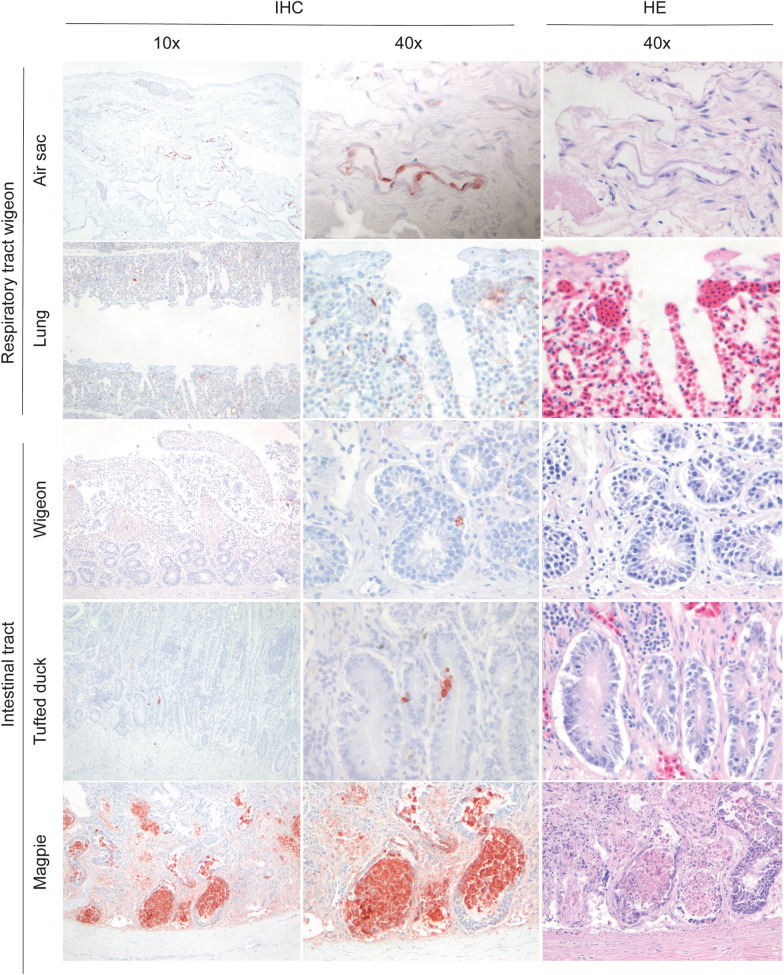
In 2016/2017, H5N8 highly pathogenic avian influenza (HPAI) virus of the Goose/Guangdong lineage spread from Asia to Europe, causing the biggest and most widespread HPAI epidemic on record in wild and domestic birds in Europe. We hypothesized that the wide dissemination of the 2016 H5N8 virus resulted at least partly from a change in tissue tropism from the respiratory tract, as in older HPAIV viruses, to the intestinal tract, as in low pathogenic avian influenza (LPAI) viruses, allowing more efficient faecal-oral transmission. Therefore, we determined the tissue tropism and associated lesions in wild birds found dead during the 2016 H5N8 epidemic, as well as the pattern of attachment of 2016 H5N8 virus to respiratory and intestinal tissues of four key wild duck species. We found that, out of 39 H5N8-infected wild birds of 12 species, four species expressed virus antigen in both respiratory and intestinal epithelium, one species only in respiratory epithelium, and one species only in intestinal epithelium. Virus antigen expression was association with inflammation and necrosis in multiple tissues. The level of attachment to wild duck intestinal epithelia of 2016 H5N8 virus was comparable to that of LPAI H4N5 virus, and higher than that of 2005 H5N1 virus for two of the four duck species and chicken tested. Overall, these results indicate that 2016 H5N8 may have acquired a similar enterotropism to LPAI viruses, without having lost the respirotropism of older HPAI viruses of the Goose/Guangdong lineage. The increased enterotropism of 2016 H5N8 implies that this virus had an increased chance to persist long term in the wild waterbird reservoir.
Keywords: H5N1; H5N8; avian influenza; highly pathogenic; immunohistochemistry; low pathogenic; pathology; tropism; virus histochemistry; wild birds.
Conflict of interest statement
The authors declare that they have no competing interests.
Figures
References
MeSH terms
Grants and funding
LinkOut - more resources
Full Text Sources
Medical
