


Histopathological imaging features- versus molecular measurements-based cancer prognosis modeling
- PMID: 32929170
- PMCID: PMC7490375
- DOI: 10.1038/s41598-020-72201-5
Histopathological imaging features- versus molecular measurements-based cancer prognosis modeling
Abstract
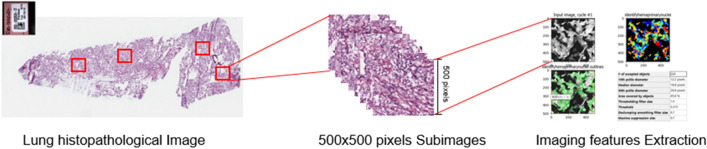
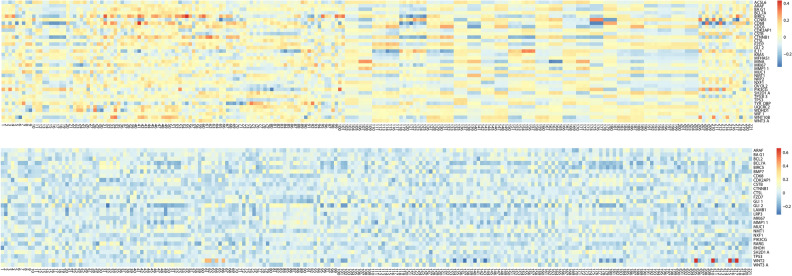
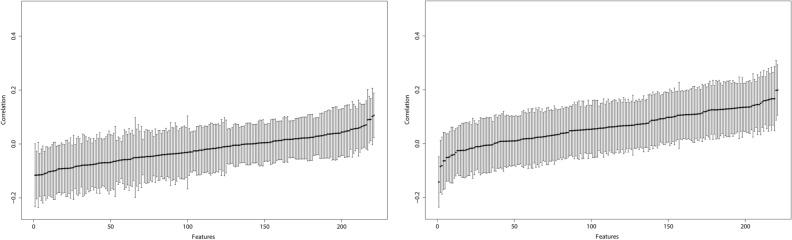
For lung and many other cancers, prognosis is essentially important, and extensive modeling has been carried out. Cancer is a genetic disease. In the past 2 decades, diverse molecular data (such as gene expressions and DNA mutations) have been analyzed in prognosis modeling. More recently, histopathological imaging data, which is a "byproduct" of biopsy, has been suggested as informative for prognosis. In this article, with the TCGA LUAD and LUSC data, we examine and directly compare modeling lung cancer overall survival using gene expressions versus histopathological imaging features. High-dimensional penalization methods are adopted for estimation and variable selection. Our findings include that gene expressions have slightly better prognostic performance, and that most of the gene expressions are weakly correlated imaging features. This study may provide additional insight into utilizing the two types of important data in cancer prognosis modeling and into lung cancer overall survival.
Conflict of interest statement
The authors declare no competing interests.
Figures
References
Publication types
MeSH terms
Substances
Grants and funding
LinkOut - more resources
Full Text Sources
Medical
Miscellaneous
