


Association of Fine Particulate Matter and Risk of Stroke in Patients With Atrial Fibrillation
- PMID: 32930777
- PMCID: PMC7492916
- DOI: 10.1001/jamanetworkopen.2020.11760
Association of Fine Particulate Matter and Risk of Stroke in Patients With Atrial Fibrillation
Abstract
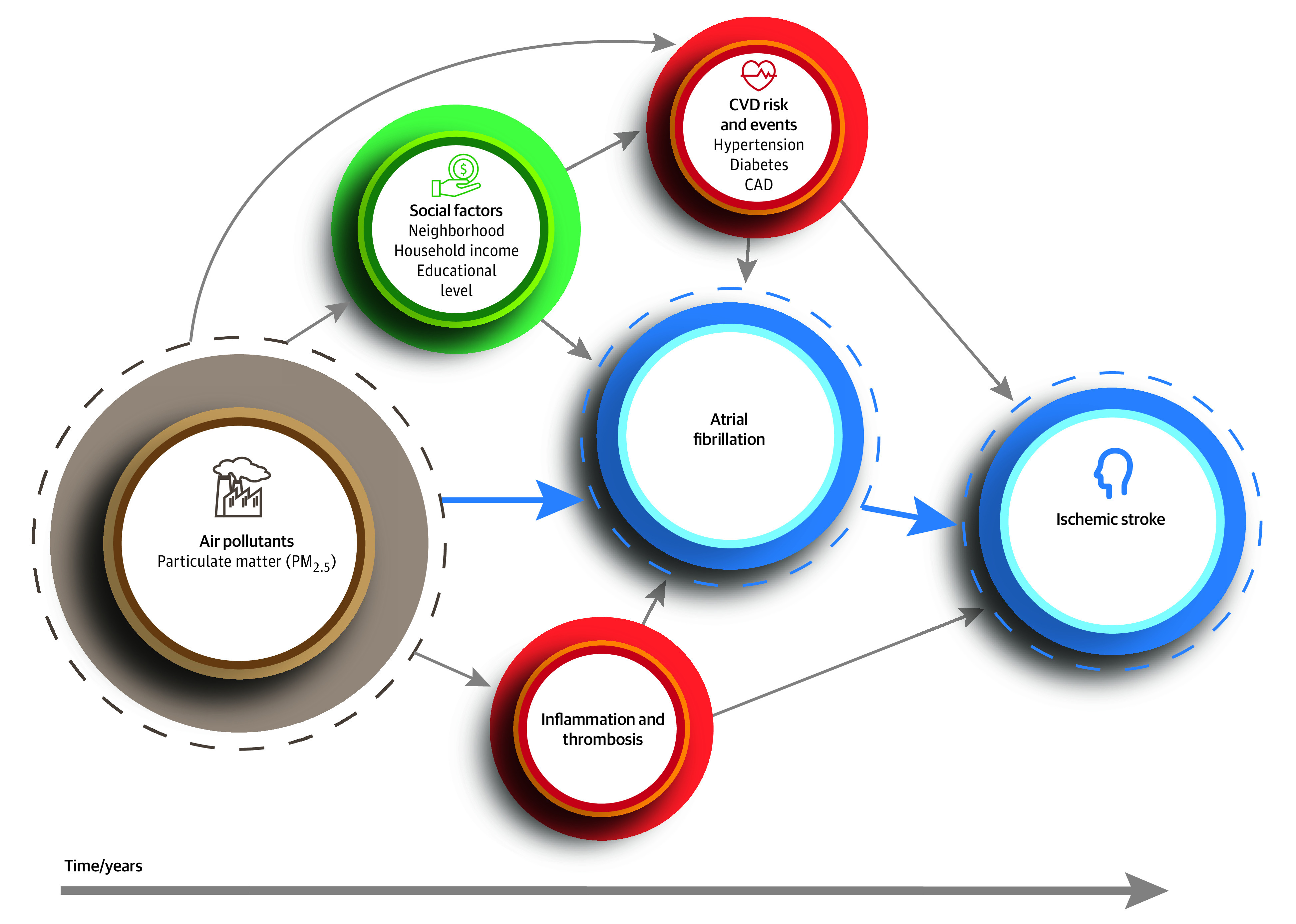
Importance: Air pollution is associated with cardiovascular outcomes. Specifically, fine particulate matter measuring 2.5 μm or less (PM2.5) is associated with thrombosis, stroke, and myocardial infarction. Few studies have examined particulate matter and stroke risk in individuals with atrial fibrillation (AF).
Objective: To assess the association of residential-level pollution exposure in 1 year and ischemic stroke in individuals with AF.
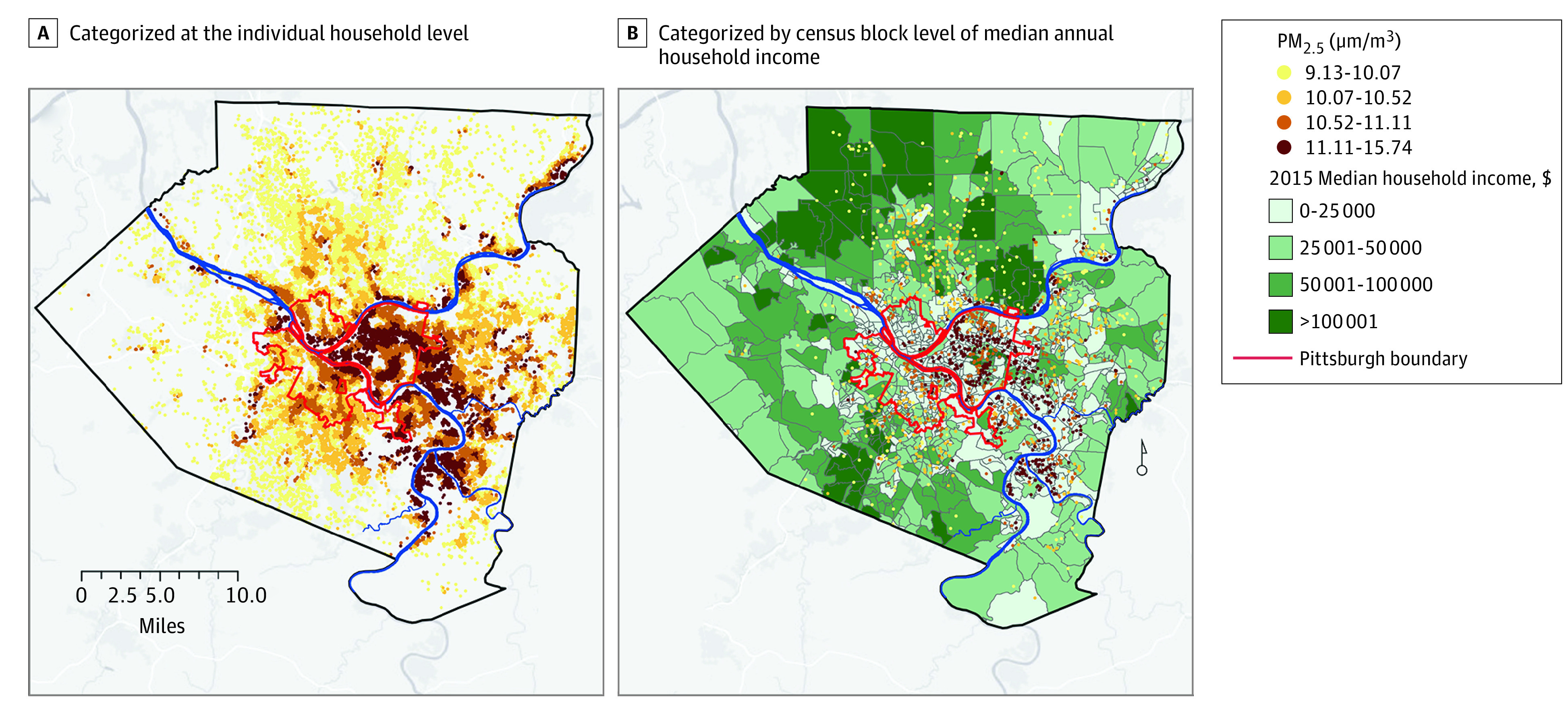
Design, setting, and participants: This cohort study included 31 414 individuals with AF from a large regional health care system in an area with historically high industrial pollution. All participants had valid residential addresses for geocoding and ascertainment of neighborhood-level income and educational level. Participants were studied from January 1, 2007, through September 30, 2015, with prospective follow-up through December 1, 2017. Data analysis was performed from March 14, 2018, to October 9, 2019.
Exposures: Exposure to PM2.5 ascertained using geocoding of addresses and fine-scale air pollution exposure surfaces derived from a spatial saturation monitoring campaign and land-use regression modeling. Exposure to PM2.5 was estimated annually across the study period at the residence level.
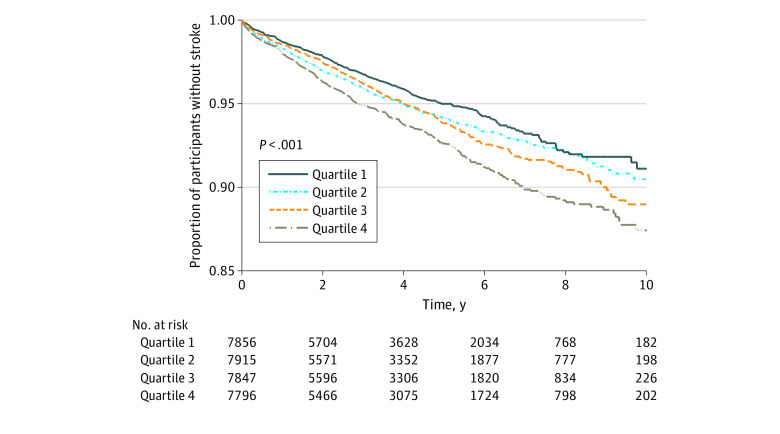
Main outcomes and measures: Multivariable-adjusted stroke risk by quartile of residence-level and annual PM2.5 exposure.
Results: The cohort included 31 414 individuals (15 813 [50.3%] female; mean [SD] age, 74.4 [13.5] years), with a median follow-up of 3.5 years (interquartile range, 1.6-5.8 years). The mean (SD) annual PM2.5 exposure was 10.6 (0.7) μg/m3. A 1-SD increase in PM2.5 was associated with a greater risk of stroke after both adjustment for demographic and clinical variables (hazard ratio [HR], 1.08; 95% CI, 1.03-1.14) and multivariable adjustment that included neighborhood-level income and educational level (HR, 1.07; 95% CI, 1.00-1.14). The highest quartile of PM2.5 exposure had an increased risk of stroke relative to the first quartile (HR, 1.36; 95% CI, 1.18-1.58). After adjustment for clinical covariates, income, and educational level, risk of stroke remained greater for the highest quartile of exposure relative to the first quartile (HR, 1.21; 95% CI, 1.01-1.45).
Conclusions and relevance: This large cohort study of individuals with AF identified associations between PM2.5 and risk of ischemic stroke. The results suggest an association between fine particulate air pollution and cardiovascular disease and outcomes.
Conflict of interest statement
Figures
References
-
- January CT, Wann LS, Calkins H, et al. . 2019 AHA/ACC/HRS focused update of the 2014 AHA/ACC/HRS guideline for the management of patients with atrial fibrillation: a report of the American College of Cardiology/American Heart Association Task Force on Clinical Practice Guidelines and the Heart Rhythm Society in collaboration with the Society of Thoracic Surgeons. Circulation. 2019;140(2):e125-e151. doi:10.1161/CIR.0000000000000665 - DOI - PubMed
-
- Lip GY, Nieuwlaat R, Pisters R, Lane DA, Crijns HJ. Refining clinical risk stratification for predicting stroke and thromboembolism in atrial fibrillation using a novel risk factor-based approach: the Euro Heart Survey on Atrial Fibrillation. Chest. 2010;137(2):263-272. doi:10.1378/chest.09-1584 - DOI - PubMed
Publication types
MeSH terms
Substances
Grants and funding
LinkOut - more resources
Full Text Sources
Medical
