Clinical Trial
. 2021 Jan 4;131(1):e139700.
doi: 10.1172/JCI139700.

The ABO histo-blood group, endothelial activation, and acute respiratory distress syndrome risk in critical illness

Affiliations
Clinical Trial

The ABO histo-blood group, endothelial activation, and acute respiratory distress syndrome risk in critical illness

John P Reilly et al. J Clin Invest. .

Abstract

BACKGROUNDThe ABO histo-blood group is defined by carbohydrate modifications and is associated with risk for multiple diseases, including acute respiratory distress syndrome (ARDS). We hypothesized that genetically determined blood subtype A1 is associated with increased risk of ARDS and markers of microvascular dysfunction and coagulation.METHODSWe conducted analyses in 3 cohorts of critically ill trauma and sepsis patients (n = 3710) genotyped on genome-wide platforms to determine the association of the A1 blood type genotype with ARDS risk. We subsequently determined whether associations were present in FUT2-defined nonsecretors who lack ABO antigens on epithelium, but not endothelium. In a patient subgroup, we determined the associations of blood type with plasma levels of endothelial glycoproteins and disseminated intravascular coagulation (DIC). Lastly, we tested whether blood type A was associated with less donor lung injury recovery during human ex vivo lung perfusion (EVLP).RESULTSThe A1 genotype was associated with a higher risk of moderate to severe ARDS relative to type O in all 3 populations. In sepsis, this relationship was strongest in nonpulmonary infections. The association persisted in nonsecretors, suggesting a vascular mechanism. The A1 genotype was also associated with higher DIC risk as well as concentrations of thrombomodulin and von Willebrand factor, which in turn were associated with ARDS risk. Blood type A was also associated with less lung injury recovery during EVLP.CONCLUSIONWe identified a replicable association between ABO blood type A1 and risk of ARDS among the critically ill, possibly mediated through microvascular dysfunction and coagulation.FUNDINGNIH HL122075, HL125723, HL137006, HL137915, DK097307, HL115354, HL101779, and the University of Pennsylvania McCabe Fund Fellowship Award.

Keywords: Coagulation; Epidemiology; Pulmonology; endothelial cells.


Conflict of interest statement

Conflict of interest: NJM reports grants from Athersys Inc., Biomarck Inc., and the Marcus Foundation. CSC reports grants and personal fees from Bayer, Roche/Genentech, Prometic, Quark Pharmaceuticals, GEn1E Life Sciences, and Vasomune. MAM reports grants from Bayer Pharmaceuticals and Roche Genentech and personal fees from GenLife Science and Citius Pharmaceuticals. JDC reports grants from GlaxoSmithKline and Bristol Myers Squibb and personal fees from Onspira.

Figures

Figure 1
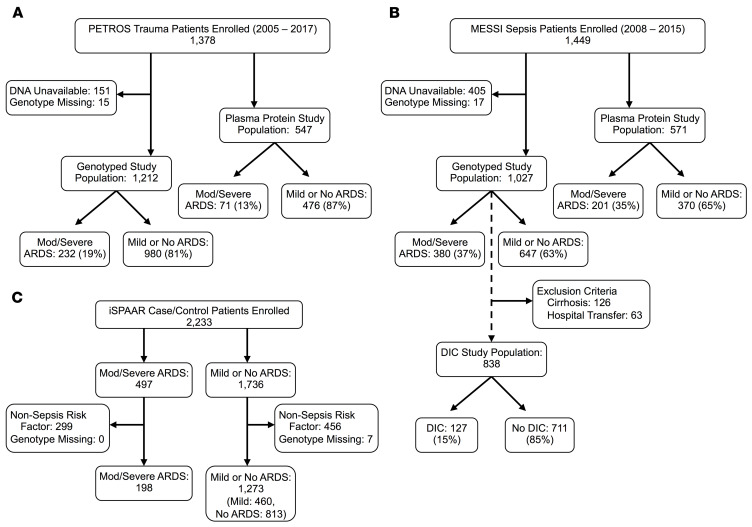
Figure 1. Study populations.
(A) PETROS, (B) MESSI, (C) iSPAAR. DNA was unavailable in some patients because a whole blood sample was missed or minimal DNA was present in the whole blood sample (e.g., patient had leukopenia secondary to chemotherapy administration).
Figure 2
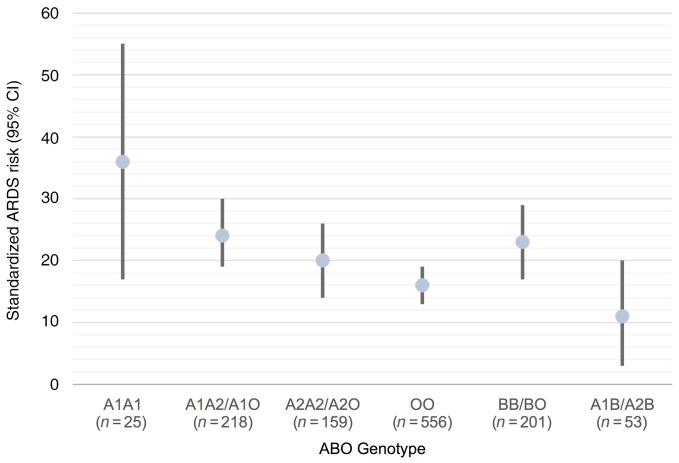
Figure 2. Standardized risk of moderate or severe ARDS by ABO genotype grouped by expected expression of A and B antigens in the PETROS trauma cohort.
The dot represents the standardized ARDS risk adjusted for injury severity score, age, sex, mechanism of trauma, and population stratification. The bars represent the 95% CI around the standardized risk. ARDS risk decreases when comparing ABO genotypes predicted to confer a higher density of A antigens (i.e., A1A1 has the highest A antigen density and ARDS risk, then A1A2/A1O, followed by A2A2/A2O, and finally OO).
Figure 3
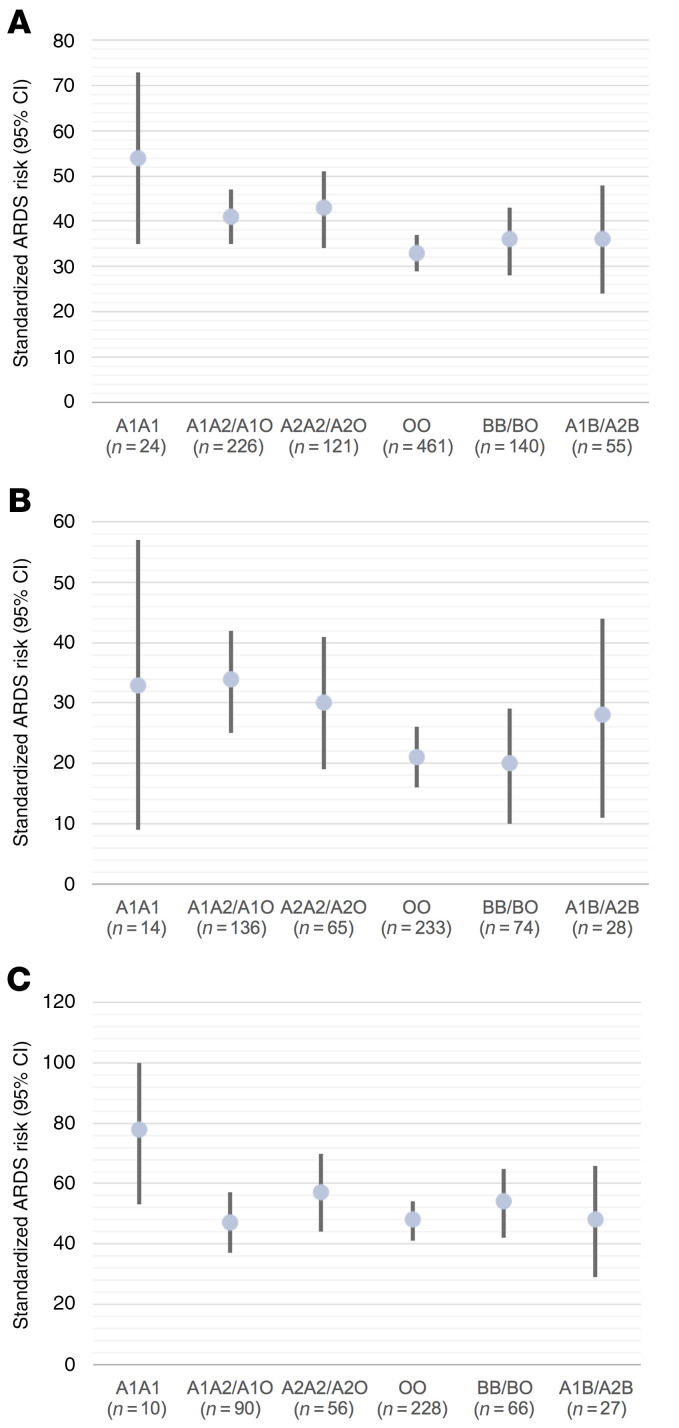
Figure 3. Standardized risk of moderate or severe ARDS in the MESSI sepsis cohort.
Standardized risk of moderate or severe ARDS by ABO genotype grouped by expected expression of A and B antigens in the (A) overall MESSI population, (B) MESSI nonpulmonary sepsis, and (C) MESSI pulmonary sepsis. The dot represents the standardized ARDS risk adjusted for age, sex, RBC transfusion, diabetes, hematologic malignancy, source of sepsis, and population stratification. The bars represent the 95% CI around the standardized risk. ARDS risk generally decreased when comparing ABO genotypes predicted to confer a higher density of A antigens (i.e., A1A1 has the highest A antigen density and ARDS risk, then A1A2/A1O, followed by A2A2/A2O, and finally OO).
Figure 4
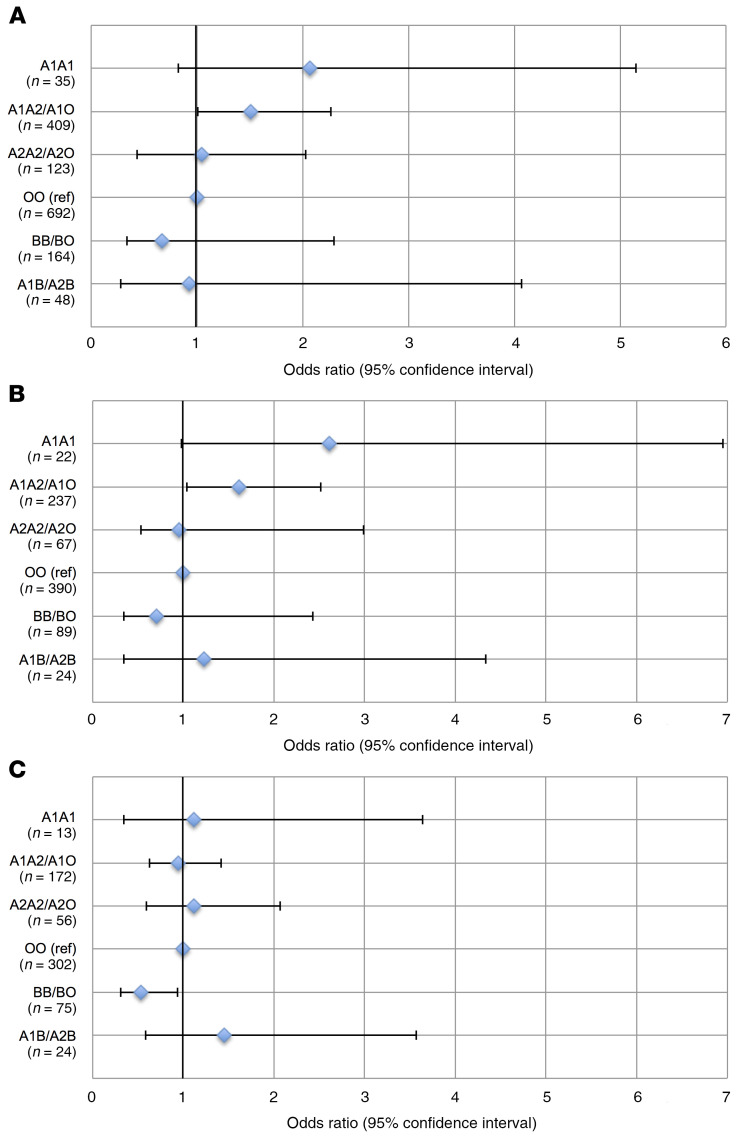
Figure 4. Odd ratios for the association of ABO genotypes and moderate or severe ARDS in iSPAAR.
Odds ratios for the association of ABO genotypes grouped by estimated antigen density and moderate or severe ARDS in the (A) overall iSPAAR sepsis case-control study and (B) nonpulmonary source and (C) pulmonary source of sepsis in the iSPAAR study. The point estimate represents the comparison of each ABO genotype grouping to the reference group, genetically inferred O blood type, adjusted for age, sex, acute physiology, and chronic health evaluation (APACHE) III score, history of diabetes, and history of malignancy. The error bars represent the 95% CI around each odds ratio. The iSPAAR study is a case-control study, not a cohort study, so we are unable to calculate standardized risks.
Figure 5
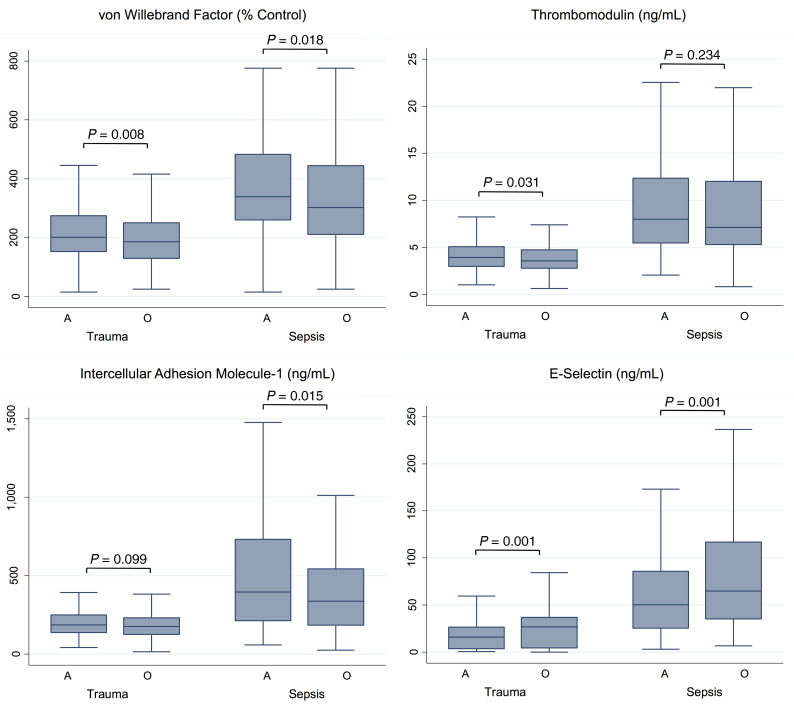
Figure 5. Box-and-whisker plots comparing the median concentrations of vWF, sTM, sICAM-1, and sE-selectin of ABO blood type A to O separately in trauma and sepsis.
The box-and-whisker plots display the median value as a line within the boxes, the bounds of the box representing the IQR, and the whiskers representing the range of the data. P values are for the unadjusted comparison of ABO blood type A to O using the Wilcoxon rank-sum test. Blood type A and O sample sizes for each biomarker are vWF: 450 trauma, 465 sepsis; sTM: 451 trauma, 465 sepsis; sICAM-1: 449 trauma, 454 sepsis; sE-selectin: 451 trauma, 453 sepsis.

Comment in

References

    1. Matthay MA, Ware LB, Zimmerman GA. The acute respiratory distress syndrome. J Clin Invest. 2012;122(8):2731–2740. doi: 10.1172/JCI60331. - DOI - PMC - PubMed
    1. Bellani G, et al. Epidemiology, patterns of care, and mortality for patients with acute respiratory distress syndrome in intensive care units in 50 countries. JAMA. 2016;315(8):788–800. doi: 10.1001/jama.2016.0291. - DOI - PubMed
    1. The ARDS Definition Task Force, et al. Acute respiratory distress syndrome: the Berlin definition. JAMA. 2012;307(23):2526–2533. - PubMed
    1. Rubenfeld GD, et al. Incidence and outcomes of acute lung injury. N Engl J Med. 2005;353(16):1685–1693. doi: 10.1056/NEJMoa050333. - DOI - PubMed
    1. The Acute Respiratory Distress Syndrome Network, et al. Ventilation with lower tidal volumes as compared with traditional tidal volumes for acute lung injury the acute respiratory distress syndrome. N Engl J Med. 2000;342(18):1301–1308. doi: 10.1056/NEJM200005043421801. - DOI - PubMed

Publication types

Substances