


Mechanisms of immune suppression by myeloid-derived suppressor cells: the role of interleukin-10 as a key immunoregulatory cytokine
- PMID: 32931721
- PMCID: PMC7536076
- DOI: 10.1098/rsob.200111
Mechanisms of immune suppression by myeloid-derived suppressor cells: the role of interleukin-10 as a key immunoregulatory cytokine
Abstract
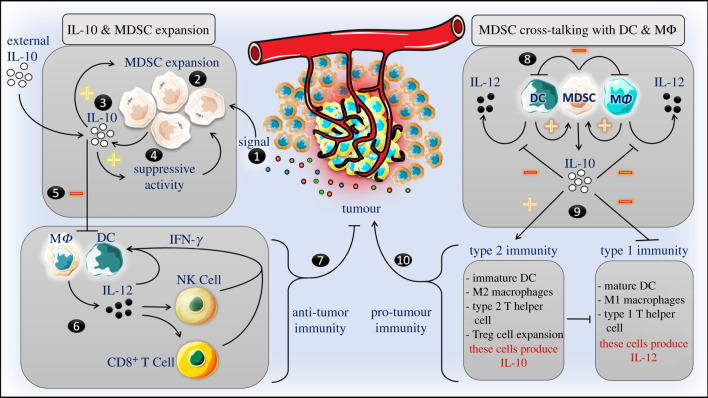
Chronic immune activation and inflammation are unwanted consequences of many pathological conditions, since they could lead to tissue damage and immune exhaustion, both of which can worsen the pathological condition status. In fact, the immune system is naturally equipped with immunoregulatory cells that can limit immune activation and inflammation. However, chronic activation of downregulatory immune responses is also associated with unwanted consequences that, in turn, could lead to disease progression as seen in the case of cancer and chronic infections. Myeloid-derived suppressor cells (MDSCs) are now considered to play a pivotal role in the pathogenesis of different inflammatory pathological conditions, including different types of cancer and chronic infections. As a potent immunosuppressor cell population, MDSCs can inhibit specific and non-specific immune responses via different mechanisms that, in turn, lead to disease persistence. One such mechanism by which MDSCs can activate their immunosuppressive effects is accomplished by secreting copious amounts of immunosuppressant molecules such as interleukin-10 (IL-10). In this article, we will focus on the pathological role of MDSC expansion in chronic inflammatory conditions including cancer, sepsis/infection, autoimmunity, asthma and ageing, as well as some of the mechanisms by which MDSCs/IL-10 contribute to the disease progression in such conditions.
Keywords: PD-1/PD-L1; S100A8/A9; STAT3; dendritic cells; macrophages; natural killer cells.
Conflict of interest statement
We declare we have no competing interests.
Figures
References
-
- Alqudah MAY, Yaseen MMM, Yaseen MMS. 2016. HIV-1 strategies to overcome the immune system by evading and invading innate immune system. HIV & AIDS Rev. 15, 1–12. ( 10.1016/j.hivar.2015.07.004) - DOI
Publication types
MeSH terms
Substances
LinkOut - more resources
Full Text Sources
Research Materials
Miscellaneous
