


Effects of Omega-3 Polyunsaturated Fatty Acid Supplementation on Non-Alcoholic Fatty Liver: A Systematic Review and Meta-Analysis
- PMID: 32932796
- PMCID: PMC7551292
- DOI: 10.3390/nu12092769
Effects of Omega-3 Polyunsaturated Fatty Acid Supplementation on Non-Alcoholic Fatty Liver: A Systematic Review and Meta-Analysis
Abstract
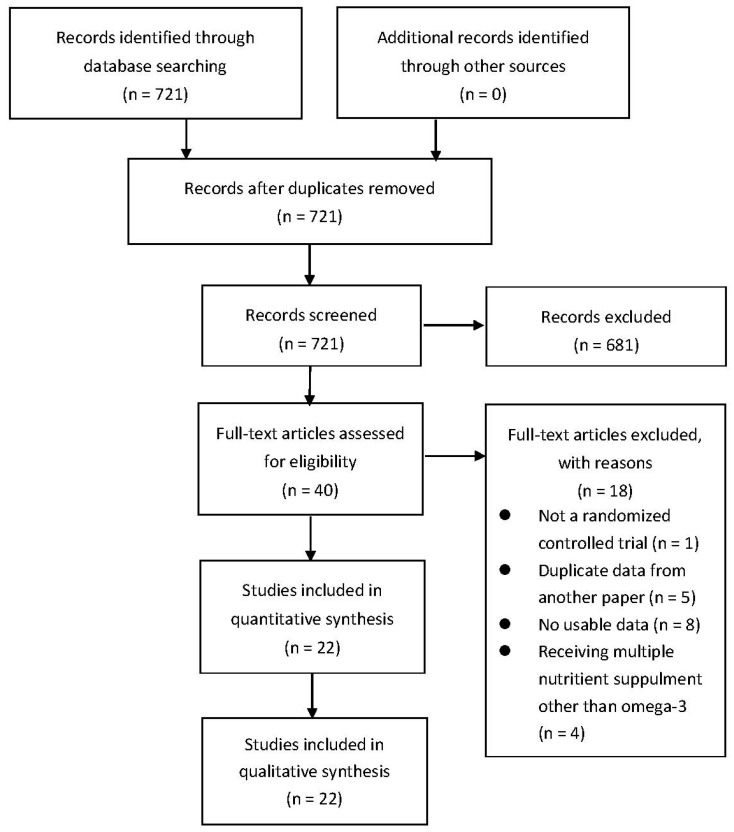
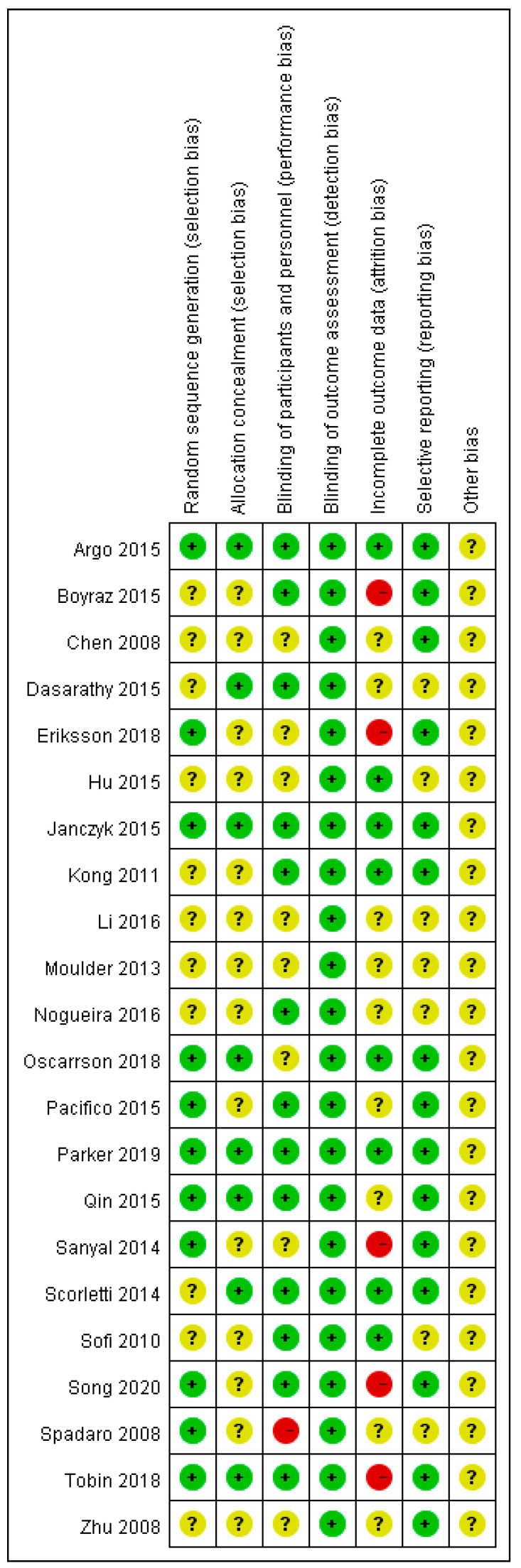
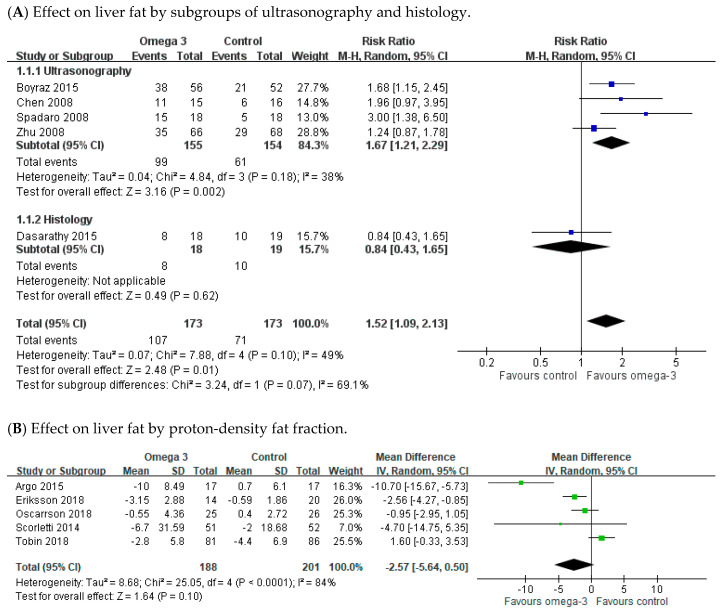
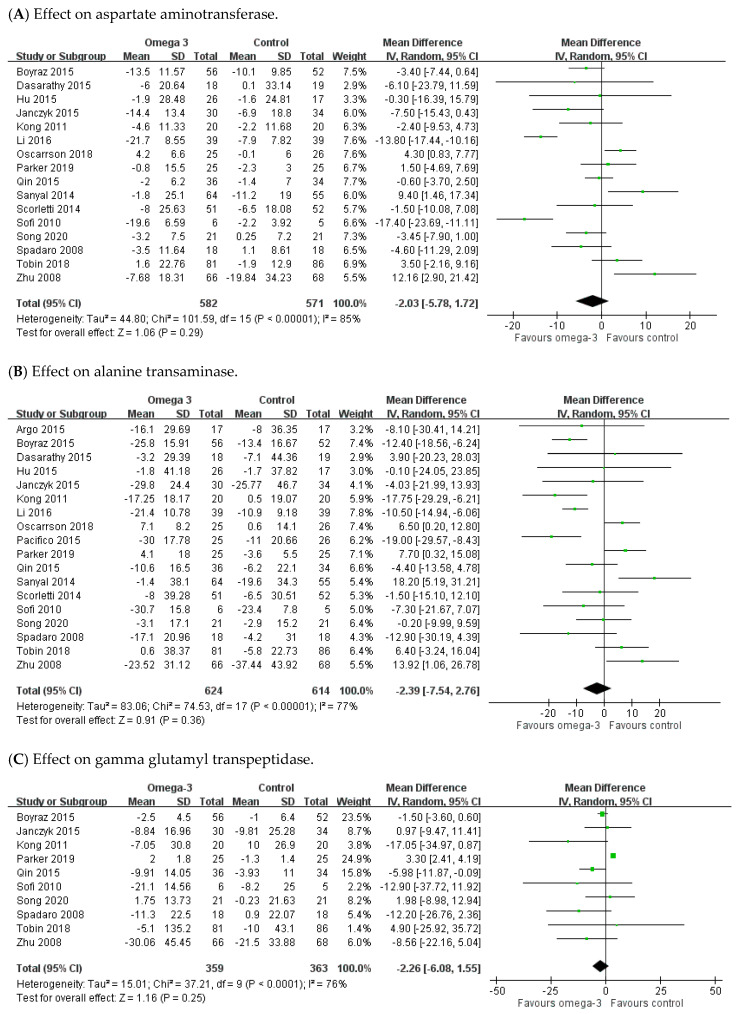
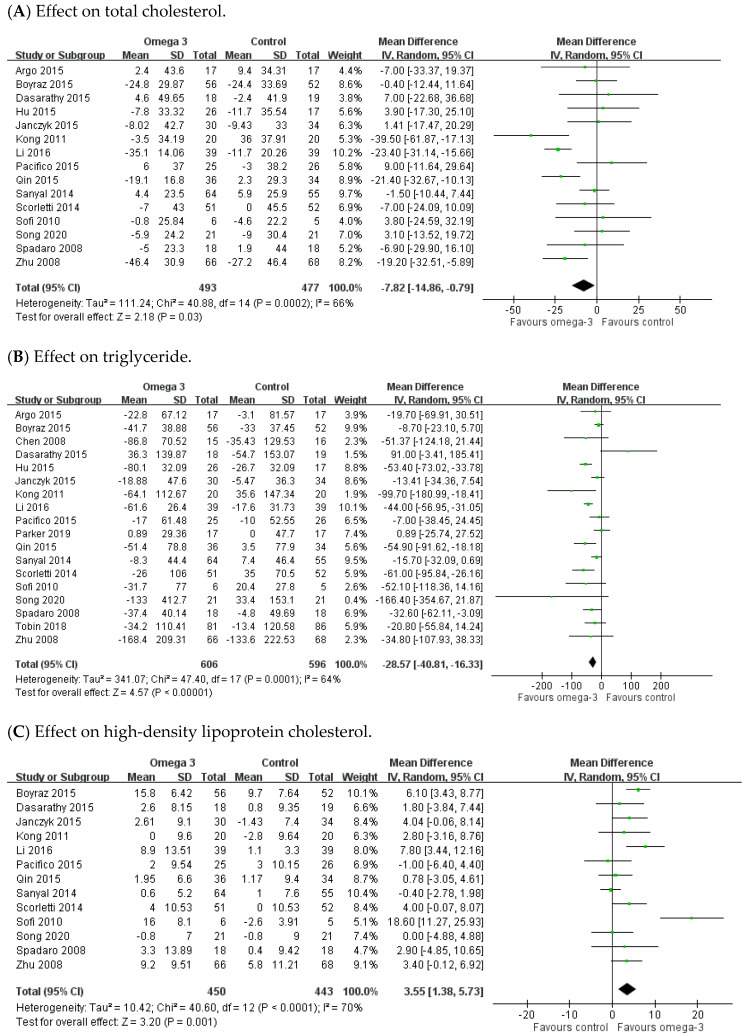
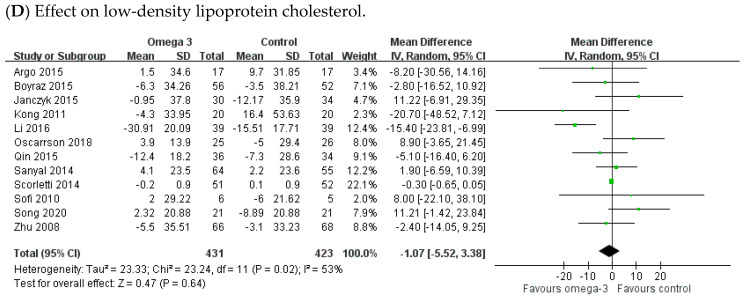
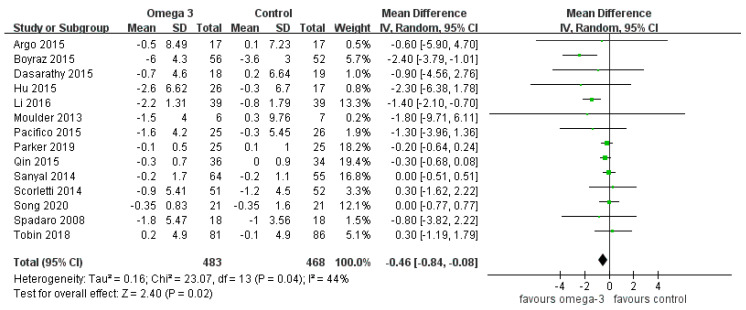
(1) Aim: Non-alcoholic fatty liver disease (NAFLD) is a prevalent disease worldwide. Omega-3 polyunsaturated fatty acids (n-3 PUFAs) bear anti-inflammatory action and can ameliorate hyperlipidemia. We wish to appraise the effects of n-3 PUFAs supplement on NAFLD. (2) Methods: We searched CENTRAL, Embase, and MEDLINE on 29 March 2020 for randomized control trials (RCTs) on the effects of n-3 PUFAs supplementation in treating NAFLD. The Cochrane Collaboration's tool was used to assess the risk of bias of included RCTs. (3) Results: We included 22 RCTs with 1366 participants. The risk of bias of included RCTs was generally low or unclear. n-3 PUFAs supplementation significantly reduced liver fat compared with placebo (pooled risk ratio 1.52; 95% confidence interval (CI) 1.09 to 2.13). n-3 PUFAs supplementation also significantly improved the levels of triglyceride, total cholesterol, high-density lipoprotein, and body-mass index, with pooled mean difference and 95% CI being -28.57 (-40.81 to -16.33), -7.82 (-14.86 to -0.79), 3.55 (1.38 to 5.73), and -0.46 (-0.84 to -0.08), respectively. (4) Conclusions: The current evidence supports the effects of n-3 PUFAs supplementation in improving fatty liver. n-3 PUFAs supplementation may also improve blood lipid levels and obesity.
Keywords: fatty liver; omega-3 fatty liver; polyunsaturated fatty acid; steatohepatitis.
Conflict of interest statement
The authors declare no conflict of interest.
Figures
References
-
- Disease G.B.D., Injury I., Prevalence C. Global, regional, and national incidence, prevalence, and years lived with disability for 354 diseases and injuries for 195 countries and territories, 1990–2017: A systematic analysis for the global burden of disease study 2017. Lancet. 2018;392:1789–1858. doi: 10.1016/S0140-6736(18)32279-7. - DOI - PMC - PubMed
-
- Scorletti E., Bhatia L., McCormick K.G., Clough G.F., Nash K., Hodson L., Moyses H.E., Calder P.C., Byrne C.D. Effects of purified eicosapentaenoic and docosahexaenoic acids in nonalcoholic fatty liver disease: Results from the Welcome* study. Hepatology. 2014;60:1211–1221. doi: 10.1002/hep.27289. - DOI - PubMed
Publication types
MeSH terms
Substances
LinkOut - more resources
Full Text Sources
Medical
