


Diversity of the Genomes and Neurotoxins of Strains of Clostridium botulinum Group I and Clostridium sporogenes Associated with Foodborne, Infant and Wound Botulism
- PMID: 32932818
- PMCID: PMC7551954
- DOI: 10.3390/toxins12090586
Diversity of the Genomes and Neurotoxins of Strains of Clostridium botulinum Group I and Clostridium sporogenes Associated with Foodborne, Infant and Wound Botulism
Abstract
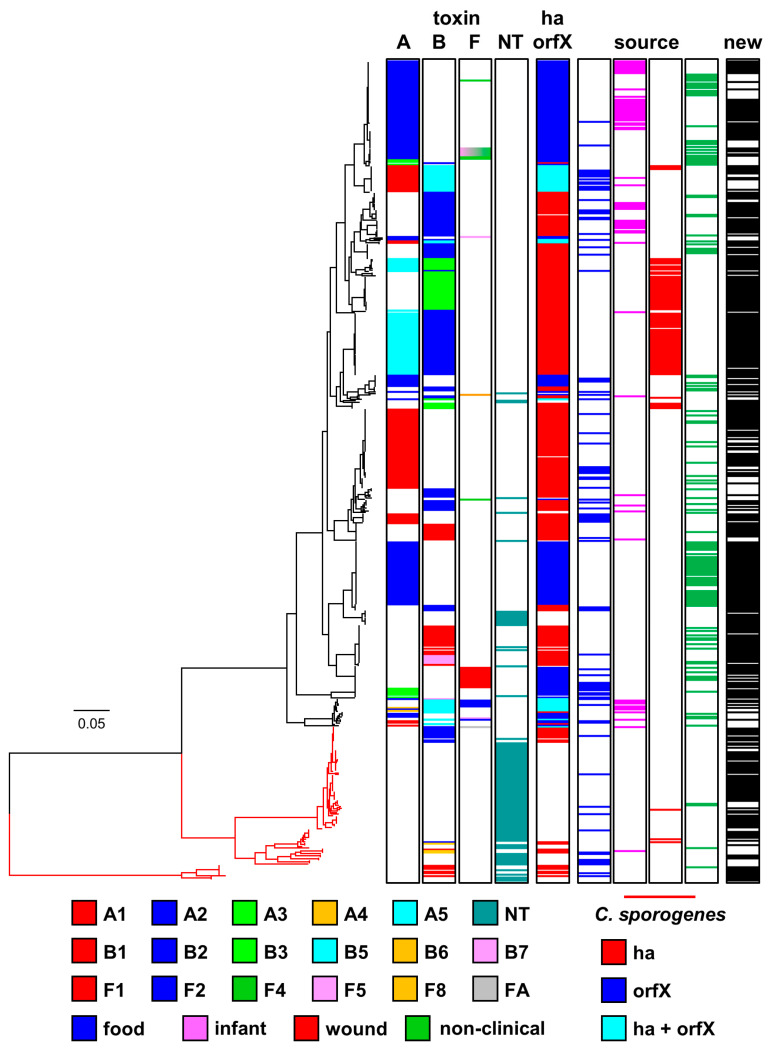
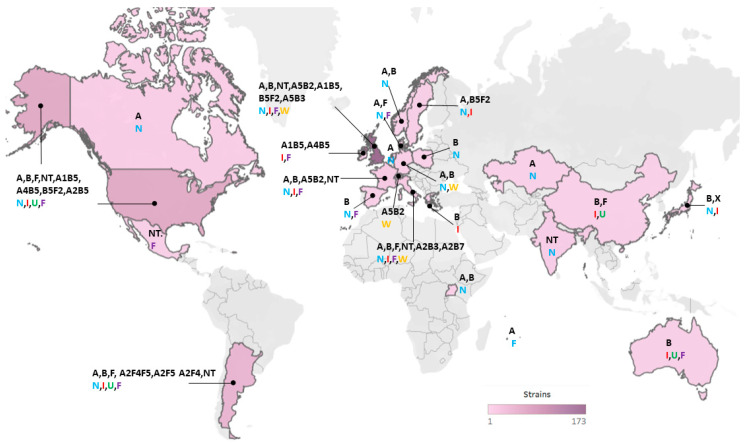
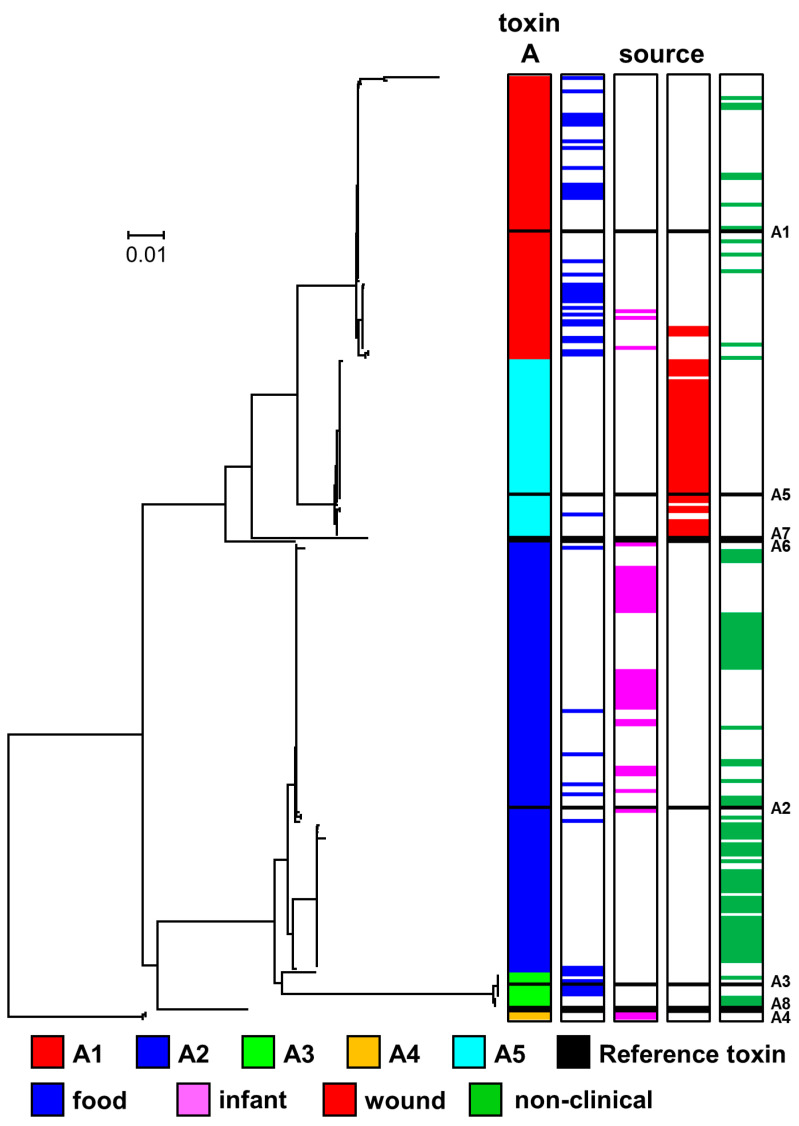
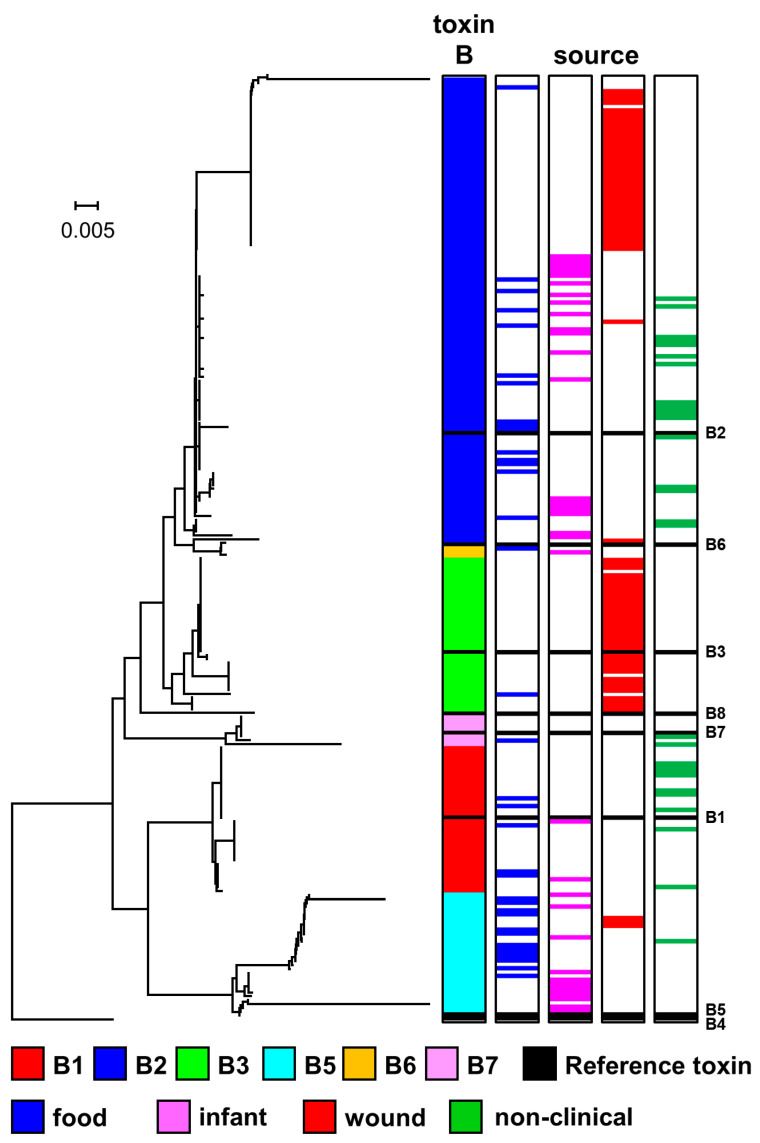
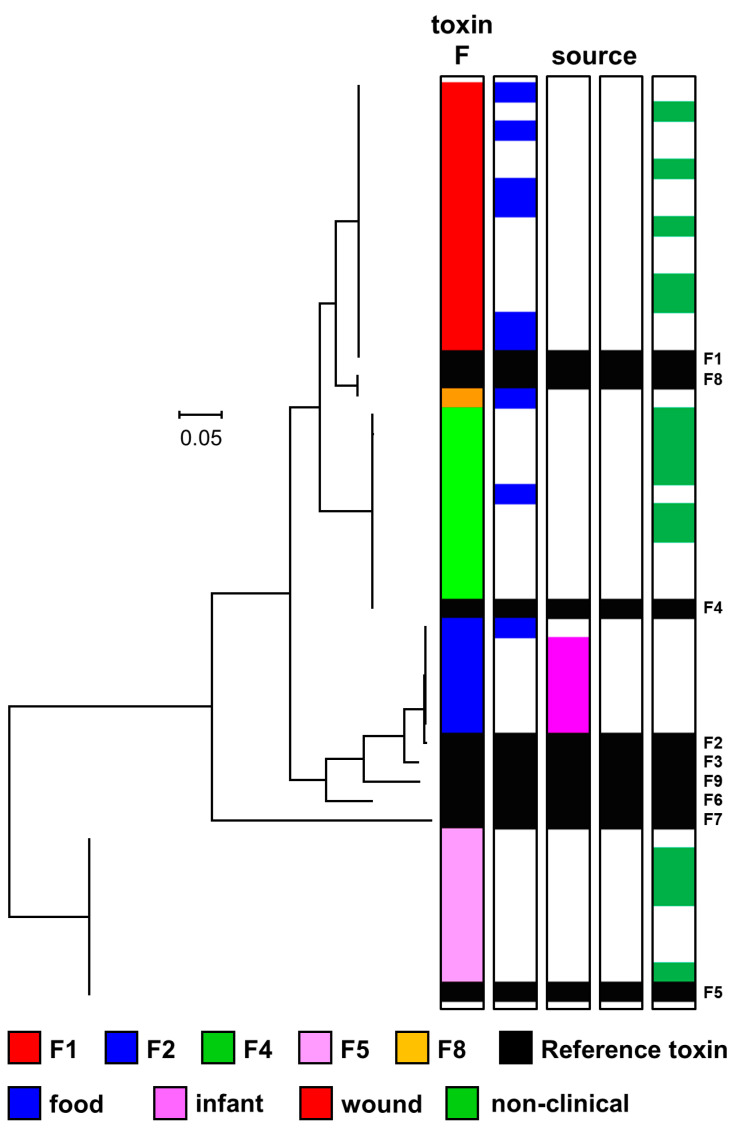
Clostridium botulinum Group I and Clostridium sporogenes are closely related bacteria responsible for foodborne, infant and wound botulism. A comparative genomic study with 556 highly diverse strains of C. botulinum Group I and C. sporogenes (including 417 newly sequenced strains) has been carried out to characterise the genetic diversity and spread of these bacteria and their neurotoxin genes. Core genome single-nucleotide polymorphism (SNP) analysis revealed two major lineages; C. botulinum Group I (most strains possessed botulinum neurotoxin gene(s) of types A, B and/or F) and C. sporogenes (some strains possessed a type B botulinum neurotoxin gene). Both lineages contained strains responsible for foodborne, infant and wound botulism. A new C. sporogenes cluster was identified that included five strains with a gene encoding botulinum neurotoxin sub-type B1. There was significant evidence of horizontal transfer of botulinum neurotoxin genes between distantly related bacteria. Population structure/diversity have been characterised, and novel associations discovered between whole genome lineage, botulinum neurotoxin sub-type variant, epidemiological links to foodborne, infant and wound botulism, and geographic origin. The impact of genomic and physiological variability on the botulism risk has been assessed. The genome sequences are a valuable resource for future research (e.g., pathogen biology, evolution of C. botulinum and its neurotoxin genes, improved pathogen detection and discrimination), and support enhanced risk assessments and the prevention of botulism.
Keywords: Botulism; Clostridium botulinum; Clostridium sporogenes; Foodborne; Genomes; Infant; Neurotoxins; Wound.
Conflict of interest statement
The authors declare no conflict of interest.
Figures

References
-
- Bruggemann H., Wollherr A., Mazuet C., Popoff M. Clostridium botulinum. In: Fratamico P., Liu Y., Kathariou S., editors. Genomes of Foodborne and Waterborne Pathogens. Vol. 13. ASM Press; Washington, DC, USA: 2011. pp. 185–212.
-
- Brunt J., van Vliet A.H.M., Stringer S.C., Carter A.T., Lindström M., Peck M.W. Pan-genomic analysis of Clostridium botulinum Group II (Non-Proteolytic C. botulinum) associated with foodborne botulism and isolated from the environment. Toxins. 2020;12:306. doi: 10.3390/toxins12050306. - DOI - PMC - PubMed
-
- Johnson E.A. In: Food Microbiology: Fundamentals and Frontiers. Doyle M.P., Buchanan R.L., editors. ASM Press; Washington, DC, USA: 2013. pp. 441–464.
Publication types
MeSH terms
Substances
Supplementary concepts
Grants and funding
LinkOut - more resources
Full Text Sources
Medical
Molecular Biology Databases
