


Machine learning predicts stem cell transplant response in severe scleroderma
- PMID: 32933919
- PMCID: PMC8582621
- DOI: 10.1136/annrheumdis-2020-217033
Machine learning predicts stem cell transplant response in severe scleroderma
Abstract
Objective: The Scleroderma: Cyclophosphamide or Transplantation (SCOT) trial demonstrated clinical benefit of haematopoietic stem cell transplant (HSCT) compared with cyclophosphamide (CYC). We mapped PBC (peripheral blood cell) samples from the SCOT clinical trial to scleroderma intrinsic subsets and tested the hypothesis that they predict long-term response to HSCT.
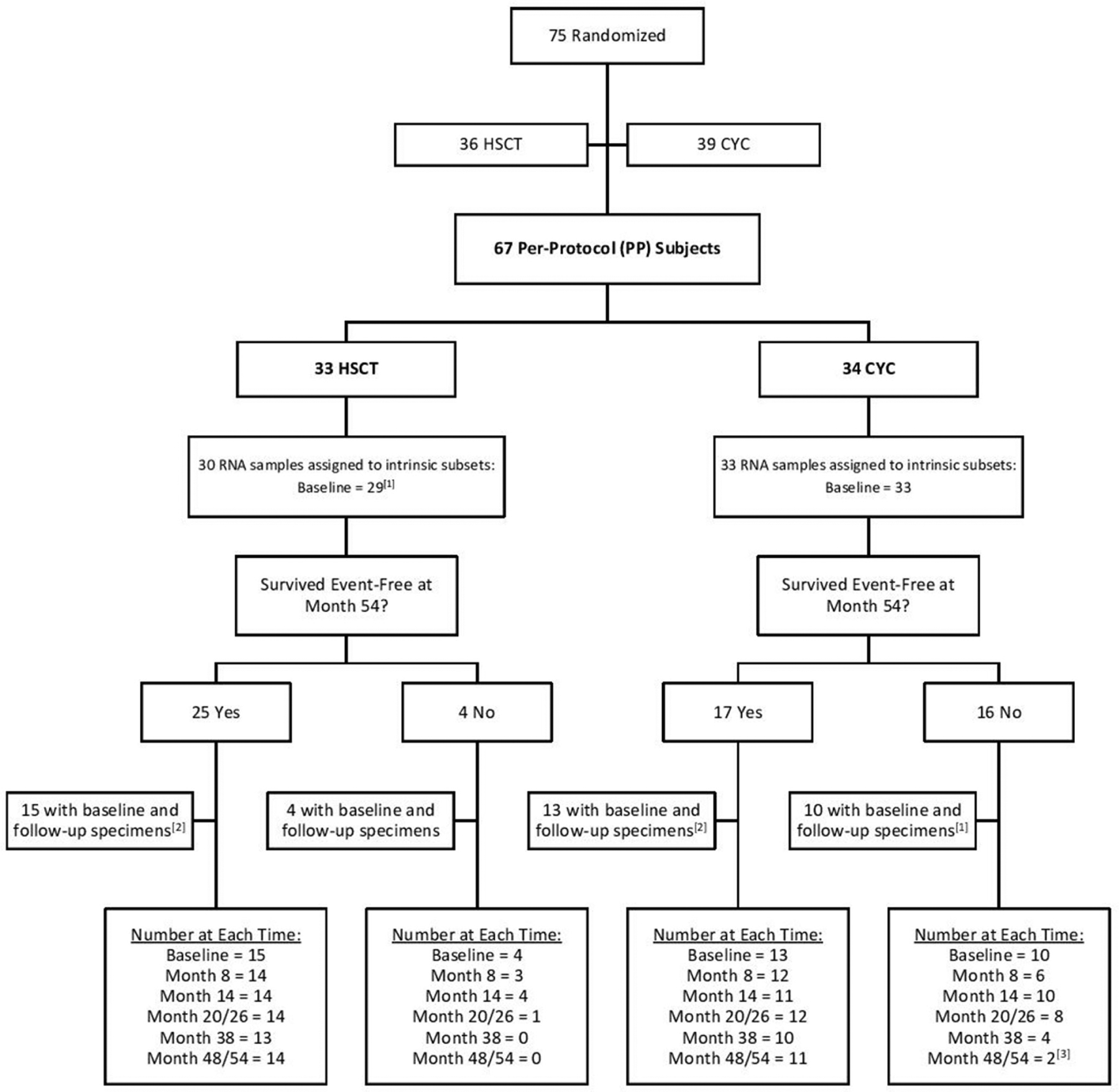
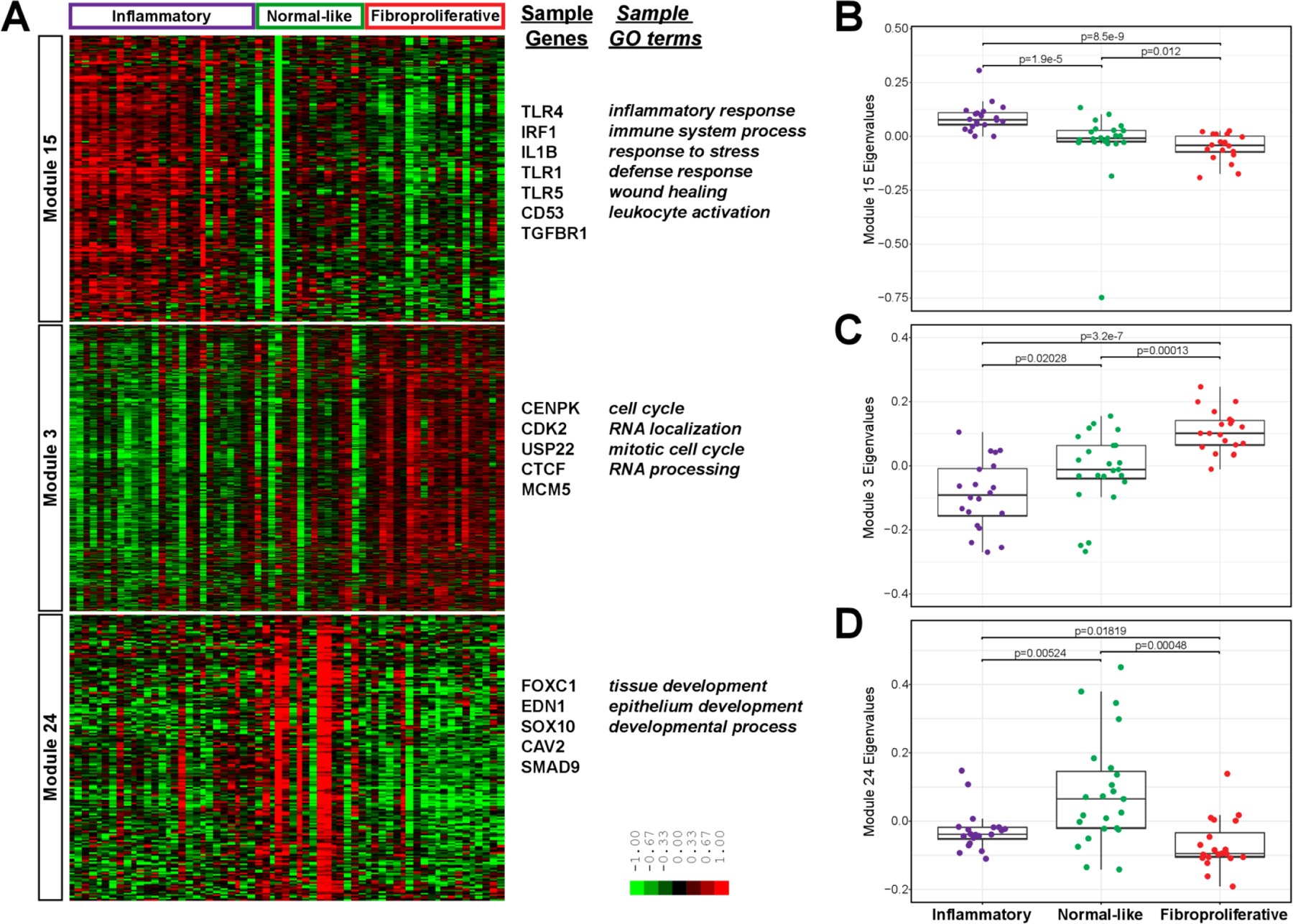
Methods: We analysed gene expression from PBCs of SCOT participants to identify differential treatment response. PBC gene expression data were generated from 63 SCOT participants at baseline and follow-up timepoints. Participants who completed treatment protocol were stratified by intrinsic gene expression subsets at baseline, evaluated for event-free survival (EFS) and analysed for differentially expressed genes (DEGs).
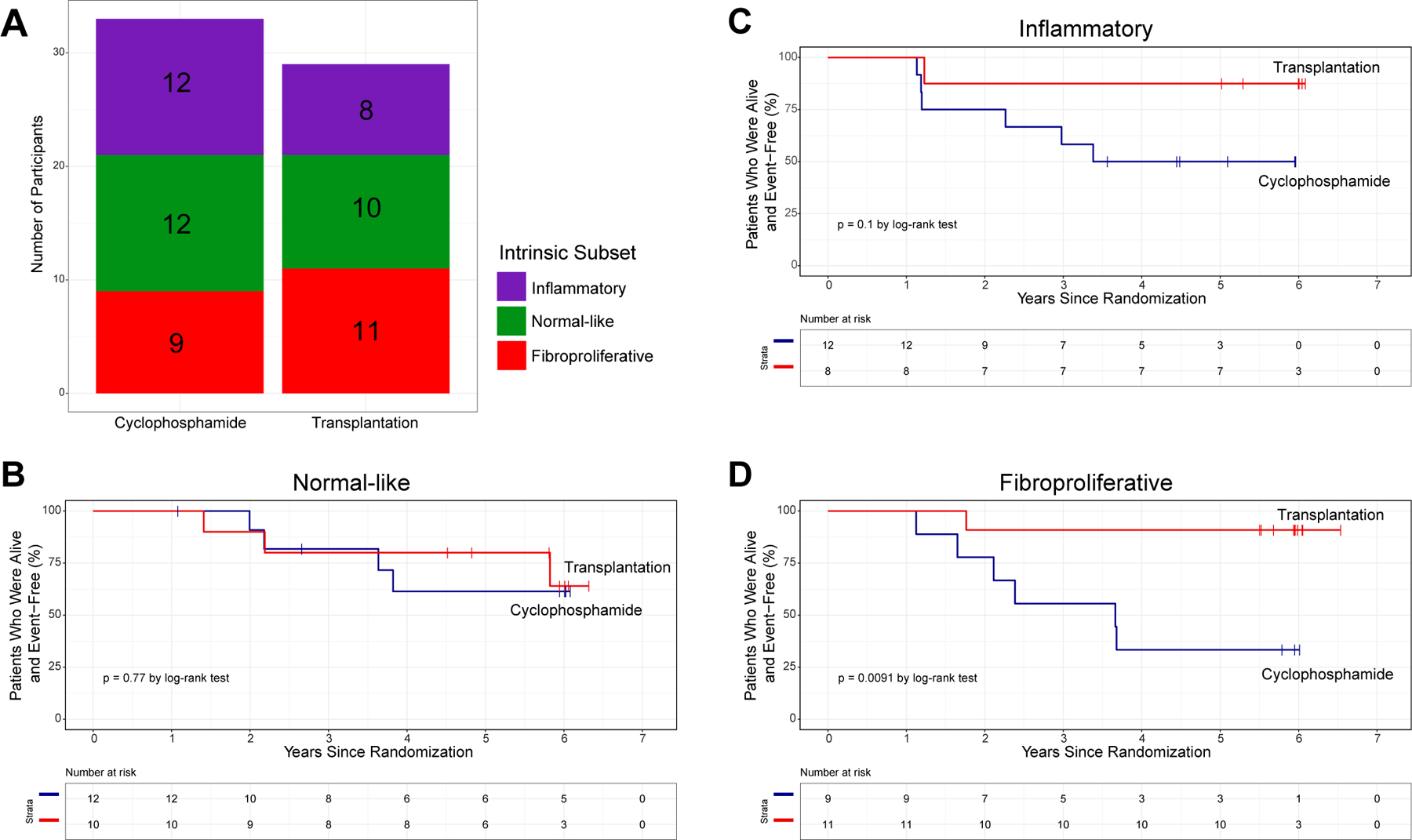
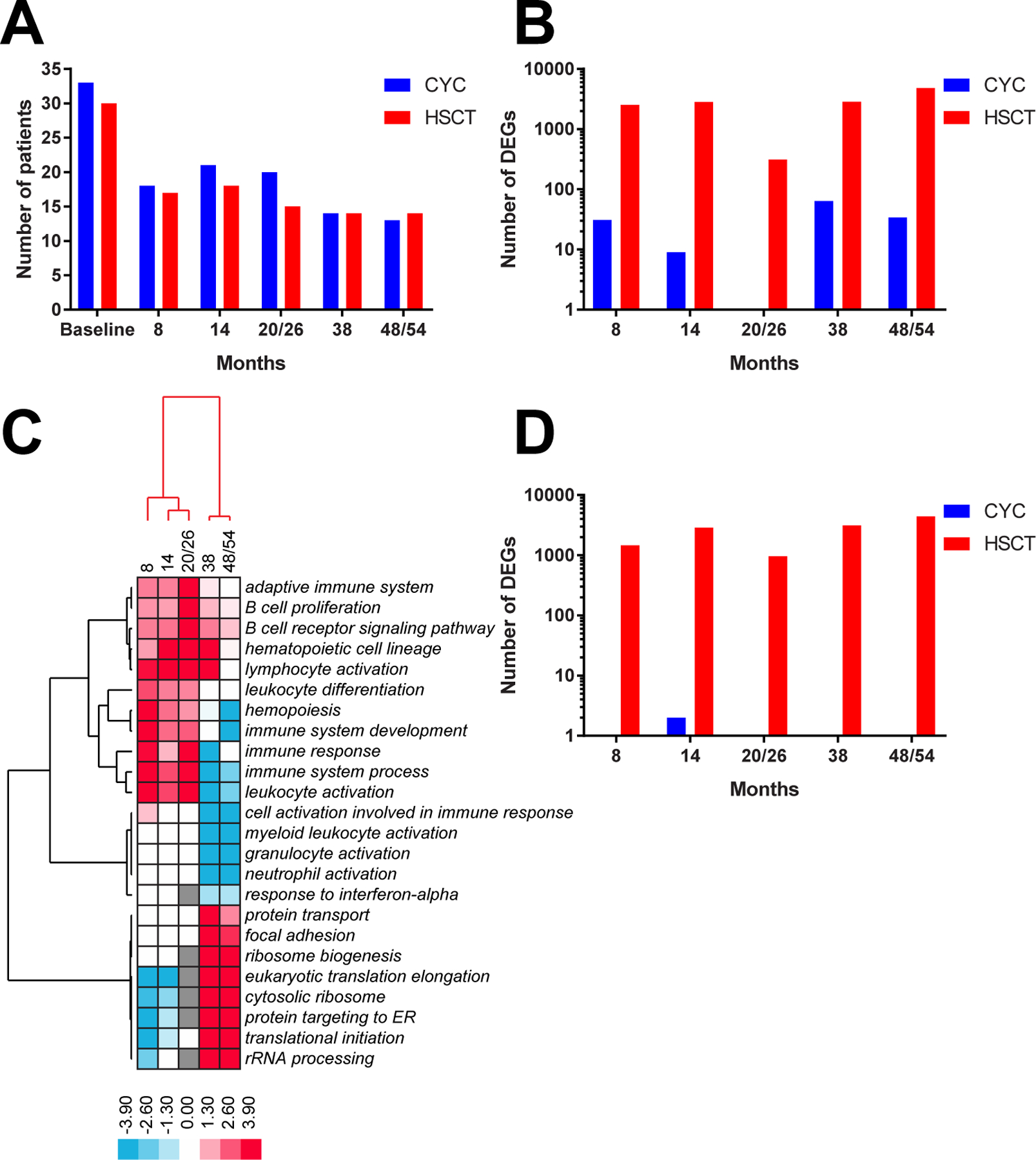
Results: Participants from the fibroproliferative subset on HSCT experienced significant improvement in EFS compared with fibroproliferative participants on CYC (p=0.0091). In contrast, EFS did not significantly differ between CYC and HSCT arms for the participants from the normal-like subset (p=0.77) or the inflammatory subset (p=0.1). At each timepoint, we observed considerably more DEGs in HSCT arm compared with CYC arm with HSCT arm showing significant changes in immune response pathways.
Conclusions: Participants from the fibroproliferative subset showed the most significant long-term benefit from HSCT compared with CYC. This study suggests that intrinsic subset stratification of patients may be used to identify patients with SSc who receive significant benefit from HSCT.
Keywords: cyclophosphamide; systemic sclerosis; treatment.
© Author(s) (or their employer(s)) 2020. No commercial re-use. See rights and permissions. Published by BMJ.
Conflict of interest statement
Competing interests: MLW reports grants and personal fees from Celdara Medical, grants and personal fees from Bristol Myers Squib, personal fees from Acceleron, personal fees from Abbvie, grants and personal fees from Corbus, personal fees from Boehringer Ingelheim, outside the submitted work. MDM reports personal fees from Medtelligence, personal fees from Actelion Pharma, personal fees from Astellas, personal fees from Mitsubishi-Tanabe, grants from Bayer, grants from Reata, grants from Sanofi, grants from Corbus, grants and personal fees from Boehringer-Ingelheim, grants and personal fees from EICOS, grants and personal fees from Galapagos, grants from GSK, outside the submitted work. DEF reports grants from Actelion, grants and personal fees from Amgen, grants and personal fees from Bristol Myers Squibb, grants and personal fees from Galapagos, grants and personal fees from Novartis, grants and personal fees from Pfizer, grants from Sanofi, grants from Roche/Genentech, grants and personal fees from Corbus, grants from GSK, outside the submitted work. All other authors have nothing to disclose.
Figures
References
-
- Distler O, Gahlemann M, Maher TM. Nintedanib for systemic sclerosis-associated interstitial lung disease. reply. N Engl J Med 2019;381:1596–7. - PubMed
-
- Barnes J, Mayes MD. Epidemiology of systemic sclerosis: incidence, prevalence, survival, risk factors, malignancy, and environmental triggers. Curr Opin Rheumatol 2012;24:165–70. - PubMed
-
- LeRoy EC, Black C, Fleischmajer R, et al. Scleroderma (systemic sclerosis): classification, subsets and pathogenesis. J Rheumatol 1988;15:202–5. - PubMed
-
- Steen VD, Medsger TA. Severe organ involvement in systemic sclerosis with diffuse scleroderma. Arthritis Rheum 2000;43:2437–44. - PubMed
Publication types
MeSH terms
Substances
Grants and funding
LinkOut - more resources
Full Text Sources
Other Literature Sources
Molecular Biology Databases
